[directorist_search_result]

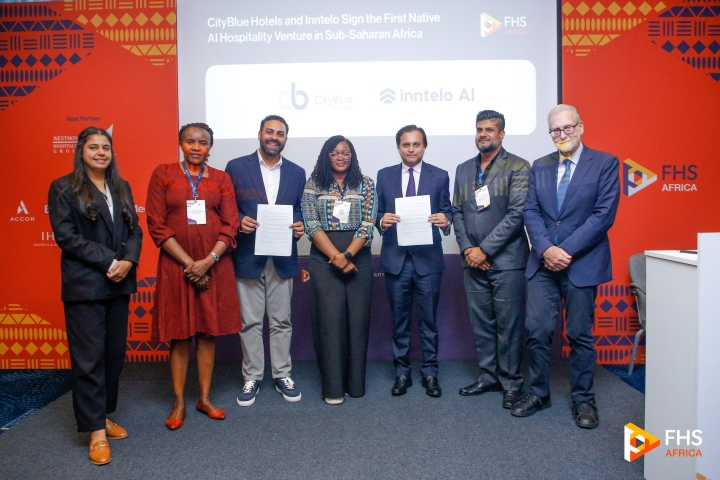
CityBlue Hotels and Inntelo AI sign first AI-native hospitality venture in Sub-Saharan Africa

Inntelo AI, the UK-based AI hospitality platform, has been selected by CityBlue Hotels, one of Africa’s fastest-growing hotel groups, to deploy AI concierge agents across hotel operations in Africa.

The rollout represents one of the first scaled implementations of AI-native concierge agents in African hospitality, positioning CityBlue Hotels and Inntelo AI at the forefront of AI-driven transformation in the sector.

Operating across Kenya, Rwanda, Tanzania and expected to open soon in Ghana, Uganda, and Zambia, with additional strategic tie-ups in South Africa and Mozambique, CityBlue Hotels’ partnership with Inntelo AI comes amid continued growth for Africa’s tourism and hospitality industries. According to UN Tourism, there was an 8% year-on-year increase in international visits to Africa in 2025, with 81 million people travelling to the continent that year – a trend that is being driven by increased investment, rising intra-African travel, and global demand for new destinations.

Inntelo’s AI-native concierge solution coordinates guest interactions and service requests, allowing hotel teams to prioritise tasks and maintain service consistency. The platform supports faster response times and, by automating workflows, it enables staff to focus on in-person service delivery, balancing operational efficiency with overall guest experience.

The partnership also includes the development of educational programmes to advance skills, innovation, and AI adoption across Africa’s hospitality industry.

Asif Alidina, Founder and CEO of Inntelo AI, said: “This partnership represents a defining moment for Inntelo AI. Africa is one of the most exciting and fastest-growing hospitality markets globally, and CityBlue Hotels stands out as a locally grown, ambitious brand that is scaling across the continent with real intent.

“For us, this is about more than deploying technology. It’s about partnering with an operator that understands its markets deeply and is ready to lead the next phase of hospitality innovation. Together, we have the opportunity to introduce AI-native operations at scale, combining conversational and agentic AI to support teams, enhance guest experiences, and set a new benchmark for what modern hospitality can look like in Africa.”

Jameel Verjee, Founder and CEO of CityBlue Hotels, added: “CityBlue has always been focused on where our markets are going. As we scale, AI-native operations become essential to delivering consistency, speed, and quality across multiple geographies.

“This partnership allows us to embed AI at the core of how we operate – supporting our teams in real time, reducing friction, and elevating the guest experience across every property. Just as importantly, we are shaping how AI is applied within an African context.”

Inntelo AI’s technology is already being rapidly deployed across hotels in the UK, Europe and Asia, including independent and branded properties such as Radisson-branded hotels with the Brilliant Hotels Collection, as well as IHG and Wyndham properties with The First Group Hospitality. This includes flagship developments such as IHG’s Ciel Dubai Marina, recognised by Guinness World Records as the world’s tallest hotel, with further deployments continuing across a growing portfolio of international hotel operators.


ScottishPower Secures £600m National Wealth Fund Green Financing for Strategic UK Subsea Power Link Eastern Green Link 4

E

Eastern Green Link 4 (EGL4) is a new 2GW High Voltage Direct Current (HVDC) subsea power link that will help reduce constraint costs by transporting domestically produced energy from where it is generated in Scotland to areas of demand in England. Running between Fife and Norfolk, the 530 km high-voltage cable will be able to transmit enough electricity to power the equivalent of 1.5 million UK homes.

Long-distance, bidirectional subsea infrastructure projects such as EGL4 are essential to reinforce the UK’s energy security and lower the cost of electricity for homes and businesses by reducing dependence on imported fossil fuels that are exposed to volatile international markets.

This transaction builds on the National Wealth Fund’s £600 million loan in May 2025 to support the development of seven of ScottishPower’s priority network initiatives. The ongoing collaboration between ScottishPower and the National Wealth Fund to drive investment in the UK grid demonstrates the power of the public and private sector joining forces to support the transition to lower cost, homegrown, clean energy. 

The National Wealth Fund prioritised the grid as an area for investment in its recent strategic plan and is offering a longer tenor facility to allow Scottish Power to better align the debt profile with the life of the assets being financed. With National Energy System Operator (NESO) estimating that £58 billion will be required in Great Britain by 2035 to support the delivery of the clean power system, the National Wealth Fund also has a role to play in widening the pools of capital available to the sector.

This new financing enables the Iberdrola Group to continue advancing its ambitious plan to develop distribution and transmission networks in the United Kingdom, which involves capex investments of £12 billion (€14 billion) through 2028 to continue expanding electrification and responding to the expected increase in electricity demand.

Chancellor Rachel Reeves said: “This is exactly why we created the National Wealth Fund – to put the full power of government behind strategic investment in partnership with business that secures Britain’s future. This investment will build the energy infrastructure of tomorrow, strengthen our energy security, and help bring down bills.

“We have the right economic plan for Britain – built on stability, investment and reform – with an active, strategic state helping to build a stronger, more secure economy and make working people better off in every part of Britain.”

Oliver Holbourn, CEO of the National Wealth Fund, said: “By supporting nationally significant projects like Eastern Green Link 4, we are demonstrating our commitment to strengthening our national infrastructure to help ensure our energy system is fit for the future.

“Our financing will support Scottish Power to go further and faster to deliver crucial grid upgrades and in doing so unlock clean energy for homes and businesses across the country.”

Keith Anderson, CEO of ScottishPower, said: “We are pleased to be strengthening our relationship with the National Wealth Fund to deliver these critical investments. By working together to support the delivery of the Government’s Clean Power 2030 pathway, projects like EGL4 are meeting our shared goals of accelerating electrification, boosting the UK economy and delivering energy security.”

Energy Minister Michael Shanks said: “Grid upgrades are vital to getting Britain off the rollercoaster of fossil fuel prices allowing us to make the most of the low-cost clean energy we generate. 

“Network investment is delivering growth across the country and jobs too, with Scottish Power set to double its transmission workforce in central and southern Scotland, creating opportunities for good, well-paid careers.”

Scottish Secretary Douglas Alexander said: “This major investment by the UK Government’s National Wealth Fund demonstrates our commitment to essential grid infrastructure like this subsea power link. Through investment like this one, we are helping to kickstart economic growth and delivering on our commitment to a decade of national renewal.”

DEEP TECH COMPANY UNVEILS CLEAN ENERGY SOLUTION TO TACKLE UK ENERGY SECURITY CRISIS HYDROGEN ON DEMAND SYSTEM COULD CUT UK HOUSEHOLD ENERGY BILLS BY 30-45%

HYDROGEN ON DEMAND SYSTEM COULD CUT UK HOUSEHOLD ENERGY BILLS BY 30-45%

 UK CONSUMERS WILL HAVE ACCESS TO CHEAP CARBON FREE ENERGY ALTERNATIVE FROM 2027

 KINETIC7 the disruptive tech company – founded by Australian entrepreneur and philanthropist Rick Parish – has today announced that it has developed a cheap clean energy platform and delivery solution to help tackle the UK and global energy crisis. 

The company also claims that its hydrogen on demand system could cut UK household energy bills by as much as 30%-45%. It comes at a time when energy prices are hitting unprecedented levels and impacting both the UK business and domestic energy markets.

British Prime Minister Keir Starmer recently announced emergency support measures for UK households worst hit by the energy crisis. The £57M package of targeted measures have been introduced to those ‘off grid’ households not covered by the energy fuel cap and not served by legacy mains gas utility companies. Over 4 million households across the UK currently using LPG and oil have seen the cost of heating their homes rise by 80% in just one week.

While the world debates and procrastinates on how to produce and use sustainable hydrogen gas safely, Kinetic7 has achieved a global breakthrough in developing and safely producing hydrogen gas on demand. It comes at a time of growing global concern over the short and medium-term security and supply of gas energy in the UK and across Europe. Rapidly increasing costs and scarcity of supply have been directly impacted by recent geopolitical issues with Russia and Ukraine and the current war between the US, Israel and Iran.

The Abu Dhabi based company – with offices in the UK, Australia, Italy and the US – has pioneered a unique multi-patented delivery mechanism and several portable delivery platforms that have successfully and safely harnessed the production and delivery of hydrogen gas on demand (HOD). The innovation dispenses with the need to capture and store hydrogen gas, which has traditionally been dangerous and is extremely expensive to build infrastructure and storage.

The Kinetic7 technology produces hydrogen (HHO) gas on demand as and when needed with zero emissions, making it safe, clean, affordable energy that is accessible to everyone, everywhere and even in the remotest of locations.

Originally the technology was conceived as a portable cooking stove for humanitarian use in developing nations. Kinetic7 has designed and produced the Tribe™️ and Nomad™️ stoves which are currently in commercialisation phase and will be launched in Q3 of 2026. Both portable cooking stoves run off battery and solar power and will also be used for humanitarian, disaster relief, military and emergency services use.  The technology meets 13 of the 17 United Nations sustainable development goals (SDG).

Kinetic7 was then pivoted to address the wider global energy crisis impacting both the business and domestic energy markets. A much larger hydrogen on demand HODbox™ was designed and created specifically for the commercial catering and restaurant sectors and one for the domestic energy market.  Further prototype pivots are currently being worked on for other industrial sectors of business and industry.

Not only does the residential HODbox™ produce carbon free hydrogen gas for cooking, hot water and heating, but it is produced and delivered from an adaptable ‘plug and play’ unit that can be attached to the side of any residential property. The Kinetic7 HODbox™ can produce clean gas at a fraction of the price delivered by legacy mains gas suppliers, without the need for costly upstream infrastructure and extensive utility pipe networks and connections. It works on the same principle of how existing LPG and oil tanks connect into existing residential properties.

Kinetic7 was founded by serial entrepreneur and philanthropist Rick Parish who has spent decades working in high risk, safety critical environments from the Australian SAS to search and rescue, global safety and emergency training operations for the oil and gas industries.

Commenting on the breakthrough Chairman and founder Rick Parish said.

“The current energy crisis has highlighted once again how vulnerable UK and European energy supplies are and the steps that need to be taken to ensure long term energy security is preserved at all costs. We have become far too reliant on legacy gas providers who control the supply and price of energy.  The cost of energy has also risen steeply over the last few years amidst market volatility and geopolitical instability. Hydrogen on demand is the future for safe, clean and affordable energy that can be rolled out at speed.

Hydrogen gas has existed since the very start of evolution, but understanding how we can create, capture and store hydrogen gas safely has eluded even the greatest of minds. When we were innovating Kinetic7, we asked ourselves what if we didn’t need to store hydrogen gas but instead could create it on demand. Today we have managed to harness the method of creating, producing and delivering hydrogen gas safely, on demand, without the need for storage. This circumnavigates the costly process of storing hydrogen gas and means that our Kinetic7 gas is 100% safe and can be created as and when it is needed and most importantly its 100% carbon free.”

Each UK household will be able to effectively create its own supply of clean energy from the Kinetic7 HODbox™, thus ensuring domestic energy supply and security to the home. Kinetic 7 provides a viable alternative to the business and domestic energy markets. It is believed that the hydrogen on demand system could represent savings of as much as 30-45% off household energy bills each year, without the reliance on legacy mains gas supply. It will also provide a 100% carbon free alternative energy source to the off grid residential market which is currently served by LPG, propane and biofuel.

The residential HODbox™ simply attaches to the side of a property and is then plumbed into the interior of the house. After an initial outlay cost for the purchase of the Kinetic 7 unit, the only other running costs to produce hydrogen gas on demand would come from the minimal supply of water and a small amount of electricity/or solar to power needed to power the unit and its auxiliary battery.

Rick Parish added.

“The crisis in the UK and European domestic energy market continues to impact households and squeezing incomes. Kinetic7 can be delivered safely to the domestic energy markets. Householders and house builders developing new homes will have a real alternative energy source that is 100% carbon free and that can simply bolt onto the side of a house at very minimal cost and disruption. Kinetic7 will provide ultra clean and ultra cheap gas for cooking and heating a boiler for ambient heat and hot water. We expect to make further announcements on this exciting phase over the coming months.”

The UK government are currently piloting several residential schemes and trials using hydrogen gas. Hydrogen gas has historically been seen as unsafe and unstable due to its low flash point, making it very volatile under storage. Typically, hydrogen gas needs to be created, captured and stored in large storage facilities. It requires expensive infrastructure and is costly to produce and store.

The Kinetic7 HODbox™ dispenses with the need to store hydrogen gas. It provides a completely safe and reliable clean energy source which requires no storage and is produced at the point of demand. It has minimal cost outlay over the traditional hydrogen pilot schemes currently operating in communities which have significant cost implications in the creation, storage and delivery of the hydrogen gas.

The technology was also recently demonstrated at the Palace of Westminster using the prototype Kinetic7 Nomad™️ stove to an audience of peers, dignitaries and members of the House of Lords at the invitation of The Baroness Uddin, a sitting member of the House of Lords.  

Rick Parish concluded.

“We are genuinely excited about the future and the huge impact that Kinetic7 can bring not just to the UK but to both developing and developed nations. It’s the first major step in producing clean and cheap energy that is carbon free anywhere in the world using one of our portable cook stoves to our commercial and residential HODbox™ systems.”  

The Kinetic 7 technology has also been subjected to independent academic assessment, expert analysis and opinion by Professor Paul Fennell and Dr Andrius Patapas for the Department of Chemical Engineering at the Imperial College London. 

 For more information on Kinetic7 

www.kinetic7.com

Three in Four UK Founders Fear Business Impact From Iran War

Nearly three in four UK scale-up founders fear the Iran war dragging on will negatively affect their business, according to new research from Helm.

When 400 members of Helm, the UK’s largest community of scale-up founders, were asked in an online survey: ‘Are you worried that the Iran war dragging on will negatively affect your business?’ 72 per cent said ‘yes’, 7 per cent said ‘no’, and 21 per cent said ‘don’t know’.

The survey carried out between March 20-23 also asked: ‘Are you worried that energy price rises will cut your profitability or slow your growth?’ with 57 per cent saying ‘yes’, 36 per cent saying ‘no’, and 7 per cent saying ‘don’t know’.

Asked: ‘Has the Iran war exposed vulnerabilities in your supply chain?’ 14 per cent said ‘yes’, 11 per cent said ‘no’, and 75 per cent said ‘don’t know’.

Andreas Adamides, CEO of Helm, said: “The Iran war and spiralling energy prices are the final straw for many founders already operating under the weight of historic cost pressures. With 72% of our members now bracing for a direct hit to their business because of the conflict, this is an urgent warning that the Government cannot afford to ignore.”

“Ministers must act now to ease the burden and support those who are the UK’s primary engine for growth. We need more than just warm words; we need decisive support with energy costs and supply chain resilience to protect margins and stabilise the business landscape.

“If the Government fails to back firms during this crisis, they risk stalling the very businesses meant to power our economic recovery.”

The average Helm member is the founder of a company with an annual turnover of £21 million.

For more info, visit: www.helmclub.coIran

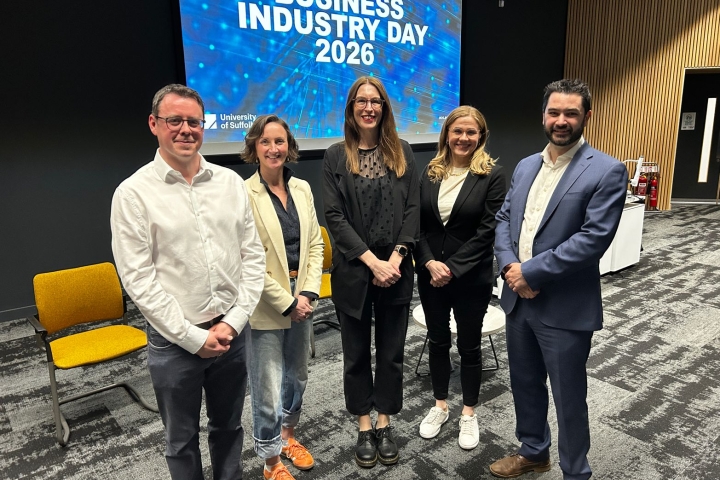
FE and HE students come together for Business Industry Day considering impact of AI on future careers

More than 120 students across Suffolk came together with industry professionals for a special Business Industry Day at the University of Suffolk this week to consider AI in their future careers.

The annual Business Industry Day aims to help local Further Education and Higher Education students gain insights from the world of work, to help them connect their learning in the classroom with current industries, and utilise expertise from representatives in international, national and local firms.

This year, students from the University’s own undergraduate and postgraduate programmes were joined by students from seven FE providers from across Suffolk and Essex to hear from Tom Cole, HSBC Non-Human Identity Control Framework Owner whose work helps protect the bank and its customers from cyber risks.

In addition, Accenture Managing Director, Shelby Flora. Dummett Copp’s UK and European Patent Attorney, Derek Holmes, and C-J Green, co-founder of CleverGoose also joined the students to share their expertise.

This year’s theme centred on AI in the workplace, exploring how the rapid expansion of AI is shaping jobs and career opportunities across a multitude of sectors, as well as how AI is being used day-to-day in the workplace, the challenges and opportunities it presents, and what AI means for graduates entering the workforce.

Claire Culley, Senior Lecturer in Marketing and Management at the University of Suffolk, who organised the day, said: “The Business Industry Day is a fantastic opportunity for students across the county and region to gain real-world insights, ask questions and network with industry professionals who can help shape their future careers.

“The growth of AI presents a wealth of opportunities and challenges to students when they transition from education into the workplace, and a dedicated event to help them explore this with experts in their industries is just one of the ways we work to ensure our students and graduates can use AI responsibly.

“Our thanks go out to the speakers at today’s event and for all the schools, colleges and sixth forms who have taken part.”

Three in four UK founders fear business impact from Iran War

Nearly three in four UK scale-up founders fear the Iran war dragging on will negatively affect their business, according to new research from Helm.

When 400 members of Helm, the UK’s largest community of scale-up founders, were asked in an online survey: ‘Are you worried that the Iran war dragging on will negatively affect your business?’ 72 per cent said ‘yes’, 7 per cent said ‘no’, and 21 per cent said ‘don’t know’.

The survey carried out between March 20-23 also asked: ‘Are you worried that energy price rises will cut your profitability or slow your growth?’ with 57 per cent saying ‘yes’, 36 per cent saying ‘no’, and 7 per cent saying ‘don’t know’.

Asked: ‘Has the Iran war exposed vulnerabilities in your supply chain?’ 14 per cent said ‘yes’, 11 per cent said ‘no’, and 75 per cent said ‘don’t know’.

Andreas Adamides, CEO of Helm, said: “The Iran war and spiralling energy prices are the final straw for many founders already operating under the weight of historic cost pressures. With 72% of our members now bracing for a direct hit to their business because of the conflict, this is an urgent warning that the Government cannot afford to ignore.”

“Ministers must act now to ease the burden and support those who are the UK’s primary engine for growth. We need more than just warm words; we need decisive support with energy costs and supply chain resilience to protect margins and stabilise the business landscape.

“If the Government fails to back firms during this crisis, they risk stalling the very businesses meant to power our economic recovery.”

The average Helm member is the founder of a company with an annual turnover of £21 million.

FM tenders: Why generic mobilisation timelines are costing you points

The UK facilities management sector contributes more than £65 billion to the UK economy each year, with over £13 billion coming directly from public sector contracts. With the market projected to grow significantly through to 2033, driven by government investment, net zero commitments and rising demand for energy efficient buildings, competition is building for FM tenders.

In public sector FM tenders, firms are increasingly losing marks for something surprisingly basic: their mobilisation plans. Following several high-profile contract transitions that failed to run smoothly, procurement teams now examine mobilisation sections far more closely. A recycled, one-size-fits-all timeline is no longer enough.

Executive Compass, a bid and tender writing specialist, examines how businesses can strengthen mobilisation responses to improve scoring and increase their chances of winning.

Why Mobilisation Sections Are Often Misjudged

Mobilisation is where the theory of a bid meets the reality of delivery. It covers everything from TUPE transfers and supply chain engagement to compliance frameworks, staff inductions, technology set up and asset verification. For FM contracts, which are operationally complex and involve multiple workstreams running simultaneously, the tolerance for error is minimal.

The problem is that many businesses approach mobilisation questions with a standard template, adjusting a few dates and resubmitting. Evaluators, many with experience of overseeing difficult contract transitions, can spot a generic plan immediately.

“Mobilisation responses are one of the areas where we see the biggest gap between what businesses submit and what evaluators are actually looking for,” said Christian Rowe, CEO at Executive Compass.

“A vague timeline with broad milestones tells an evaluator very little. What they want to see is a structured mobilisation plan with clear timescales, defined task dependencies and resources aligned to the competency required at each stage.

“That level of detail shows the bidder has considered how the contract will transition in practice, rather than relying on a generic approach.”

What Evaluators Expect to See

A strong mobilisation response demonstrates an understanding of the client’s operational environment, acknowledges the complexity of the transition and presents a credible, sequenced plan with clear ownership and contingencies.

“Procurement teams have become far more sophisticated in how they evaluate mobilisation,” says Rowe.

“They are looking for specificity. What are the dependencies? What happens if a key subcontractor is delayed? How will you maintain service continuity for building users during the switchover? If your response does not address those questions directly, you are going to lose marks.”

Commercial clarity is another area where bids often fall short. Misalignment between the pricing model and mobilisation approach can quickly undermine evaluator confidence.

Strengthening Mobilisation Through Independent Review

With mobilisation questions carrying significant quality weightings in FM tenders, a generic response can be the difference between winning and losing.

An independent bid review before submission can identify where a mobilisation plan lacks the specificity evaluators expect, where risks have been overlooked and where the narrative fails to reflect the particular contract being bid for.

“A bid review gives businesses an objective view of their submission before it goes in,” advises Rowe. “It’s also an opportunity to build stronger habits for future tenders. The feedback from a thorough review does not just improve one bid, it raises the standard across the board.”

In a competitive market where evaluators know exactly what a credible transition plan looks like, specificity and contract-focused detail are what separate high-scoring bids from the rest.

Phytoestrogens and Lignans in prostate health

Prostate health is something many men only start thinking about when problems appear.

Yet long before symptoms are noticeable, the choices we make around diet and lifestyle can influence how the prostate behaves as we age.

Among the nutrients attracting interest are phytoestrogens, and in particular a group called lignans, which are naturally present in many everyday plant foods. Read on to learn more about phytoestrogens and lignans in prostate health.

These compounds are not new. We have been eating them for generations in seeds, wholegrains, berries and vegetables. What is new is the growing body of research suggesting that plant-rich diets containing lignan-rich foods may offer gentle but meaningful support for long-term prostate health.¹

What are phytoestrogens and lignans?

Phytoestrogens are plant compounds that resemble human oestrogen just enough to interact with our hormone receptors, although in a much milder way.²

Lignans are one of the most common phytoestrogen groups in our diet. When we eat lignan-containing foods, the gut bacteria in our microbiome convert them into “enterolignans,” which are then absorbed into the bloodstream.³ These are the forms that seem to offer potential health benefits.

Why lignans matter for the prostate

The prostate is a hormonally sensitive gland. As men age, subtle shifts in hormone metabolism, inflammation and oxidative stress can all influence the risk of enlargement or cancer.

This is where lignans come into focus. Research suggests that enterolignans can help to:
• Support a healthier balance of sex hormones⁴
• Reduce inflammation and oxidative stress⁵
• Encourage a gut microbiome profile linked with healthier hormonal regulation⁶

Together, these effects may help create a more favourable environment for the prostate over the long term.

What the research shows so far

While no single food or nutrient can prevent prostate problems, the evidence around lignans is evolving. A major review of diet and prostate cancer highlights the potential importance of plant-rich dietary patterns, which often include lignan-containing foods.¹

More specific research on lignans shows mixed but intriguing findings. In prospective cohort studies, higher circulating levels of enterolactone, one of the main enterolignans, have in some cases been associated with a lower risk of prostate cancer, although results are not entirely consistent across all studies.⁷⁻⁸

An individual participant data meta-analysis pooling seven large studies found generally modest associations between circulating lignans and prostate cancer risk, again suggesting that lignans may be one helpful component within a broader plant-focused diet rather than a stand-alone protective agent.⁹

Clinical trials provide further insight. In a well-designed study of men awaiting prostate surgery, daily flaxseed supplementation was associated with reduced tumour cell proliferation compared with controls.¹⁰ This does not prove that lignans prevent prostate cancer, but it does highlight a promising mechanism that merits more investigation.

The wider dietary pattern matters too. Diets rich in vegetables, wholegrains, legumes and seeds consistently appear favourable for prostate health compared with traditional Western diets.¹¹

Where to find lignans in your diet

Lignans are widely distributed across the plant kingdom, making it easy to include them as part of everyday eating. Good sources include:

• Flaxseed
• Sesame seeds
• Rye, oats and barley
• Berries
• Broccoli and other vegetables
• Legumes

Flaxseed is one of the richest sources, but the goal is variety rather than relying on any single food.

Practical ways to add more lignans to your diet

Many lignan-containing foods fit easily into familiar meals. A spoonful of ground seeds on porridge, wholegrain bread at lunchtime, berries with yoghurt, or a sprinkle of a seed blend over salads or soups are simple ways to increase your intake. A ready-to-use mix of ground seeds can make this even easier.

A gentle step towards long-term prostate health

Lignans are not a magic bullet, but they are a natural part of a plant-rich diet that may help support healthier hormonal balance and better prostate outcomes as we age. And perhaps most importantly, these are easy, everyday foods that support overall health far beyond the prostate.

Doctor Alan is a Consultant Gastroenterologist who has made evidence-based dietary advice an essential part of his medical  practice. He has presented at numerous international medical conferences on the benefits of this approach to food, alongside other renowned advocates including Dr Michael Greger, Dr Michael Klaper, Dietician Brenda Davis, Dr Kim Williams, and Dr Neal Barnard.  He is an Ambassador for Plant-Based Health Professionals UK, a not-for-profit group which educates members of the public, health professionals, and policy makers on the incredible health benefits of a plant-based diet.

Certified in both Gastroenterology and General Internal Medicine, Doctor Alan completed his medical training in Ireland and Oxford. He has a specialist interest in the role of diet in the prevention and treatment of Crohn’s disease and Ulcerative Colitis. A fellow of the Royal College of Physicians, London, he has published several influential research papers in the field of Inflammatory Bowel Disease and is a dedicated advocate for the gut health benefits, and overall health benefits, of a whole-food plant-based approach to nutrition.  He lives in South Devon with his wife and three children.

Alan has written for the Daily Telegraph and the Irish Times. He has contributed to numerous best-selling publications, including “The Happy Health Plan” by Stephen and David Flynn, “How to Go Vegan” by Ian Theasby and Henry Firth of BOSH!, “How to Go Plant-Based” by Ella Mills, “Let’s Do This: How to use motivational psychology to change your habits” by Andy Ramage, and “Plant-Based Nutrition in Clinical Practice”, edited by Professor Shireen Kassam. HIs own best-selling book, ‘The Plant-Based Diet Revolution: 28 days to a happier gut and a healthier you’, is available wherever books are sold.

Immigration reforms set to reshape hiring plans for small businesses

From April 2026, the UK is expected to introduce sweeping reforms to its immigration system, the most significant overhaul of permanent settlement (Indefinite Leave to Remain, ILR) rules in decades. The scheme, known as Earned Settlement, is designed to reshape how migrants qualify for long-term residence, putting financial contribution and integration at the centre of eligibility.

Kadmos Immigration, a UK specialist immigration advisory firm, explains what the reforms entail, who will be affected, and what individuals and employers should prepare for.

What’s Changing From April 2026

A New ‘Earned Settlement’ Framework for Permanent Residence

Under the current system, most migrants on skilled worker, family and other qualifying visas can apply for ILR after five years’ lawful residence.

From April 2026, the government plans to introduce an “Earned Settlement” system that:

  • Raises the baseline qualifying period for most migrants to 10 years.
  • Introduces a points-based contribution model that can reduce or extend that period based on individual circumstances (e.g., high earnings, public service work or benefit use).
  • Adjusts qualifying periods, potentially shortening it to three years for very high earners, or lengthening it to 15 years or more for others — depending on contribution, earnings, immigration history and other factors.

Helena Sheizon, Immigration expert at Kadmos Immigration, explains:

“This reform represents a fundamental shift from a time-based route to permanent residence, to one focused on earned contribution. It aims to reward economic contribution and integration, but it also means that thousands of people already on paths to settlement will face new qualifying conditions and longer waits if they do not meet newly introduced criteria.”

Contribution and Penalty Points Will Matter

The Earned Settlement model will consider aspects such as:

  • Income levels: higher taxable earnings over a sustained period can reduce the time to settlement.
  • Employment in key public service sectors:  work in roles like health and education can accelerate eligibility.
  • English language proficiency: higher language skills may shorten qualifying periods.
  • Claims on public funds, previous visa breaches or irregular entry may increase qualifying periods significantly.

For example, someone with high earnings and strong integration may qualify faster than someone with lower income and intermittent work history.

Helena Sheizon, Immigration expert at Kadmos Immigration adds:

“What makes this system distinctive is the idea of earning settlement by measurable contribution. It will require people to demonstrate not just residence but economic engagement with the UK.”

English Language and Minimum Employment Requirements Tighten

Several groundwork reforms have already taken effect or will apply from early 2026, including:

  • A higher English language requirement (B2 level) for key work visas such as Skilled Worker, High Potential Individual and Scale-up visas.
  • Minimum income thresholds tied to both settlement and long-term visa eligibility.
  • Expanded enforcement and compliance measures affecting sponsors and employers.

Who Will Be Most Affected?

The reforms will touch thousands of people currently living and working in the UK:

  • Skilled workers and their dependents may face longer waits for settlement unless they meet the new earnings criteria.
  • Family visa holders on a five-year route may see their settlement timeline extended and additional requirements added, such as income test
  • Lower-paid workers, including those in sectors like social care or middle-skilled roles, may face baseline waits as long as 15 years before qualifying

What Has Changed Since 2025

These reforms follow a broader immigration strategy set out in the UK government’s recent White Paper and consulted on throughout late 2025. Key developments leading up to April 2026 include:

  • The higher English language requirement for work visa routes, effective from January 2026.
  • A reduction in Skilled Worker visa eligibility for some occupations since July 2025
  • A Statement of Changes to the Immigration Rules is expected in March 2026 following the Earned Settlement consultation which closed in February 2026. This will pave the way for implementation from April.

Helena Sheizon, Immigration expert at Kadmos Immigration, explains:

“The Immigration Reform expected from April 2026 marks a major turning point. The shift to an earned settlement model changes not only how long people must wait for permanent residence but what they must do.

For individuals and families planning long-term lives in the UK, this means greater complexity and new conditions. It also means that migrants cannot assume a simple five-year route to settlement will exist in the future, even if they entered under earlier expectations.”

Helena Sheizon, Immigration expert at Kadmos Immigration  adds:

“Employers and visa holders should review their settlement plans now and where possible schedule for early settlement, as this is in the interests of both the employers and employees.”

What Individuals and Employers Should Do Now

Kadmos Immigration recommends:

  • Reviewing current settlement timelines and check if small adjustments may facilitate quicker settlement
  • Engaging legal advice early for those close to settlement.

Monitoring government updates following the consultation closure and the Statement of Changes in March 2026.

Skip to content Skip to content