

[directorist_search_result]

High street bank eyes up town centre move after developer continues to invest in Ipswich

A high street bank has signed an agreement on new premises in Ipswich after a developer committed to a major redevelopment plan.

Lloyds Bank will move into the former H&M store in Tavern Street in the town centre in the summer of 2026, and works have now commenced on the transformation of the site.

ALB Group, the Nottingham based developer behind projects such as Sailmakers shopping centre, has continued its commitment to reinvigorating the Great British high street with the purchase of 21-23A Tavern Street for an undisclosed sum.

The art deco style building, which stands in one of the area’s main commercial and retail zones, was purchased by ALB in April 2025 after standing empty for nearly four years. Its conversion will provide commercial space while retaining the integrity of the building’s exterior design.

Arran Bailey, managing director at ALB Group, said: “We are excited to continue our investment journey in the heart of the historic town of Ipswich with what will be a standout commercial unit.”

John Morgan, director at Leonard Design Architects, said: “Across the UK, we are seeing a new generation of high-quality developments successfully bringing vacant retail space back into use with considered right-sized units.”

The vision for this building reflects a sustainable approach to town centre regeneration. It contributes and aligns directly to the council’s strategic vision for sustainable growth and regeneration by 2036.

Tim Lloyd, director at commercial property agency Cited, who originally marketed and sold the building to ALB, said: “There are many challenges posed when it comes to the regeneration of existing buildings. A number of vacant units in Ipswich, such as the former Debenhams department store, are still vacant due to the cost implications of reconfiguration. For example, in the case of the Debenhams building, the removal of the escalators and the building’s sizable rates are contributory factors based on its current configuration.

“The vision of ALB Group’s plan for the former H&M building considers the nature of the building and the needs of the consumer.”

In addition to ground floor commercial space, some 6,000 sq. ft of basement area will be available.

Tim said: “This space will have access from Tower Street and would be ideal for local leisure operators such as gyms or fitness studios.”

While Tavern Street is a busy pedestrianised retail hub close to Sailmakers and Buttermarket shopping centres, it is also close to heritage sites.

The building’s distinctive design, which will remain intact, fits well within this context. There is a blue plaque on the exterior of the building which is attributed to Geoffrey Chaucer. The poet’s family connection with the town is celebrated with this English Heritage signposting to the place where Geoffrey Chaucer’s grandfather, owned and occupied premises on the site in the 13th and 14th centuries.

Arran Bailey said: “I am passionate about investing in the high street and, where I can, saving some of the beautiful buildings that have stood empty for too long. ALB Group has been investing in towns and cities across the country, helping to reinvigorate and retain local shopping and commercial areas for the future. Ipswich is a beautiful town. We have invested in Sailmakers turning its fortunes around and we now plan to do the same on Tavern Street.”

It is anticipated that commercial space will be handed over to Lloyds in the summer.
Millions of Families in Line for Child Benefit Rate Increase

Millions of families in line for Child Benefit rate increase

  • More than 6.9 million families claiming Child Benefit will see an increase in payments from next week
  • Using the HMRC app is quickest and easiest way to claim Child Benefit and manage payments
  • Thousands of new parents are missing out on payments by delaying their claim

Millions of families claiming Child Benefit will see an increase in their payments from next week, as HM Revenue and Customs (HMRC) encourages those yet to claim to use the HMRC app or go online to claim theirs today.

From 6 April, claimants will receive £27.05 per week – or £1,406.60 a year – for the eldest or only child and £17.90 per week – or £930.80 a year – for each additional child, with no limit as to how many children parents can claim for. This is an annual increase of £52 and £33.80 respectively.

Latest figures show that while more than 6.9 million families receive Child Benefit payments, only 72% of families claimed it in their baby’s first year. A Child Benefit claim can only be backdated for up to 3 months from the date your claim is received by HMRC, which means thousands of families are missing out.

HMRC has released a YouTube video explaining how new parents can make a claim.

Myrtle Lloyd, HMRC’s Chief Customer Officer, said:

“Looking after a child can be expensive and especially a newborn baby. It takes a few minutes to claim Child Benefit via the app and doing so as soon as you can after your baby is born will ensure you don’t miss out on vital financial support.”

The quickest and easiest way for parents and carers to claim, view and manage Child Benefit payments is by downloading the free and secure HMRC app or by using the digital service. Since the launch of the digital service, more than 1.5 million families have gone online or used the HMRC app to claim their Child Benefit with latest figures showing almost 85% of claims are made this way.

Child Benefit is usually paid every 4 weeks and will automatically be paid into a bank account.

App users can track their Child Benefit payments with a simple swipe. Since April 2025 more than 928,000 parents have used the HMRC app to manage their Child Benefit account, including:

  • making a new claim
  • updating a change in circumstances 
  • amending personal or bank details
  • adding additional children to a claim
  • viewing or printing Proof of Entitlement to Child Benefit
  • telling us their children are continuing in full time, non-advanced education or approved training

To make a claim for Child Benefit, parents will need to create an online HMRC account and will need:

  • child’s birth or adoption certificate
  • bank details
  • National Insurance number for themselves and their partner, if they have one
  • child’s original birth or adoption certificate and passport or travel document, for children born outside the UK.

Anna Sharkey from the Money and Pensions Service, said:

“Use MoneyHelper’s free Benefits Calculator if you think you, or someone you know, might be eligible for Child Benefit. The calculator will show you all the benefits you’re eligible for.

“Other MoneyHelper tools for new parents include the Baby Cost Calculator to help you budget when having a baby, and the Baby Money Timeline which gives you key dates to help you plan your finances.

“Visit MoneyHelper.org.uk for free and impartial money guidance for everyday money management.”

Parents in receipt of Child Benefit payments, or who are making a new claim where either they or their partner have income of more than £60,000 a year, may have to pay the High Income Child Benefit Charge (HICBC).

Parents eligible for the charge can use the HICBC PAYE digital service to pay the charge through their PAYE tax code rather than completing a Self Assessment tax return, if they have no other reason to file a return.

The service is available to parents who are liable for the charge, where their income exceeds the HICBC threshold. Eligible parents can register via the HMRC app or on GOV.UK.

Parents who choose to pay the charge through their Self Assessment can continue to do so.

Families who have previously opted out of Child Benefit payments can opt back in and restart their payments quickly and easily on the HMRC app or online.

A person living in a household subject to the HICBC will still receive National Insurance credits if they claim Child Benefit but choose to opt out of receiving payments.


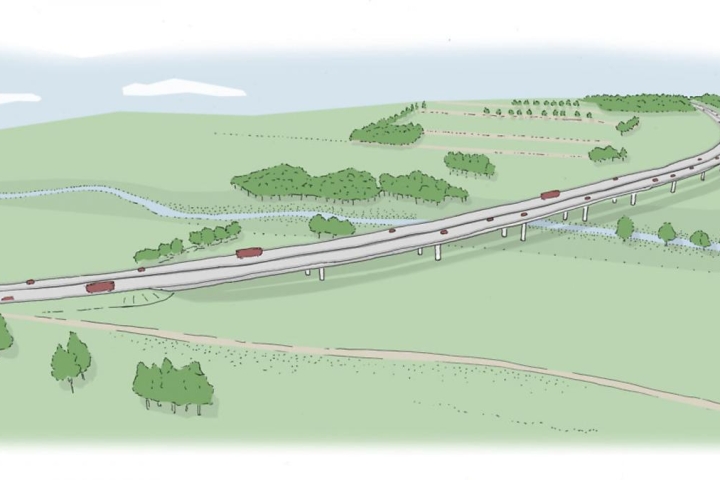
Norwich Western Link confirmed in the Department for Transport’s Major Road Network programme

Norfolk County Council has been told that the Department for Transport (DfT) has concluded its review and that the Council’s Norwich Western Link project – to improve travel and tackle traffic problems to the west of Norwich – will remain in DfT’s Major Road Network programme.

This should mean that funding of nearly £1 million, which DfT agreed ‘in principle’ last July, will be released to the County Council. In turn, this means the project team can continue with their work to assess potential options for a Norwich Western Link, with the intention of arriving at a shortlist of options and then carrying out a public consultation.

Cllr Kay Mason Billig, Leader of Norfolk County Council, said: “We made a strong case to the Government about the need to tackle the transport problems to the west of Norwich and I’m glad they’ve listened. With further housing and business growth planned in and around Norwich, it’s vital that we continue to progress this project and ensure we deliver an effective solution that will improve travel in the area.”

Cllr Graham Plant, Cabinet Member for Highways, Infrastructure and Transport at Norfolk County Council, said: “This will be very welcome news for the local residents and businesses who are being affected by traffic congestion and delays on small, local roads every day. This means the project team can ramp up their work to find viable options for a Norwich Western Link and get us closer to delivering a solution.”

The project team will need to do some work to update the project’s timetable before being able to confirm when they expect to be able to conduct the consultation.

Fly-tippers warned after prosecutions

Residents are being reminded to dispose of waste properly after two fly-tippers were given heavy fines by magistrates.

The council’s waste team actively works to tackle fly-tipping in Peterborough and will look to prosecute those who dump rubbish or use unlicensed waste disposers to get rid of waste which then gets fly-tipped and is traced back to them.

The authority is also increasing its work to raise awareness of the issue and will shortly be launching a new website page asking the public to help us identify offenders who we believe have flytipped waste.

Meanwhile, two offenders were recently fined at Peterborough Magistrates’ Court after pleading guilty to fly-tipping offences following prosecutions by the council.

Jaroslav Kocko admitted paying a company to take household waste, without checking whether they were licensed. The waste was later found in Oxney Road and traced back to him by officers. Kocko was ordered to pay a fine of £400, costs of £200 and victim surcharge of £106.

Ivan Curtis also appeared before magistrates recently and admitted dumping garden waste in Newborough which was caught on one of the council’s covert CCTV cameras. He was ordered to pay costs of £499.45, a fine of £400 and a surcharge of £160.

Councillor Angus Ellis, Cabinet Member for Environment and Transport, said: “We are fully committed to tackling fly-tipping which is a blight on our communities and something we take extremely seriously. Whenever we obtain evidence of fly-tipping we will investigate and look to issue either a fine or secure a conviction in the courts.

“These recent prosecutions show that anyone considering dumping waste illegally can end up out of pocket, so we would urge residents not to run the risk. There are several ways to get rid of waste legally, such as by visiting the Household Recycling Centre in Fengate, using a licensed waste company or our bulky waste collection service.”

The council has stepped up its efforts to tackle fly-tipping in recent years. In May 2024 the authority was awarded just under £50,000 by the Department for Environment, Food and Rural Affairs (DEFRA) as part of a nationwide scheme to target fly-tipping hotspots. The council used the funds to provide further cameras at hotspot locations to assist with collecting evidence to allow for enforcement actions.

Fixed Penalty Notices for fly-tipping offences have also been increased to the maximum amount. As part of work to raise awareness, officers regularly visit local schools to teach children about the importance of proper waste disposal.

You can find out more advice and information about correct waste disposal and how the council tackles fly-tipping on our website.

Fly-tipping can be reported either online or by calling 01733 747474. Anyone who witnesses fly-tipping taking place should contact Police on 101.

Expert shares how increased scrutiny is changing UK logistics

The UK’s £170 billion logistics sector employs more than eight percent of the nation’s workforce, moving goods that keep businesses, retailers, and households functioning. With regulatory pressure mounting across environmental standards, border compliance, and supply chain transparency, operators face an extremely complex and demanding environment.

Since the UK’s official departure from the European Union in early 2020, Brexit has completely changed the landscape. UK to EU exports fell by 27 percent and imports by 32 percent between 2021 and 2023, and the administrative burden that came with those trade changes has never fully eased.

While cross-border movements that were once seamless, customs declarations, rules of origin certification, Export Health Certificates, and safety and security declarations are now standard requirements.

“The sheer volume of compliance obligations that logistics managers are now expected to absorb is overwhelming,” said Andrew Thompson CEO at Cleveland Containers. “What has changed most is not just the number of requirements but how quickly they evolve. Businesses that were managing comfortably two years ago are finding themselves exposed as the goalposts continue to move.”

Here, Cleveland Containers, a leading supplier of shipping containers, offer their insights.

Where Businesses Are Getting Caught Out

Environmental compliance is one of the fastest-growing pressure points. The UK’s Minimum Energy Efficiency Standards are widely expected to tighten to an EPC B rating for commercial properties by 2030, which will force costly upgrades across older warehousing stock. Biodiversity Net Gain requirements now apply to most new logistics developments, adding another layer of planning complexity for operators looking to expand their footprint.

At the same time, the UK’s Carbon Border Adjustment Mechanism is progressing through legislation, with full implementation expected in 2027. Businesses importing carbon-intensive goods will face new cost obligations, meaning that those that haven’t yet mapped their supply chain’s carbon footprint will quickly find themselves behind.

For operations with EU-facing trade, regulatory divergence from EU standards continues to create friction for many during daily operation, including border delays, temperature breaches in refrigerated freight, and rising administrative costs. Research suggests businesses with EU-connected supply chains will face logistics cost increases of between 12 and 18 percent by 2027, as UK and EU standards drift further apart.

“Environmental compliance is catching a lot of businesses off guard because several regulations are running in parallel and it’s complex,” said Thompson. “Operators who are focused purely on transport costs and border compliance often haven’t fully accounted for what they will need to spend on their physical infrastructure.”

Rule Changes Impacting Workforces

Driver numbers are sitting around 15 percent below pre-Brexit levels which is attributed to the loss of EU workers, following the change in immigration rules. The knock-on effect impacts delivery reliability, service levels, and cost across the board.

As firms compete for a smaller pool of qualified drivers, wages have risen and training investment has increased. While both are welcome developments for workers, this also adds to the sector’s cost pressures.

With updated guidance published in March 2025, Modern Slavery Act obligations are also tightening, placing greater scrutiny on supply chain transparency, particularly for businesses that use subcontractors.

Building Compliance Without Sacrificing Efficiency

Despite the pressure, the businesses managing things best are those treating compliance as an operational discipline rather than a reactive exercise.

“The instinct is to deal with each requirement as it arrives, but that approach is expensive and disruptive,” warns Thompson. “The operators who are in the strongest position are those who have built compliance thinking into how they plan routes, manage contracts, and procure storage. It becomes part of the process rather than a problem to fix.”

Digital customs platforms, automated documentation systems, and real-time tracking tools are reducing the administrative load for businesses managing high volumes of cross-border movements. Early investment in these systems is paying off as scrutiny increases and the cost of errors grows.

For businesses working with external storage and container solutions as part of a flexible logistics model, ensuring those assets meet current and forthcoming EPC and sustainability requirements is an increasingly important consideration when planning capacity.

“Scrutiny across this sector is not going to ease,” said Thompson. “The businesses that will navigate this well are the ones building resilience now, not waiting until a regulation deadline forces the issue.”

Refuge data exposes scale of post-separation abuse amid widespread public misunderstanding

Refuge, the UK’s largest specialist domestic abuse charity, is raising the alarm over a worrying gap in the public’s understanding of post-separation abuse, despite persistently high reports to its National Domestic Abuse Helpline.

The criminalisation of controlling or coercive behaviour after separation was introduced through the Domestic Abuse Act 2021 and came into force on 5 April 2023. Now, Refuge reveals reports of post-separation abuse to its National Domestic Abuse Helpline remain alarmingly high, while the public significantly underestimates the threat posed by former partners.

New YouGov data commissioned by Refuge finds that while 71% of UK adults correctly believe that a woman is most likely to be abused by someone she knows, there is a widespread misunderstanding about who that person is. Among those who chose “someone she knows”, 78% said a current partner is most likely to be the abuser, while just 12% identified an ex-partner.

Data from Refuge’s National Domestic Abuse Helpline shows that post-separation abuse is far more common than people think. In 2025, 19,674 callers were asked who their perpetrator was, with 42% (8,283) identifying a former partner. Of those asked, 47% (9,176) reported a current partner, yet only a small proportion of the public recognise an ex-partner as a likely abuser.

Refuge’s Helpline team have identified a number of dangerous patterns in post-separation abuse cases, including perpetrators breaching bail conditions, threatening survivors’ children or new partners, and using child custody arrangements to maintain control or to avoid child maintenance payments. Helpline advisors highlight the devastating impact this abuse has on survivors, many of whom live with trauma as a result of their experiences.

The Government’s recent Violence Against Women and Girls (VAWG) Strategy, titled Freedom from Violence and Abuse, outlines three key pillars, including pursuing perpetrators. However, it fails to address the need for stronger institutional understanding of post-separation abuse within the systems that allow it to persist, such as the family courts.

As the three-year anniversary of the offence approaches, Refuge is raising public awareness of post-separation abuse and calling for stronger Government action to protect survivors from this insidious yet often-hidden form of abuse. This includes introducing mandatory training for police and the judiciary on the dynamics of domestic abuse, enabling the justice system to better recognise and respond to post-separation abuse.

Sasha*, a survivor supported by Refuge, experienced domestic abuse after separating from her partner, who is also the father of her child. She said:

“When we split up, he would show up unannounced, demanding to be let in under the guise of wanting to see my son. I moved to a new place, but he tracked us down using geolocation data in photos of my son that he had insisted I send because he wasn’t spending Christmas with him.

“The stalking and abuse kept ramping up. I did a year abroad as part of my degree and he flew 900 miles to find me. Later, after he threatened to kill himself and said it would be my fault, I reached breaking point.

“The police put a community resolution in place, saying he was not to come near me or try to contact me. But he broke that four times: he went to my gym, my house, my workplace, and even approached me in public. I eventually had to relocate with my son.

“Abuse doesn’t always end with separation and may not even begin or escalate until this point. There needs to be much more awareness of this. My son’s and my safety was on the line for years after I split from my ex. I want no woman or child to go through what we did.”

Gemma Sherrington, CEO of Refuge, said:
“Sadly, Refuge’s National Domestic Abuse Helpline regularly hears from survivors experiencing abuse after separation. But as the data shows, there is still a long way to go when it comes to public understanding of this form of abuse and the very real danger it can pose.

“While all forms of domestic abuse are frequently misunderstood within the justice system, post-separation abuse is particularly likely to go unrecognised by professionals, leaving survivors at heightened risk of harm.

“Women and their children deserve protection at every stage of their journey. Post-separation abuse must be treated with the seriousness it requires so that more survivors can access vital support.”

British Airways announces major winter 2026 expansion

British Airways has announced a significant planned expansion to its network for winter 2026, with the addition of two new destinations, Melbourne in Australia and Colombo in Sri Lanka.

In addition, the airline will be adding more flights for winter to Cape Town (South Africa), Haneda (Tokyo), Bridgetown (Barbados), Kingston (Jamaica) and San Jose (Costa Rica). The new schedule reflects a nine per cent* growth in British Airways’ long-haul route network, as the airline continues to invest in providing more choice for customers.

These planned new routes and frequency growth for winter 2026 is in addition to short-term capacity increases to destinations to meet customer demand, as a result of the situation in the Middle East. British Airways added seven extra return services to Bangkok and Singapore in the last week and will continue to review its schedule and add additional flights to destinations as needed.

Demand for travel continues to remain strong, and as customers look for alternative holiday destinations in the immediate term, British Airways Holidays has seen a rise in searches for popular destinations like Antigua and Gran Canaria, which have increased by 63% and 50% respectively.

Neil Chernoff, British Airways’ Chief Planning and Strategy Officer, said: “We’re delighted to announce sizeable growth to our flying schedule for winter 2026, including two notable new destinations that I’m confident will prove popular with our customers. We’re also increasing services across several high-demand routes around the world. Together, these changes represent a significant investment in our long-haul leisure network, adding even more options and choice for our customers.

“Elsewhere, we know there is short-term demand as a result of the situation in the Middle East. To support customers with alternative routes from popular destinations we have already launched additional flights, and we will continue to monitor customer demand and add flights to our schedule if we’re able to do so.”

WINTER 2026

Melbourne, Australia

British Airways will commence flights to Melbourne in Australia from 9 January 2027, launching in time for the Australian Open and the Melbourne Grand Prix. Flights will operate year-round from London Heathrow, via Kuala Lumpur, on a daily basis.

Melbourne is the capital of the state of Victoria, and is known as the country’s culture hub and world-renowned for its coffee scene. It’s also the gateway to southern Australia and its array of attractions including Grampian’s National Park, the Great Ocean Road and the High Country with its breathtaking landscapes and famed vineyards.

Customers have a choice of four cabins – World Traveller (economy), World Traveller Plus (premium economy), Club World (business class) and First. Return fares start from £1,130 (including taxes and carrier fees) and are on sale from 17 March.

Colombo, Sri Lanka

Launching on 23 October 2026, British Airways will fly three times per week from London Gatwick to Colombo, the vibrant gateway to Sri Lanka.

The route will operate for the winter season only, taking customers directly to the Indian Ocean island and home to picturesque beaches, scenic wildlife, vibrant culture and rich cuisine.

Customers have a choice of three cabins – World Traveller (economy), World Traveller Plus (premium economy) and Club World (business class). Return fares start from £620 (including taxes and carrier fees) and are on sale from 17 March.

Frequency growth

In a significant planned expansion to the winter 2026 schedule, the airline is increasing frequencies across several of its popular routes:

  • A third daily flight from London Heathrow to Cape Town, South Africa, will start in December
  • London Heathrow to Haneda in Tokyo, Japan increases to double daily from the end of March, and continues throughout the winter schedule
  • A daily Barbados flight from London Gatwick will commence on 25 October, a new route that will complement the existing London Heathrow service to the Caribbean island, and will have onward tags to Grenada, Guyana and Tobago
  • There is more dedicated capacity to St Lucia in the Caribbean, as daily flights become a standalone service from 25 October
  • San José in Costa Rica increases to five per week, and moves to London Heathrow
  • Kingston in Jamaica and Punta Cana in the Dominican Republic, both served from London Gatwick, will go up to four per week
  • To the US, New Orleans increases to four per week, Baltimore becomes daily and Houston moves to 12 per week
  • Delhi continues to be served three times a day, as the frequency growth introduced at the start of the summer season remains in place
  • London Heathrow to Abu Dhabi will return for its planned winter schedule, operating daily from 25 October

SHORT-TERM CAPACITY

In addition to the planned growth for winter 2026, British Airways has also introduced seven additional return services from London to Bangkok and Singapore over recent weeks, to meet rising demand for these routes as a result of the situation in the Middle East.

The airline has added more than 3,300 extra seats between 10 and 19 March for customers travelling to and from these destinations and continues to monitor its network closely to make adjustments based on where customers want to fly.

British Airways has extended the temporary reduction in flights to the region, with flights to Amman, Bahrain, Dubai and Tel Aviv cancelled up to and including 31 May, and flights to Doha cancelled until 30 April.

MOST SEARCHED DESTINATIONS

 British Airways Holidays has seen a boost in interest for holidays to the Caribbean, with Barbados searches on ba.com up 46% and Antigua searches up 63% versus last year. Searches for Indian Ocean holidays have also increased, with the Maldives up 32% and Mauritius up 42% versus last year. Closer to home, holiday searches to the Canary Islands are on the rise, with Tenerife up 38% and Gran Canaria up 50% versus last year.

The airline has also seen similar trends for flight searches, with the Maldives up 74%, Barbados up 18% and St Lucia up 26%, when compared to February 2026. Overall, searches for flights from the UK to the Caribbean, South West Pacific and South Asia have increased by 40%, and for short-lead travel in the next two weeks, figures are up 155%.

Two new bespoke specifications bring Boodles’ sparkle

Two iconic British brands with exceptional northern heritage, Boodles and Bentley, have come together for the second time to create an exquisite design specification, available across all Bentley models. The collaboration brings Boodles’ distinctive design language into the world of Bentley, resulting in a choice of two bespoke specifications that reflect both brands’ personality across each detail.

The reignited collaboration follows the success of the co-created one-of-one ‘Be Boodles’ Bentley Continental GTC in 2024, sold on the night of launch. The car featured a timeless exterior colour palette in Anthracite and Light Grey, and a beautifully designed interior with lofted quilting and a blind stitch repeat pattern of the iconic interlocking ‘Be Boodles’ motif, and resulted in Bentley receiving enquiries to apply this specification to other models in the range.

Customers can now configure their Bentley with a choice of two bespoke specifications – Standard or Dark. The first car configured with the Boodles Standard specification – a Bentayga EWB Azure – celebrates the launch of this second phase and is available for customers to order via Bentley retailers, for delivery in 2026. Combining Bentley’s engineering expertise with Boodles’ eye for elegance and individuality, each customer configuration will be tailored with precision and meticulous attention to detail.

Understated elegance

Drawing inspiration from the modern colour spectrum of the 2024 ‘Be Boodles’ Continental GTC, the Standard specification has a calming air of elegance with Gravity Grey and Linen hides, Autumn Stone and Piano Linen veneers and feature subtle diamond detailing and mood lighting. A bespoke diamond encrusted ‘Be Boodles’ design adorns the centre console. Accents of Powder Pink flow throughout the cabin in the form of contrast piping and embroidery, and painted pinstripes to the veneers nod to the iconic Boodles brand colours. The car’s striking Anthracite exterior includes jewel-like self-levelling wheel badges, Boodles badging and subtle Powder Pink painted pinstripes on the mirror caps.

In contrast, the Dark specification has similar options with a moodier edge. The Satin Anthracite exterior finish is complemented with a Beluga and Baroda interior and Piano Black veneer. The Powder Pink accents from the Standard specification are replaced with touches of Silver and Chrome embroidery, piping and paint to reflect the platinum and 18 carat white gold as part of the ‘Be Boodles’ jewellery collection.

Northern heritage and craftsmanship

Founded in Liverpool, Boodles has remained a family-run jeweller throughout its 228-year history – now with 10 showrooms across London, the northwest of England and Dublin. Only 30 miles as the crow flies, is Bentley’s factory in Crewe, where luxury automobiles have been designed and manufactured for the past 80 years. Both Boodles and Bentley believe firmly in British design and craftsmanship, and the latest collaboration between the two brands brings together some of the best creative minds and craftspeople in the country. 

Nicola Brown, Head of Marketing for Bentley EMEA says of the project:
“Even as a global business, Bentley’s British roots remain central to who we are, including our commitment to celebrating fellow master craftspeople here in the UK. Both Boodles and Bentley share a devotion to creating timeless luxury through meticulous attention to detail, whether in the hand-stitched interiors of a Bentley or the precision cut gemstones in a Boodles jewellery piece. Bringing these elements together in our new co-branded design pack offers customers a truly immersive luxury experience and we are excited to present the first Boodles Bentayga for 2026.”

Honour Wainwright, sixth generation Boodles family member and Director of Marketing says:
“The next chapter of our collaboration with Bentley feels like a very natural progression. We share not only northern roots, but also a commitment to British craftsmanship and attention to detail. Bringing the Boodles design language into Bentley’s world once again has been an incredibly rewarding process, and we’re delighted to see it evolve into something customers can now make their own.”

National Express sees holiday booking surge

With the cost of fuel prices through the roof, adults are concerned about the ever growing prices, especially with the Easter holidays just around the corner.

Bookings for coach travel with the National Express are seeing a rise ahead of the Easter holidays, as cost-conscious families look for more affordable ways to travel across the UK. With reports of a 40% overall increase in the last two weeks alone.

VisitBritain’s latest Domestic Sentiment Tracker shows 64% of UK adults report being impacted by the cost of living crisis. Many saying they are tightening their budgets or reducing overall spending, with financial pressures emerging as a key obstacle with travelling.

In fact, 31% say affordability is one of the main reasons preventing them from taking an overnight trip within the UK, while 23% say rising fuel costs are discouraging them from travelling altogether.

National Express says coach travel offers a practical, budget-friendly and comfortable alternative for those keen to get away in the UK or further afield, without the added expense or driving.

Director of Commercial at National Express, Helen Smyth said,

“People still want to get away this Easter and spend quality time with their family or simply switch off for a few days. But with fuel prices continuing to rise, many are looking for more cost-effective ways to get around.

“Coach travel allows people to enjoy a spring getaway without worrying about the cost of filling up the car, parking or other driving expenses – helping to keep UK breaks and airport travel for holidays abroad more affordable.

She added:

“With hundreds of great value, reliable and frequent coaches serving destinations across the UK including all major airports, those seeking an Easter or spring break have one less thing to worry about and can make the most of their budget.”

Even with the pressures of finances, families still want to venture off on holidays, creating those special memories with their loved ones.

And if leaving the car at home and taking the coach allows families to head off on that new adventure this Easter, that’s what they’ll do.

National Express coaches connect hundreds of destinations across the UK, offering comfortable leather reclining seats, free Wi-Fi on selected routes, convenient USB charging points, and a generous luggage allowance of up to 20kg.


For more information, and to plan your next journey this Easter, click here

Skip to content Skip to content