[directorist_search_result]

Karren Brady Leaves West Ham and the Premier League is Down to its Last Woman Standing: Lina Souloukou

Karren Brady leaving West Ham is not just a West Ham story. It is a Premier League story, a governance story and, most of all, a warning story. Brady has been one of the most visible women in the English men’s game for years, a vice-chair who helped steer West Ham through the London Stadium move, ownership changes and the era that eventually delivered the Europa Conference League. With Brady stepping away after 16 years, English football loses one of the few women who has occupied real power in the top flight, not just a ceremonial seat near it.

That is why Lina Souloukou at Nottingham Forest matters so much now. Her title is not decorative, and nor is her influence. In the daily running of Forest, she is no background extra. She is central to the club’s direction, and with Forest chasing another major European step, her role is only going to become more significant. She is not loud, not theatrical, not forever auditioning for the cameras. She feels more like a still centre in a sport addicted to noise. She goes about her work with quiet authority, with professionalism rather than performance, and that has become one of her defining strengths. Souloukou also brings with her serious European pedigree, having been involved in three European semi-final runs over the last four years, the kind of elite-level experience that sharpens judgement and steadies an organisation. In an industry that too often runs hot, she brings clarity, order and calm.

That is what makes this moment feel so jarring. In 2026, the Premier League should not be arriving at a point where Souloukou appears to be the lone woman holding a chief executive-level post. Denise Barrett-Baxendale has gone from Everton. Susan Whelan has gone from Leicester City. Brady is now going at West Ham. One by one, the women who reached the upper floors have left the building, and the corridor behind them has not exactly filled up. It is difficult to dress that up as coincidence. It looks more like a structural failure.

And that is the uncomfortable truth for football. Women do not simply tick a diversity box in senior leadership. They add balance. They add a different lens, a different tempo, a different way of navigating pressure. That is not to say men cannot lead calmly or brilliantly, because of course they can. But in a testosterone-driven environment such as football, balance matters. It matters in decision-making, in communication, in culture and in crisis. The strongest leadership teams are rarely built on one tone, one instinct or one type of authority. Women have repeatedly shown, in football and beyond, that they bring composure, strategic intelligence, emotional control and resilience at the highest level. Their track record has been excellent. The issue is not whether women can do these jobs. The issue is why football still makes it so hard for more of them to get them.

When football looks as male as it still does at the top, it becomes harder to pretend the problem is merely one of patience, timing or “the right candidate”. Football does not have a shortage of qualified women. It has a culture problem and an access problem. It has too often remained a place where power is passed around familiar circles, where the face that fits still matters too much, and where women are frequently expected to prove themselves over and over again in ways men are not.

That culture problem is not confined to offices and boardrooms. It stretches across the game. The abuse aimed at women in football, whether they are executives, commentators, pundits, referees or officials, has become one of the sport’s ugliest constants. Women in visible roles are still judged through a harsher lens. They are challenged more quickly, mocked more personally and abused more viciously. Female commentators are dismissed before they finish a sentence. Female officials are scrutinised with a venom that says more about the audience than the performance. Women who step into football’s public spaces often do so knowing they will have to absorb a level of sexism and hostility that many men simply never encounter.

So when the game asks why more women do not push for senior jobs in men’s football, it should begin with a mirror. Why would ambitious executives line up for an industry that still too often makes women fight for authority, then fight to keep it, then fight to be heard when the abuse begins? Why would female entrepreneurs, CEOs and senior leaders look at football and see it as a natural home when the temperature is so high and the resistance so stubborn? There are so many brilliant women thriving in other industries, including sport more broadly, and one of football’s great failings is that it has not made itself attractive enough to them.

This is where Brady’s own story becomes complicated, and important. She has been praised, criticised, admired and resented in almost equal measure, sometimes for reasons rooted in performance, sometimes for reasons rooted in football’s discomfort with powerful women. Senior figures should be accountable, and Brady was, but she also became a highly visible lightning rod at West Ham, often absorbing public anger in a regime where every major football decision did not begin and end with her. David Sullivan has come under intense pressure over West Ham’s direction and over a sequence of managerial calls that have not always convinced, yet Brady often stood in the line of fire because she was the visible face of the boardroom. That was the burden of being both powerful and public. Her legacy is not spotless, because nobody’s is, but it is substantial. She made it easier to imagine women in the upper tier of the men’s game, even if football has done a poor job of ensuring more followed behind.

Souloukou now inherits, in symbolic terms, a loneliness she did not create. The danger is that she gets talked about as an exception, a rarity, a one-off. That would be unfair to her and damning for the game. Forest did not bring her in to decorate the place. They appointed an executive with real weight, real experience and a reputation for composure in volatile environments. If Forest qualify again for the Champions League, whether through league performance or by going all the way in Europe, her influence will only grow, because European qualification multiplies scrutiny, complexity and opportunity. In that environment, calm is not cosmetic. Calm is a competitive advantage.

There is also an uncomfortable contradiction at the heart of sport more broadly. Women are still underrepresented in senior positions across sport, but football feels particularly backward. There are women doing major jobs elsewhere, across governing bodies, event leadership and elite sport administration, proving again and again that the issue is not capability. It is opportunity. It is recruitment. It is trust. It is whether the people making the appointments are genuinely willing to broaden their thinking, or whether they are merely paying lip service to inclusion while falling back on the same patterns.

And then there is the other side of the imbalance, which football rarely examines with enough honesty. If there are too few women in senior positions in the men’s game, there are plenty of men in senior roles across women’s sport. That contrast should provoke real discomfort. The barriers seem to work one way. Men continue to find routes into leadership across the game, while women still hit the ceiling in men’s football far too quickly. That tells its own story. This is not just about a pipeline problem. It is about power, who is trusted with it and how stubbornly the game still protects the traditional image of what authority is supposed to look like.

So what is going on here? Part of it is network hiring. Men’s football still loves familiarity and still confuses experience with resemblance. Part of it is tribalism, because clubs are emotional institutions and owners often retreat toward the known when the pressure rises. Part of it is the climate itself, where abuse, scrutiny and gendered hostility make the industry less attractive than others for talented women who could flourish elsewhere with less bile and less theatre. And part of it is simple inertia, football’s favourite hiding place. It is easier to say change is hard than to admit exclusion is convenient.

The answer is not to romanticise women as saviours or paint men as the problem in every room. It is to recognise that the game is narrowing its own intelligence by recruiting from too small and too familiar a pool. More women in senior positions would not magically fix poor ownership, rash managerial appointments or chaotic strategy. But broader leadership would improve the quality of decision-making, diversify the instincts in the room and dilute the groupthink that has so often left clubs lurching between vanity and panic. Football says it wants innovation, resilience and better governance. Then it keeps walking past an enormous section of the talent market.

That is why Brady’s departure should land as more than a farewell, and why Souloukou’s presence at Forest should be seen as more than an anomaly. This ought to be a prompt for English football to ask itself a blunt question. In 2026, does it really want to be a modern industry, or does it still prefer being an old boys’ club in a sharper suit? Because if Souloukou ends up as the last woman left at that level in the Premier League, the issue will not be symbolism. It will be an indictment.

London Stansted Jobs Fair Draws 1,500 Jobseekers As Summer Recruitment Drive Begins

London Stansted has hailed its latest Jobs Fair a success after welcoming 1,500 job seekers to the airport as employers ramp up recruitment ahead of the summer season.
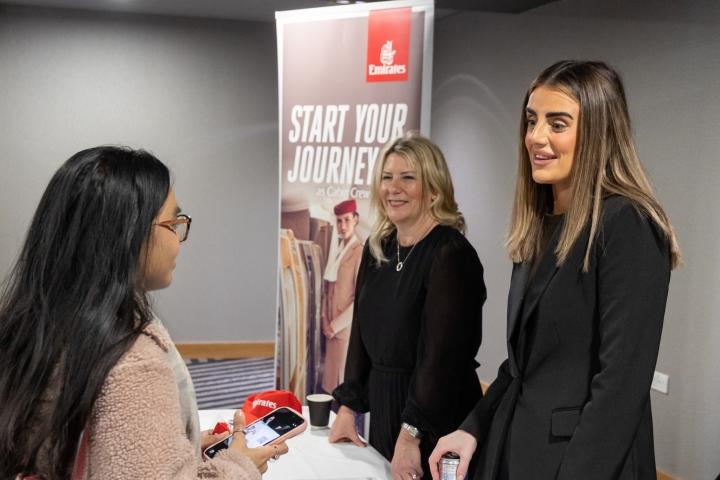
The event, held at the Radisson Blu Hotel on Wednesday 22 April, brought together 30 airport companies and business partners, offering more than 500 job opportunities across roles including customer service, security, retail, hospitality, logistics and airport operations.
Jobseekers were able to meet recruiters throughout the day, with several companies carrying out on-the-spot interviews.
Among the employers represented were MAG Stansted, Emirates, Ryanair, Jet2, SSP, Swissport, UPS and Border Force, giving attendees the chance to learn more about careers at the airport.
Alongside employers, a number of support organisations were also present to provide advice and guidance. These included the Department for Work and Pensions, National Careers Service, Stansted Academy, Harlow College and the Stansted Airport Commuter Centre, offering information on training, career pathways and travel options.
Nathan Mullane, Employment & Skills Manager at London Stansted, said:
“With hundreds of vacancies available, this event played a vital role in connecting local people with careers across the airport. It also highlights our wider commitment to supporting skills, employment and economic growth across the region.”
London Stansted is home to more than 12,000 employees working across 200 on-airport companies, making it the region’s largest single-site employer.

Thrive Launches Abacode Compliance Services To Help Businesses Strengthen Cyber And Regulatory Standards

Thrive Launches Abacode Compliance Services to Help Organisations Build and Maintain Continuous Compliance

New offering combines expert consulting to streamline audit readiness and create measurable business value

Thrive, a global technology outsourcing provider for AI, cybersecurity, cloud, and IT managed services, today announced the launch of Abacode Compliance Services, its managed Governance, Risk, and Compliance (GRC) portfolio designed to help organisations establish, operationalise, and sustain continuous compliance programs. This launch follows Thrive’s July 2025 acquisition of Abacode.

As compliance requirements grow more complex, many organisations continue to struggle with visibility and program effectiveness. According to Gartner, only 37% of executives are confident they can track their company’s compliance program effectiveness. Thrive’s new managed GRC services address that challenge by aligning governance, security, and operational execution to create measurable business value.

Thrive’s new service portfolio offers our clients a seasoned compliance consulting team experienced in helping organisations navigate evolving regulatory requirements. Through a structured, hands-on engagement model, Abacode Compliance Services enables organisations to move beyond point-in-time assessments and toward a more strategic, ongoing approach to compliance.

“Compliance should not be a one-time exercise or a box to check,” said Rolando Torres, Vice President, Cyber Consulting Group at Thrive. “With Abacode Compliance Services, organisations can take a more strategic, continuous approach that connects governance, risk, and cybersecurity to strengthen resilience, simplify audit readiness, and create long-term business value.”

Backed by Thrive’s broader security foundation, including 24×7 security monitoring and support, a U.S.-based security operations center, dedicated cyber incident response capabilities, and advanced backup and recovery services, the new offering gives organisations a more integrated path to managing cyber risk and compliance obligations. Other notable capabilities include: 

  • Baseline assessments of current IT environments, processes, and compliance readiness
  • Program implementation through policy development, roadmap creation, and compliance portal setup
  • Continuous compliance support through system monitoring, documentation management, and annual policy and assessment updates
  • Audit and certification support, including audit preparation, support, and expert guidance throughout the audit process
  • A central compliance portal, which works alongside the Thrive Client Portal to provide centralised documentation, task automation, evidence tracking, and real-time visibility into compliance and security status 

Abacode Compliance Services supports a broad set of leading regulations and frameworks, including CMMC Level 2, PCI-DSS, HIPAA, TISAX, NIST SP 800-171 and 800-172, CIS Controls, GDPR, SOC 2, ISO 27001, and ISO 42001, among others.

For more information about Thrive’s compliance offerings, visit https://thrivenextgen.com/compliance-regulatory-services/

European Yu-Gi-Oh! National Championships 2026 Launch With UK Events And World Finals Path

Across Europe, Duelists compete against one another for the title of “National Champion”

WINDSOR, UNITED KINGDOM – April 23rd, 2026 – Konami Digital Entertainment, B.V. (KONAMI) announces the 2026 European Yu-Gi-Oh! World Championship Qualifier – Nationals for Yu-Gi-Oh! TRADING CARD GAME (TCG). The Nationals are scheduled across Europe with the first event being held in Switzerland, Madiswil 25th – 26th April. Open to the public, Duelists across Europe can enter the Nationals and compete for one of the coveted places at this year’s Yu-Gi-Oh! World Championship Qualifier (WCQ) with a chance to advance to the Yu-Gi-Oh! World Championship (WCS) in Tokyo.

The 2026 European Yu-Gi-Oh! World Championship Qualifier – Nationals take place between April 25th – June 30th in 16 countries across the continent including the United Kingdom, Italy, France, Germany and Spain. At most National Championships, there is also a Dragon Duel National Championship taking place aimed for the younger Duelists born in 2012 or later.

Duelists will compete to be crowned National Champion and win special prizes. However, the stakes go far beyond the title of National Champion 2026 as the top Duelists from the tournament will earn an invitation to the European WCQ in Brussels, Belgium from 10th – 12th July.  

From the European WCQ, the winner alongside top performing Duelists will qualify from Europe to compete for the Yu-Gi-Oh! World Championship in Ariake, Japan from 28th – 30th August and earn the opportunity to be crowned Yu-Gi-Oh! TCG world champion 2026.

This year’s WCS will feature tournaments in four different categories:

For more information on the Yu-Gi-Oh! National Championship, please visit: https://www.yugioh-card.com/eu/event/2026-european-wcq-nationals/

For more information on the Yu-Gi-oh! European World Championship Qualifier, please visit: https://www.yugioh-card.com/eu/event/2026-european-world-championship-qualifier/ 

For more Information on the Yu-Gi-Oh! World Championship 2026, please visit: https://www.konami.com/yugioh/worldchampionship/2026/en/

Today, the popular Yu-Gi-Oh! TCG is available across the globe, with products distributed in more than 80 countries and regions and 9 languages, to be enjoyed by fans of all ages. 

 For all the latest information regarding Yu-Gi-Oh! TCG products and events, and all Yu-Gi-Oh! digital card game titles, please visit the following: 


Padel Courts And Gym Open At Waresley Park Estate To Boost Community Wellbeing

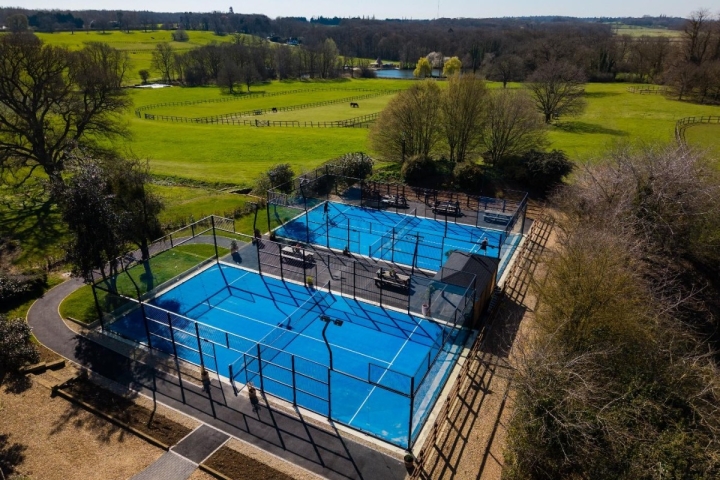
Waresley Park Estate, on the border of Bedfordshire and Cambridgeshire, has opened two brand-new padel courts and a new gym, alongside three new membership options designed to support movement, wellbeing and community.

Since 2022, the Estate’s growing wild swimming community has embraced outdoor wellness experiences centred around the natural lake including swimming, paddleboarding, yoga, meditation, and Pilates. The new padel courts and gym mark an exciting next step in Waresley Park Estate’s wellbeing offering. The gym offers free weights, cardio machines, strength machines and functional training space, creating even more opportunities for members to move, train and feel well.

To accompany these new facilities, Waresley Park Estate has introduced three membership tiers, designed to offer flexible ways for people to enjoy the Estate and become part of its community. Each      tier — Waresley Member, Lake Member and Full Estate Member — offers discounted rates across      facilities, food and drink. Lake members benefit from complimentary swims, sauna access, paddleboarding, and guest passes while Full Estate Members benefit from all of the above, as well as unlimited gym access and classes.

Ben Griggs, Managing Director of Waresley Park Estate, said: “At Waresley Park Estate, wellbeing is rooted in community and belonging. Our membership tiers give everyone access to swimming, movement and wellness facilities while ensuring they feel part of our community. The response since launch has been tremendously positive, and we’re excited to expand our facilities and experiences throughout 2026.”

Jane Tyler, a Founder Member of the Waresley Park Estate wild swimming community, said: “Cold water swimming at Waresley Park has become essential to my wellbeing. It has supported me through grief in ways I never expected. It’s not just the swim, it’s the community. Every single time I walk back up the hill, I’ve had my spoonful of Waresley wellbeing tonic and I hope more people join our community so that they can enjoy the same experience.” 

Explore the facilities and membership options at Waresley Park Estate: https://waresleyparkestate.co.uk/membership

University Of Suffolk Publishes New Journal Showcasing Student Research

High-quality research by University of Suffolk students is being showcased in a new journal volume to give promising students their first experience of academic publishing and the peer review process.
The Journal of Suffolk Student Research launched last year, with Volume Two published this month.
Eight research papers have been collated in the second volume, published online as an open-access journal, meaning it is publicly accessible and can be read by a non-specialist readership.
This year’s collection features a broad range of studies, including research exploring the long-term impact of childhood adversity on the development of depression and PTSD (post-traumatic stress disorder), the impact of disordered sleeping and the quality of sleep on everyday memory problems, and the experience of Suffolk school children of aerial warfare and evacuation during the Second World War.
The submissions undergo rigorous peer review, meaning their work has been reviewed by academics to ensure its originality, quality and accuracy.
The journal gives both undergraduate and taught postgraduate students at Suffolk an early opportunity to gain experience of having work published and peer-reviewed, particularly for those interested in pursuing further careers in academia or research.
Cindy Cassidy is among those to contribute to the second volume. Her study explored the use of cognitive behavioural therapy (CBT) and other psychotherapy approaches for those in the early stages of Huntingdon’s Disease, and she has already gone on to further research around psychological resilience.
Cindy said: “This has been a deeply personal topic so it has been a great privilege to have my dissertation published in the journal. Having a journal of student research is a fantastic opportunity for students to share their work in a formal way.”
Dr Jen Coe, co-Executive Editor of the Journal of Suffolk Student Research, said: “We are proud to present this second volume of the Journal of Suffolk Student Research, which reflects a continued enthusiasm across the University to showcase student research and provide a meaningful opportunity for our learners to experience academic publishing for the first time.
“The research demonstrates the exceptional skills the students have utilised in developing their work from idea to published article, including critical thinking, structuring an argument, academic writing, and proofing and revisions.”
Dr Rachel Grenfell-Essam, co-Executive Editor of the Journal of Suffolk Student Research, added: “The eight outstanding examples published in Volume Two speak to the University’s values around social justice, inclusivity and community engagement, while also showcasing the broad range of disciplines the University’s growing research culture operates within.
“We hope current and future students will be inspired to pursue their own work for submission to future volumes.”
The first and second volumes can be read online by heading to the website here: Journal Volumes – Journal of Suffolk Student Research – Learning and Teaching at University of Suffolk.

Bristol Pupils Help Launch Microfibre Book After Groundbreaking School Research

School pupils from Bristol, Luton and Pembrokeshire have helped create a new children’s book exploring airborne microfibres, after taking part in pioneering research with the University of the West of England (UWE Bristol).

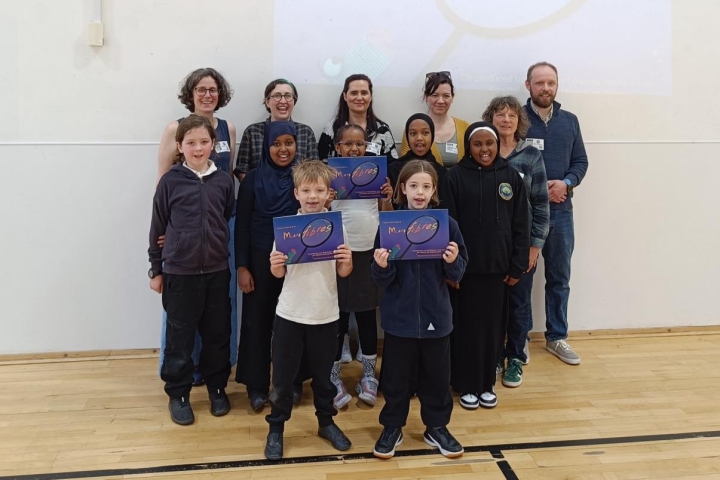
The book, ‘Taking a Close Look at Microfibres’, was launched on Earth Day at May Park Primary School in Bristol – one of the schools that took part in the Schools Under the Microscope project.

The child-led citizen science research enabled pupils aged nine to 11 to explore the presence of microfibres in the air within their schools. Following an initial pilot involving 90 pupils, the project expanded to include around 400 children across four schools – one secondary and three primary. This marked the first time data on airborne microfibres has been collected within the school environment.

Nat Brown, Year Six teacher at May Park Primary School said: “In most science lessons, as a teacher, you already know the outcome. You’re guiding the children towards a result you expect, hoping they’ll discover what you already know. This experiment was completely different. It was significant and exciting because we were contributing to a genuine unknown scientific investigation rather than a classroom exercise. For once, this wasn’t about leading pupils to a pre‑known answer; we were exploring something new together.”

Lesson plans and background information were given to the participating schools. Pupils prepared Petri dishes, made predictions, and placed dishes around school for two weeks, with everyone asked to not disturb the dishes. Pupils later used microscopes to count fibres, and researchers at UWE Bristol conducted additional analysis and fed back their findings.

Lead researcher, Dr Verity Jones, Associate Professor in Education at UWE Bristol, said: “While microfibres are well documented in water, far less is known about fibres in the air we breathe. Building on ‘Homes Under the Microscope’ methods, we were able to collect data on airborne microfibres in schools for the first time, allowing us to see if this method works in a classroom setting and to develop an educational resource with the new book.”

The project found that airborne microfibre levels in schools were similar to those found in homes, with a mix of natural and synthetic fibres – including colours matching the school uniforms.

Throughout the project, it was clear that the pupils and teachers enjoyed contributing to real scientific research,” added Dr Jones. “It also increased awareness of air‑quality professions – an important focus for green futures and employment. It demonstrated that air pollution, though invisible, becomes meaningful through hands‑on activities.”

The book launch took place during a school assembly at May Park Primary School, Coombe Road, Eastville. Nat Brown from May Park Primary School also added: “The children really took ownership of the project, which was fantastic to see. One of the best things UWE Bristol did for us was provide access to high‑quality equipment. That technology allowed us to do things that simply wouldn’t have been possible in a primary setting without UWE Bristol’s support.”

The children’s questions, observations and learning helped shape the storyline and content of the new book, which provides teachers, parents and children with the opportunity to learn more and ask questions about what’s in the air. 

Dr Margarida Sardo, Senior Research Fellow in Science Communication, added: “The project helped raise awareness of citizen science and what scientists are and what they do. As one child put it, it’s ‘not just potions and making things explode’.”

Socially engaged artist and arts-based researcher Luci Gorell Barnes made the illustrations in the book by scanning recycled plastics, fabrics, card and paper – all materials which shed microfibres – and then used these scans to create digital collages.

The book is available as an e-copy and as will be hosted as a hard copy in every library in Bristol and in local schools.

The project team is also partnering with the Global Goals Centre to work with schools across Bristol on the Better Uniform Campaign which seeks to build a more socially and environmentally just system for school uniforms.

Cambridgeshire Named UK’s Safest Area For Property Crime In New Study

Property crime is a growing concern for homeowners across the UK, indicated by searches for “self-installed home security” breaking out and surging by 5000% over the last 30 days. The risk of having your property stolen or damaged varies greatly depending on where you live.

The home security experts at Tapo have analysed public police data across the UK’s largest local authorities, logging recorded cases of burglary, criminal damage, robbery, theft and vehicle crimes over a one-year period from January 2025 to 2026.

Calculating the total number of crimes per 1,000 residents, the experts have revealed their list of the safest areas for property-related crimes.

The UK’s safest areas for property crime


Rank

Location

Burglaries per 1,000 residents

Criminal damages per 1,000 residents

Robberies per 1,000 residents

Direct theft per 1,000 residents

Other theft per 1,000 residents

Vehicle crimes per 1,000 residents

Total property safety score/10

1

Cambridgeshire

1.05

1.61

1.31

0.08

0.07

1.02

10

2

Somerset

1.22

2.51

2.50

0.30

0.05

1.06

9.77

3

North Yorkshire

1.92

4.23

2.92

0.35

0.14

1.50

9.53

4

Lincolnshire

2.27

5.24

3.56

0.45

0.12

2.05

9.3

5

Wiltshire

2.41

5.92

3.65

0.20

0.30

2.14

9.07

6

East Riding of Yorkshire

2.62

5.21

4.43

0.25

0.14

2.10

8.84

7

Bracknell Forest

1.99

4.69

4.93

0.67

0.33

4.09

8.6

8

East Suffolk

2.88

6.32

3.97

0.27

0.30

2.28

8.37

9

Swindon

2.30

6.36

4.18

0.63

0.58

3.25

8.14

10

South Gloucestershire

3.52

5.33

5.27

0.85

0.09

2.88

7.91

Cambridgeshire takes the top spot with a perfect safety score of 10/10, recording the lowest combined property crime rates in the study. With 1.05 burglaries per 1,000 residents, equating to a 0.1% chance of an incident.

The area also reports 1.61 cases of criminal damage and 0.08 direct theft incidents per 1,000 residents. Wider theft cases are the most unlikely form of incident at 0.07 cases per 1,000 residents.

Somerset claims second place with a score of 9.77/10. With a population of nearly 983,000, the area maintains an impressively low crime rate across all categories. Recording just 1.22 burglaries and 1.06 vehicle crimes per 1,000 residents. Wider thefts are reported at a rate of 0.05 cases per 1,000 residents, the lowest recorded in the whole study. Beyond the rolling hills and cider farms, Somerset offers residents high levels of safety.

North Yorkshire rounds off the top three locations, with a score of 9.53/10. Despite being one of the largest local authorities, with a population of 1,158,000, North Yorkshire records 1.92 burglaries and 0.35 direct theft cases per 1,000 residents.

Lincolnshire and Wiltshire follow in fourth and fifth place with scores of 9.30 and 9.07, respectively. Both areas maintain low burglary rates and modest vehicle crime figures. Wiltshire’s robbery rate of 0.20 per 1,000 residents is the second-lowest in the ranking, earning its place in the top five.

East Riding of Yorkshire, Bracknell Forest and East Suffolk occupy the next three spots – recording low numbers of burglaries and robberies per 1,000 residents. Bracknell Forest’s vehicle crime rate of 4.09 cases per 1,000 is the highest in the top ten.

Swindon and South Gloucestershire complete the top ten. Swindon’s criminal damage rate of 6.36 is the highest within the ranking, while South Gloucestershire records a robbery rate of 5.33 cases. 

Micheal Fernandes, tech expert at Tapo, comments:
“Even in the UK’s safest areas, no resident is entirely immune to property crime. A home security system acts as both a deterrent and a safety net. Visible cameras and systems can discourage opportunistic individuals and provide crucial evidence if any damage or theft occurs. For homeowners who want genuine peace of mind, security cameras, video doorbells and alarm systems are one of the most effective additional layers of protection available.”

You can view the full dataset here.

The Datai Langkawi Launches Luxury Catamaran Expeditions Across The Andaman Sea

From day voyages and private charters in the waters surrounding Langkawi, to a brand-new overnight trip to southern Thailand

Luxury rainforest resort The Datai Langkawi invites guests to set sail on the Andaman Sea and to explore the lesser-known parts of Langkawi and neighbouring southern Thailand, with new routes aboard the resort’s own catamaran, Gadis Pulao. Available for shared or private charters, each journey offers an intimate encounter with the quiet majesty of the surrounding archipelago, filled with hidden coves, untouched beaches, and serene seascapes. In 2026 the resorts also introduced its first overnight private charter experience, sailing to the idyllic island of Koh Lipe in southern Thailand.

Meaning ‘the island lady’ in Malay, The Datai Langkawi’s sleek Gadis Pulao, a 54-foot catamaran, accommodates up to 12 guests and offers a series of half- and full-day sailing experiences around Langkawi and overnight trips to southern Thailand’s Andaman archipelago. The half-day Discovery Cruise sails north from Datai Bay towards Koh Tarutao National Park in southern Thailand, the country’s first marine National Park, before tracing the dramatic Machinchang coastline and the scenic Straits of Chinchin, with opportunities to swim and enjoy a picnic lunch on board. The Sunset Cocktail Cruise explores the Andaman Sea at golden hour, cruising past Datai Bay and Tanjung Chinchin as guests enjoy canapés and drinks while watching the changing colours of the sky.

For those seeking a more personalised experience, private charters range from four-hour to full-day voyages. The half-day private cruise follows the scenic route towards Koh Tarutao and the Machinchang coast, with time for swimming, wildlife spotting and relaxing on deck. The full-day Indulgence Cruise ventures further into the Andaman Sea, combining sailing with kayaking, snorkelling and swimming, as well as a chef-prepared lunch and afternoon cocktails on board.

The new overnight Koh Lipe journeys offer ocean escapes that reveal the beauty of the island located within Tarutao National Marine Park, Thailand. Available as two- or three-day private charters, these sailings depart from Telaga Harbour and include stops at key locations in southern Thailand such as Monkey Beach, Pattaya Beach, Koh Adang, Koh Jabang, Koh Hin Ngam and Koh Butang and can be tailored to meet guests’ ideal itineraries around the archipelago. Guests can snorkel vibrant coral gardens, kayak or paddleboard in clear waters, hike to panoramic viewpoints, enjoy private beach picnics, try deep-sea fishing, or explore Koh Lipe’s Walking Street and beachfront nightlife. On board, a dedicated crew and private chef oversee tailored dining experiences, with time balanced between island exploration and relaxed sailing across the Andaman Sea.

Catamaran excursions start from MYR 1,210 (approx. GBP 226) per person.

Rates at The Datai Langkawi start from MYR 3,000 (approx. GBP 561) per night, excluding 10% service charge.

Routes are flexible and can be tailored according to guest preferences and weather. Terms and conditions apply.

For more information on the catamaran experiences, please visit https://www.thedatai.com/experiences/sailing/. To make a reservation, please call +60 4 9500 500 or email reservations@dataihotels.com.

Skip to content Skip to content