[directorist_search_result]

East Anglia THREE offshore windfarm boosts Norfolk marine firms with £16m deals

Two Norfolk marine companies are set to play a key role in the construction of the East of England’s latest offshore windfarm, securing multi-million-pound agreements with ScottishPower Renewables.

The green energy company, part of the Iberdrola Group, has signed charter contracts worth more than £16 million with NR Marine Services in Caister and OEG in Great Yarmouth.

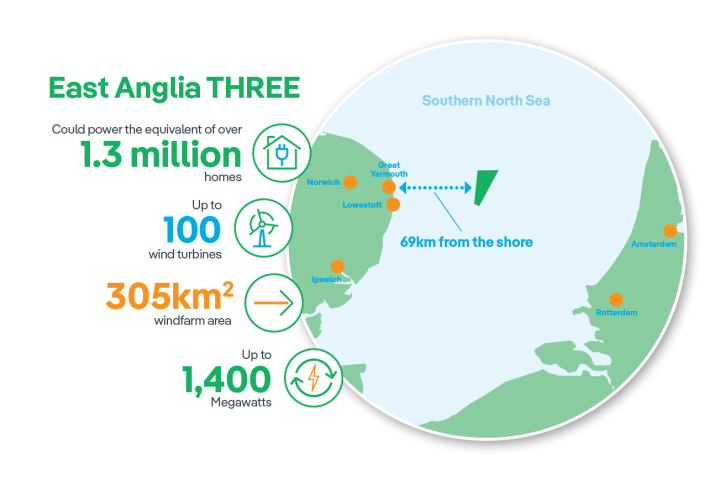
The agreements will see the companies provide vessels to support the East Anglia THREE offshore windfarm, which will be the second largest in the world when it comes into operation next year. The vessels will operate out of Lowestoft.

NR Marine Services will supply two crew transfer vessels, the NR Rebellion and NR Hunter. The Typhoon Class Rebellion is due to enter service in April 2026, followed by the Storm Class Hunter later in the year.

Built by Diverse Marine on the Isle of Wight, NR Rebellion is a 25-metre hybrid vessel and one of the cleanest CTVs in the industry, with reduced emissions and lower fuel consumption. It can travel at 26 knots, cover 1,000 nautical miles, and ferry up to 24 personnel to the 1.4GW windfarm construction site. It will be the first vessel of its type used within the Iberdrola Group.

OEG will provide the support vessel Tess, which will carry out guard operations at the windfarm site. Tess is designed for extended periods at sea, making it ideal for East Anglia THREE.

Ross Ovens, Managing Director for Offshore at ScottishPower Renewables, said: “It’s fantastic to have NR Marine Services and OEG on board – supporting the construction of East Anglia THREE right on their doorstep, bringing more investment and opportunity to the region and contributing to a cleaner and greener future for us all. It’s also terrific to be using vessels that were built here in the UK to support the country’s clean power ambitions.”

Owen Nutt, Director of NR Marine Services, described the deal as “the biggest charter we’ve ever signed” and a vote of confidence in the region’s capabilities. He highlighted the company’s growth over the past year, including doubling its fleet and headcount and hiring more local staff.

George Moore of OEG said the contract strengthened the company’s commitment to the East of England and built upon years of supporting ScottishPower Renewables’ offshore projects.

East Anglia THREE is wholly owned by ScottishPower Renewables and is the second of four East Anglia projects. Public engagement began in November 2012, with consultations between 2013 and 2015. A development consent application was submitted to the Planning Inspectorate in November 2015, accepted in December 2015, and examined between June and December 2016.

On 28 March 2017, the Planning Inspectorate issued a report recommending consent to the Secretary of State for Business, Energy and Industrial Strategy (BEIS), who approved the project on 7 August 2017. Subsequent non-material changes were approved in June 2019, April 2021, and September 2022 to adjust turbine numbers, hub heights, rotor radius, and offshore substations while keeping the total capacity at 1.4GW.

When complete, East Anglia THREE will be ScottishPower Renewables’ largest offshore windfarm and the second largest globally. Its 1.4GW capacity is enough to power more than 1.3 million homes.

The project is part of the UK’s expanding offshore wind sector. As of April 2025, 16GW of offshore wind capacity was operational, with 10.4GW under construction. Contracts for a further 1.4GW have been awarded, while early planning exists for 47.3GW more. By the 2030s, total UK offshore wind capacity is expected to reach 79GW.

Iberdrola, the parent company of ScottishPower Renewables, has led the global renewable energy sector for more than 20 years. It has installed over 47,600MW of renewable capacity worldwide and continues to invest in smart grids, energy storage, and digital transformation to drive the low-carbon economy.

The East Anglia THREE project is expected to create hundreds of jobs in the UK, supporting vessel operation, construction, and the wider supply chain. By working with local marine firms such as NR Marine Services and OEG, the project brings both economic and environmental benefits to the region.

ScottishPower Renewables said the contracts demonstrate how regional expertise can be harnessed to meet the UK’s offshore wind ambitions while investing in local skills and industry.
Thief jailed over £7,700 cosmetics theft from St Albans Boots

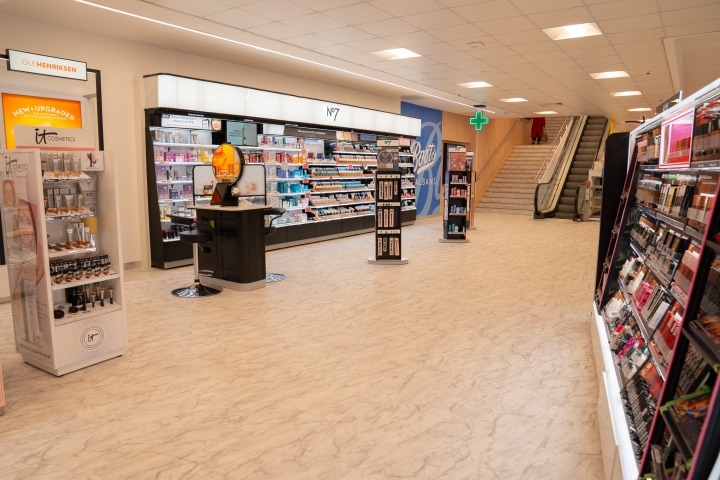
A thief who stole more than £7,700 worth of cosmetics from a Boots store in St Albans has been jailed.

Daniel Mcdonagh, 21, of Ringlet Road, Hemel Hempstead, was sentenced to 26 weeks in prison at St Albans Magistrates’ Court on 25 September.

The court heard that Mcdonagh stole cosmetics worth £7,761 from the city centre Boots on 10 April 2024.

He had initially pleaded not guilty in March but was later convicted.

Magistrates said the offences were “so serious that only a custodial sentence can be justified,” citing Mcdonagh’s “flagrant disregard for people and their property.”

No order was made for court costs or a victim surcharge.

The case comes as shoplifting has become an increasing concern in St Albans.

In January 2025, the city recorded 100 shoplifting crimes, making it Hertfordshire’s worst major town for the offence.

Overall, St Albans saw a crime rate of 69 offences per 1,000 people in 2025. That figure is 16% higher than the Hertfordshire average.

While the city is statistically the safest major town in the county, shoplifting and robbery have been persistent problems.

Violence and sexual offences remain the most common crimes, with 1,745 cases reported in 2025.

The sentencing also highlights a wider pattern of targeted thefts against Boots stores across the country.

Earlier this year, prolific shoplifter Liam Hutchinson, 31, was jailed after stealing more than £100,000 worth of goods from Boots outlets in Chelsea and Kensington between May and August.

Hutchinson carried out 99 offences in just three months, focusing on electrical items and razors.

He was sentenced to 12 months’ imprisonment at Westminster Magistrates’ Court.

He was also given a 10-year Criminal Behaviour Order banning him from every Boots store in the UK.

In addition, he was barred from entering Chelsea and Kensington for five years.

Sgt Jack Vine of the Met Police said Hutchinson’s sentence “should act as a warning” to those who “terrorise retail workers and cost businesses thousands of pounds.”

Retail theft has become a growing issue nationally, with police forces under pressure to clamp down on shoplifting that costs businesses millions every year.

In St Albans and across Hertfordshire, repeated thefts threaten not just local businesses but also frontline staff, who often face intimidation and abuse.

For Boots, one of the UK’s largest high street chains, these high-value thefts highlight the scale of organised and repeat shoplifting.

Cases such as those in St Albans and west London show how retail crime can range from single high-value incidents to sustained, systematic campaigns.

As Mcdonagh begins his 26-week prison term, many businesses in Hertfordshire hope the sentence will serve as a deterrent.

But many fear shoplifting will remain a persistent challenge, both in St Albans and across the region and UK at large for local communities and retailers alike.

Littleport Rangers football pitch vandalism forces youth teams off field

A grassroots football club in Cambridgeshire has been left devastated after vandals drove a vehicle onto their pitch and tore up the playing surface, just hours after children had played their first match on it.

Littleport Rangers Football Club said it was the second time in three weeks the field at Camel Road Sports and Leisure Centre had been targeted. Both incidents are now being investigated by Cambridgeshire Police.

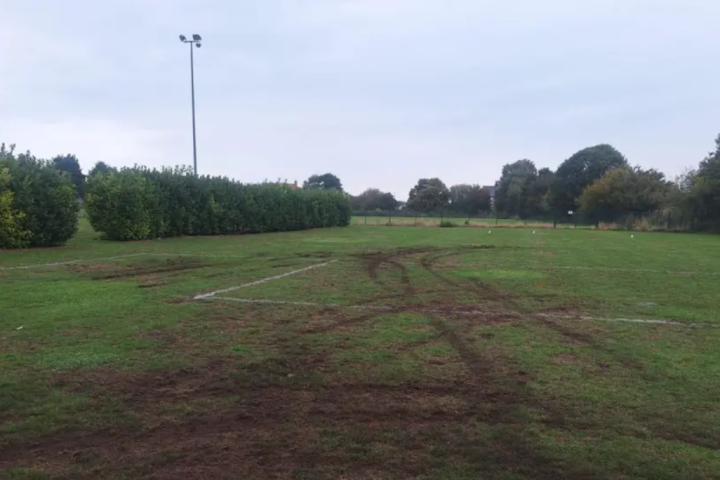
The most recent attack came after volunteers had already spent hours reseeding and repairing damage from the first incident, which cost about £400 in materials alone. Deep tyre ruts and churned soil have once again left parts of the pitch unplayable.

Vice chairman Steven Grindy described the vandalism as a major blow to the community-run club. “We’re only a small club and we’re going to struggle to afford to have last night’s work fixed,” he said. “They’ve done wheel spins and doughnuts and dug the grass up and made an absolute mess. We’re all volunteers, all we want is a safe place for the kids to enjoy. It’s not only our kids, it’s a public field.”

The disruption has already forced teams to move. The under-7s were relocated after their first match on the new surface, while the under-17s had already been shifted to another pitch to allow the grass to recover from the first incident.

Founded in 2009, Littleport Rangers run four youth teams at under-7, under-8, under-10 and under-13 levels. The club’s ethos is to keep costs low so that as many children as possible can take part in football. But repairing damage of this scale threatens that mission.

Mr Grindy said the vandalism could even affect small but important traditions. “With Christmas coming up, we normally buy all the kids a little Christmas hamper, some chocolate or something. If we’ve got to pay to repair this second lot of vandalism, we just physically won’t have the funds for it. It’s the knock-on effects behind the scenes that people don’t see.”

The Sports and Leisure Centre field is more than a football ground. It is also used by families, dog walkers and kite flyers, making it a shared green space for the whole community. The damage has therefore had a wider impact beyond the football club.

Police confirmed both incidents took place overnight, on 9 and 27 September. A spokesperson said: “On both occasions, a vehicle was driven onto the pitch causing significant damage to the grass surface and rendering parts of the pitch unusable for local teams.”

Repairing vehicle damage on football turf is far more complex than fixing an ordinary lawn. While homeowners may be able to aerate or reseed, sports pitches need specialist care. Tyre tracks compact the soil, reduce drainage and can rip up carefully nurtured turf. For grassroots clubs, reseeding might cost a few hundred pounds, but deeper repairs involving new topsoil, turf rolls or decompaction can easily run into thousands.

At the professional level, surfaces are often built in layers with sand-based root zones, making damage even more expensive to fix. While clubs like Littleport Rangers play on a simpler soil-based pitch, the principle is the same: once compacted and churned, the ground is unsafe for play and must be repaired properly.

The club said it would now approach the local council to ask for fencing to help prevent vehicles accessing the field. In the meantime, it remains dependent on the time and effort of volunteers to repair the pitch and keep youth football running.

For Littleport Rangers, the vandalism is not just about damaged turf. It has meant disrupted fixtures, disappointed children and the potential loss of community traditions. Yet despite the setbacks, volunteers continue to fight to provide a safe and welcoming place for young people to play the game they love.

Luton and Dunstable Hospital abseil raises £64,000 for NHS charity

More than 90 people have abseiled down the side of a new hospital wing in Bedfordshire to raise thousands of pounds for charity.

The daring challenge took place on Sunday at the Acute Services Block of the Luton and Dunstable University Hospital, with doctors, nurses, midwives, executives, volunteers and families of former patients among those taking part.

Over £64,000 was raised for Bedfordshire Hospitals NHS Charity, which will fund patient comfort items, artwork, advanced medical equipment and furnishings in the new building.

Sarah Amexheta, from the charity, said the effort highlighted the community’s commitment to supporting the hospital. She said the money would help ensure patients and staff enjoy “the very best possible environment” when the new block opens later this year.

The abseil involved descending 100ft down the outside of the new building. Many participants were trying the activity for the first time, including senior midwife and maternity ward manager, Pauline Yamfam.

“It was terrifying but exhilarating – and worth every second to support such an important cause,” she said. “I have worked at the L&D for over 22 years and I know this new block will transform how we deliver care. I wanted to do something memorable to help get it off to the best possible start.”

She was joined by her eldest son, Matthew-Paul, who was born at the hospital. She described it as “a full circle moment” for her family.

The Acute Services Block will bring together critical care, theatres, the Neonatal Intensive Care Unit and maternity wards under one roof. It is part of a modernisation effort at the hospital, which has served the region for more than 80 years.

Luton and Dunstable Hospital, often known simply as the L&D, provides care for more than 350,000 people across Bedfordshire, Hertfordshire and Buckinghamshire. With more than 3,400 staff, it is one of the largest employers in the area and has long been recognised for patient care, becoming a teaching hospital for University College London in 2012.

The hospital has a history stretching back to the 19th Century. Its predecessor, the Bute Hospital, opened in 1882 on land donated by the Marquis of Bute. The present site between Luton and Dunstable was built on land purchased from Electrolux and was officially opened by Queen Mary in 1939. Since then, it has seen numerous expansions and royal visits, including the Duke of Edinburgh opening a cardiac centre in 2013.

The abseil itself connects with a long history of rope descent techniques. Abseiling has been used for centuries, with body techniques described as far back as the 1400s. The modern rope descent was refined in the 19th century by mountaineers in the Alps. It has since become a popular fundraising challenge because of its mix of fear, exhilaration and spectacle.

For those taking part at the L&D, the thrill was balanced by the knowledge that their efforts will directly improve patient experiences.

With sponsorships and donations still coming in, organisers expect the final total to surpass the £64,000 already raised. The funds will help ensure that the new Acute Services Block not only delivers world-class medical care but also provides a welcoming and comfortable environment for patients and staff alike.

The Student Safety App is already making its mark nationwide

After its launch on the 15th  of September, the Student Safety App has already made its mark across different universities nationwide.

From attending a number of freshers’ fairs, to featuring on different TV and radio channels, to launching their very first bus campaign, the SSA team are working hard to expand the conversation around student safety and protect young people both on and off university campus.

Last week, the BBC released the results from the first sector-wide survey of sexual misconduct at universities in England, revealing that thousands of students have reported that they have been victims of sexual violence and harassment (including rape, attempted rape and unwanted touching) at university.

One victim who spoke out about her experience of harassment whilst studying, emphasised that the support she received was lacking when it came to her safety. This shows the urgent appeal of the Student Safety App.

The new app offers a discreet, practical way for young people to protect themselves and others on and around campus – with features including anonymous incident reporting (for concerns such as drink spiking, knife crime, etc), a “Track Me” and “Plan a Safe Route Home” tool, a Fake Call option to help users leave uncomfortable situations, and an SOS button that instantly shares a user’s live location with chosen contacts.

Additionally, with the app also being in line with the newly introduced OfS Condition E6 – which requires universities in England to take action to prevent and respond to harassment and sexual misconduct – it is working to effectively respond to the recent BBC findings.

This incredible initiative promises to be the subtle safety companion that students can download for free – to provide reassurance to both themselves and their parents.

Since its launch, the team have visited nine freshers’ fairs across the country to personally engage with students, exhibiting and demonstrating the app’s capabilities. For everyone who downloaded and signed up to the app, they were also given the chance to win an Amazon gift card amongst other prizes.

Feedback from these appearances showed the rewards section to be a fan-favourite amongst students – who were very excited for the discounts they could get on popular brands such as: MyProtein, Footasylum, World of Books, LG and so much more, when merely signing up to an app that is going to keep them safe.

The SSA have also featured on eleven TV and radio stations recently, with their supporters – former England, Leicester City and Liverpool footballer, Emile Heskey, and founder of the Barnaby Webber Foundation, Emma Webber – giving live interviews on the likes of GB News, LBC, Sky Sports News, Greatest Hits Radio (East Midlands) and more.

Giving an explanation of the app, what they think of it, and why they are in support of the campaign, got an incredible 9.12 million impressions, and all helped to secure over 1000 new signups to the app in such a short space of time.

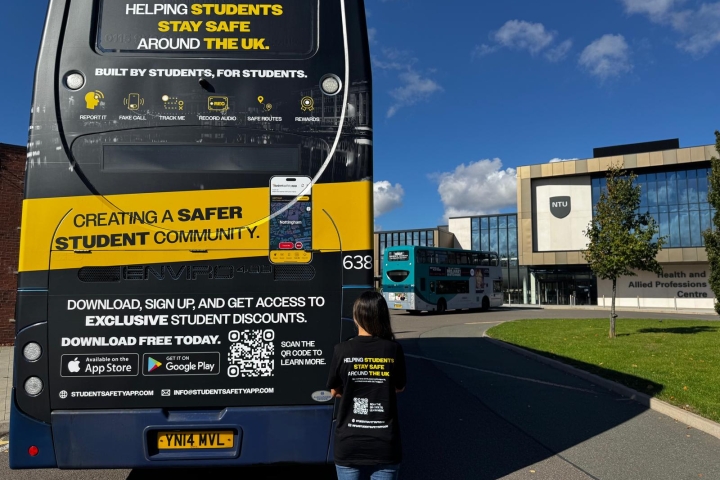
The most recent SSA project to continue expanding its reach, is their new bus campaign based in Nottingham. Featuring on the ‘Double Deck Mega Rears’ on Routes 4 and 34 in Nottingham City Transport.

The Navy Line 4 (N4) bus follows a route from Nottingham City Centre to Nottingham Trent University Clifton Campus, and the Orange Line 34 (including 36U and Night Buses N34 and N36) which follows a route from Nottingham City Centre to University of Nottingham University Park Campus and onwards to Chilwell.

This was made possible by a collaboration between bus advertising specialist, Outdo, and Nottingham City Transport (NCT), where local onlookers will clearly see the app’s features and a handy QR code to the Appstore, to download the app completely free.


This is all in a bid to continue the expansion of this purpose-driven initiative and keep more students safe when at university.

Brightlingsea Boating Lake reopens after blue-green algae scare

Brightlingsea Boating Lake in Essex has reopened after tests showed a significant drop in toxic blue-green algae levels.

The lake, near Colchester, was closed in May following advice from the Environment Agency (EA) after samples revealed unsafe concentrations of the algae.

Dug from the salt marsh in the 1930s, the lake is topped up with seawater at high tide via sluices from the nearby beach. Its brackish waters support crabs, jellyfish, shrimps, and small fish but also present conservation and management challenges.

Brightlingsea Town Council and volunteers have carried out improvements over the years, including the creation of a freshwater pond on one of the three islands to provide clean water for nesting birds.

The islands themselves are well established with native vegetation such as dog roses, hawthorns, and tamarisks. These plants provide shelter for resident mute swans, mallards, coots, moorhens, and occasional visitors such as tufted ducks, Egyptian geese, cormorants, and herons.

Simon Collyer, from the Brightlingsea Model Boat Club, said: “I know people will be absolutely thrilled to bits.” The club organises radio-controlled boat races every Sunday.

He admitted feeling “very frustrated” during the closure but added that no-one at the EA was going to “take any gambles” with public or animal safety.

Blue-green algae, or cyanobacteria, are photosynthetic bacteria that have existed for billions of years. They were among the first organisms to produce oxygen on Earth and continue to play a fundamental role in global ecosystems.

Cyanobacteria use sunlight to split water molecules, releasing oxygen and creating carbohydrates through carbon fixation. Some species form harmful blooms, producing toxins known as cyanotoxins, which can cause illness or skin irritation in humans and animals if ingested.

Blooms are more likely during warm, sunny, and stagnant conditions. Cooler weather, higher water flow, and preventive measures such as aeration or chemical treatment can help reduce their occurrence.

Terry Hamilton, the council’s grounds manager, said recent cooler weather helped lower algae levels. The council also opened a slough to the sea during tidal changes and used a dye to suppress further growth. “All we can do now is keep an eye on it next summer,” he said.

The lake provides an important habitat for birds. Resident mute swans are highly territorial during the breeding season. Mallards nest primarily on the islands. Coots feed on algae, reed shoots, and insects, while moorhens employ a strategy of laying eggs in other birds’ nests to ensure survival of some chicks.

Tufted ducks, which visit from Northern Scandinavia and Russia, are occasional winter visitors. Egyptian geese, introduced from Africa in the 18th century, are currently resident on one island. They are brightly coloured and can be aggressive at times.

Other regular visitors include herons and cormorants. The three mud islands, once bare, now support native vegetation and small reed beds. Tamarisks around the edges provide perches for birds and additional cover.

Previous conservation efforts have included extending reed beds, creating a shingle beach to attract waders, and planting native bushes to provide insect habitats. These measures support both breeding and migrating bird populations.

The lake continues to host regular model boat races on Sundays, offering recreational opportunities while maintaining public safety.

Cyanobacteria, while a natural and ancient component of the environment, require careful monitoring in freshwater and brackish recreational areas to prevent health risks. The EA continues to provide guidance to councils on safe water use during warmer months.

Brightlingsea Boating Lake remains a site where careful water management, monitoring of algae levels, and conservation of wildlife intersect to allow recreational use while protecting both people and animals.

Royal Oak Stowmarket fire leaves pub closed as investigation continues

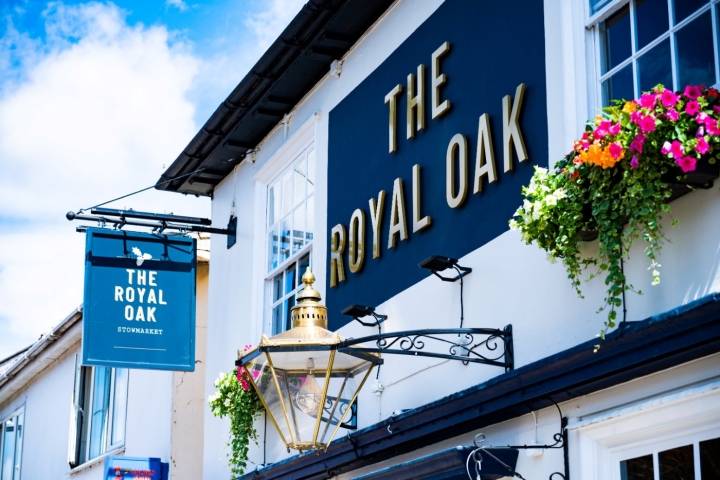
The Royal Oak pub in Stowmarket has announced it will remain closed after a fire ripped through a nearby funeral home.

The pub’s kitchen suffering the heaviest smoke damage as the intake fans drew smoke throughout the building.

The blaze broke out at Andrew Bingham Independent Funeral Service on Milton Road South at around 6.25pm on Saturday, September 27. Suffolk Fire and Rescue Service attended alongside police, closing the road while the fire was extinguished.

No injuries were reported, but the fire caused significant damage to the funeral home.

A 47-year-old man from Stowmarket was arrested in connection with the incident in the early hours of Sunday morning. He was questioned at Bury St Edmunds Police Investigation Centre and has since been released on bail to answer on Monday, November 24, 2025.

Officers are appealing for witnesses or anyone with information about suspicious behaviour before the fire. Anyone with details is asked to contact Suffolk Police quoting crime reference number 37/54822/25.

The Royal Oak said it continues deep cleaning after the smoke damage and hopes to reopen on Tuesday.

The pub has a long history in Stowmarket, with photographs from 1910 and 1916 showing it trading as the “Royal Oak Stores. The building itself dates back to the early 19th century.

The Royal Oak has faced challenges in recent years. It temporarily closed in 2023 and reopened after a £320,000 refurbishment. The Rose and Thorn Pub Company later took over.

James Farrington, a Stowmarket local, acts as general manager. In June 2025, he spoke to the media about problems with “disrespectful vandalism,” citing mirrors, signs, and dartboards damaged, slowing the team’s efforts to revitalise the venue.

Despite these setbacks, the pub remains an integral part of the community. Staff and management have emphasised their commitment to reopening as soon as possible, restoring the pub for local residents to enjoy food, drinks, and events once more.

Reviews on Trip advisor from 2025 included the following:

“Great menu and very good value for money. Welcoming and friendly family atmosphere and staff couldn’t do enough for us. The coffee and cake offer is lovely and great place to meet and be in.” Sept 2025

“What amazing food, you have to try the Korean belly of port dish. What lovely staff, I love coming here with a good catch up with friends. James has turned this pub around compared to how it used to be run by previous landlords” – March 2025

Parent slams Bungay High Sixth Form closure plans by East Anglian Schools Trust

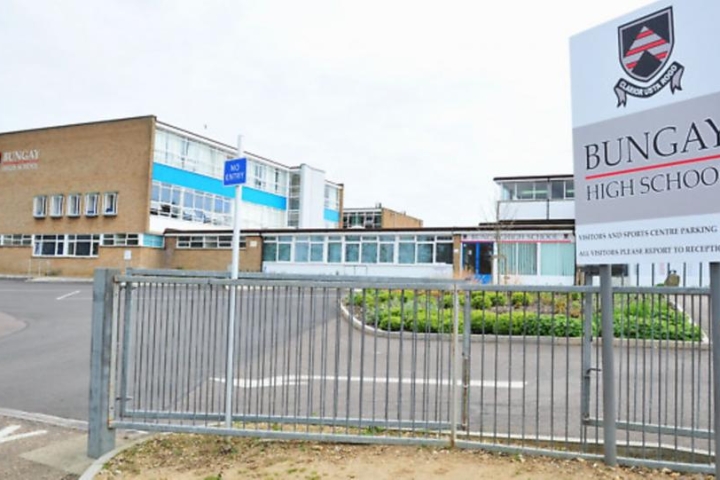
A parent and local businessman has condemned plans for the Bungay High Sixth Form closure, accusing the trust behind the school of “giving up” on the town’s young people.

Sam Oliver, founder and chief executive of international packaging firm BodyPak, spoke out after East Anglian Schools Trust (EAST) announced it would apply to the Department for Education to shut the sixth form from September 2026.

Mr Oliver, whose daughter is a student at Bungay High, said: “It is really disappointing and such a shame because the school is a really good school. When did the education of our children become a business?”

He explained that the existence of a sixth form had been a key factor in choosing the school for his daughter. In an email to EAST chief executive Angela Goduti, who was previously Bungay High’s headteacher, he wrote: “You are giving up on the further education of young people in the Bungay and Halesworth area.

“Our daughter has had a fantastic first year at Bungay winning sports and academic awards and we’ve been so impressed with the commitment, creativity and care that the Headteacher and her team of staff have shown her.

“However, if EAST had made this decision last year then it is questionable whether we would have chosen Bungay High School for her education. Bungay Sixth Form could be a great product, you have the right people in place so don’t throw away forever something that is special and integral to the prosperity of the Bungay area.”

The controversy comes after EAST suspended the Year 12 intake earlier this month. Only 19 students had enrolled, and families were informed on the first day of term, leaving many scrambling for alternative placements. The sudden announcement sparked frustration among parents and students who had planned around the school’s sixth form provision.

Yesterday the trust confirmed it was moving ahead with formal Bungay High Sixth Form closure plans. EAST said in a statement: “It is with great sadness that we are proposing the Sixth Form closure. This course of action has been taken to secure the best possible provision for post-16 students.

“The Department for Education is ultimately responsible for making this decision following a review of consultation outcomes. Students, staff and families have been kept updated on these developments and we will continue to work closely with the Bungay High School community throughout the process.”

A public consultation will be launched, inviting views from families, staff, local authorities, and other post-16 providers before a decision is made. Current Year 13 students will not be affected by the consultation or final DfE decision.

Bungay High is part of EAST, a multi-academy trust established in 2019, initially joining Bungay, Farlingaye, and Kesgrave secondary schools. The trust expanded further in 2020 with the establishment of Castle EAST, a free special school for children with interaction and communication needs. In 2023, EAST welcomed several Suffolk primaries from the Avocet Academy Trust. EAST describes itself as an “all-phase trust” delivering education across all key stages and emphasises inclusivity, effective learning, and personal development.

Mr Oliver highlighted the wider implications of the closure for the Bungay community. He said the sixth form offered a unique opportunity for local students to continue education without having to travel further afield, adding that the decision could have long-term consequences for the area’s prosperity.

BodyPak, Mr Oliver’s company, was founded in 2008 and has grown into a global packaging supplier with offices in the UK, USA, Poland, and India. The business serves international FMCG brands, focusing on innovation, sustainability, and flexibility. Mr Oliver said the experience has taught him the value of investing in people and communities, which he sees mirrored in the school’s approach to education.

EAST said the proposed closure was intended to secure the best possible post-16 provision, and emphasised that it remained committed to working closely with students, families, and staff. The trust’s statement underlined its wider vision: to provide high-quality education across multiple sites while maintaining the wellbeing of students and staff.

The consultation period will allow stakeholders to shape the decision, ensuring families and the local community have a voice in the future of post-16 education in Bungay. EAST said it would continue engaging with parents, carers, and local authorities to ensure all perspectives are considered before the Department for Education makes a final ruling.

The Bungay High Sixth Form closure debate highlights tensions in education between financial viability, student choice, and community needs. For parents like Mr Oliver, the decision is about more than numbers; it is about safeguarding opportunities for local young people and protecting a provision they see as vital to the town’s future.

New minibus boosts Norfolk Wraparound Childcare Programme in rural villages

A rural community in Norfolk has received a boost to childcare thanks to the arrival of a brand-new minibus.

Catfield Primary Academy and Sutton Infant Academy can now transport pupils between sites after receiving £24,995 from the government’s Childcare Expansion Capital Grant.

The funding is part of the Norfolk Wraparound Childcare Programme, which has already created more than 2,000 extra childcare places across the county. Run by Norfolk County Council, the scheme is designed to make before and after school care more accessible for families.

For rural schools, transport has long been a barrier. The new minibus will allow children to attend breakfast and afterschool clubs, giving them greater access to high-quality childcare and the chance to take part in more activities.

Councillor Penny Carpenter, cabinet member for Children’s Services, said: “We are proud that Norfolk was one of four early adopters working to develop the Wraparound Childcare programme, ahead of its national rollout in September 2024. The wraparound childcare initiative not only supports working parents but also ensures that children receive high-quality care and educational opportunities.”

Natalie Butcher, Executive Head at The Swallowtail Federation, said the impact was already being felt. “The introduction of a minibus to support our wraparound provision has been exceptional. As a federation of small rural schools, we would not be able to offer provision at just one of our sites. The minibus allows the service to be available to all. There are also huge benefits to the children in terms of social development as they are able to interact with peers across the three schools.”

Local councillor Richard Price welcomed the move, saying it would have “a real positive impact on the local children.”

The Wraparound Childcare Programme is an ambitious national initiative that aims to ensure, by 2026, all parents and carers of primary-aged children can access childcare locally.

Provision runs during term time from 8am until 6pm, Monday to Friday. It is delivered on school sites or at nearby settings, with families expected to pay for sessions. Parents can use Tax-Free Childcare or Universal Credit Childcare to help with the cost.

The Department for Education says the programme is designed to boost employment by giving parents the childcare cover they need to stay in work. Norfolk was one of four councils chosen to lead the scheme ahead of its nationwide rollout.

In summer 2025, an additional 1,943 full wraparound places were created across 114 schools in Norfolk, bringing the total to more than 2,000.

The council expects that, once fully established, the childcare will become self-sustaining, funded through session fees rather than grants.

Skip to content Skip to content