
[directorist_search_result]

Norfolk County Council Launches Budget Consultation Amid £41.6m Savings Challenge

The Norfolk County Council budget consultation opened on Monday 27 October.

Residents are invited to share their views on proposals designed to balance the authority’s finances for 2026–27. The council faces the task of addressing a £41.6 million funding gap while continuing to deliver key services across the county.

Cllr Andrew Jamieson, deputy leader and cabinet member for finance, said all councils were contending with “higher costs and greater demand for services.”

He explained that the challenges Norfolk faces include “[a] budget gap, the continued cost increases from inflation, spending pressures across wider public finances, and uncertainty about government funding for 2026–27 onwards.”

Despite these pressures, the council has confirmed plans for £298 million in budget growth over the next five years.

This funding is intended to support essential services and meet rising demand, particularly within adult and children’s social care.

Cllr Jamieson stated that the aim was to “protect vulnerable residents while still delivering the key services which are relied upon every day by Norfolk’s residents, businesses and visitors.”

The Norfolk County Council budget consultation sets out 50 saving proposals alongside options for council tax increases. Collectively, the savings proposals amount to £35.7 million, contributing significantly to the £41.6 million savings target for 2026–27.

Three potential council tax increases are under consideration:

  • An increase of 3%

  • An increase of up to 5%

  • An increase of more than 5%

The consultation, open from 27 October to 15 December 2025, allows residents to review these options and provide feedback online at www.norfolk.gov.uk/budget.

Once the consultation period closes, findings will be presented to Norfolk County Council’s Cabinet in January 2026.

The select committees will also provide feedback before Cabinet finalises its proposals, ahead of the Full Council’s final decision in February 2026. National announcements, including the Autumn Budget on 26 November and the Local Government Finance Settlement in December, are expected to influence the final plan.

Funding and Spending Overview

For 2025–26, Norfolk County Council is managing approximately £2.167 billion in revenue expenditure. The main sources of funding are:

  • Council Tax: £572 million

  • Business Rates: £208 million

  • Government Grants: £346 million

  • Other Income (fees, charges, interest): £534 million

  • Schools Grants: £507 million

Expenditure is divided across key service areas:

  • Adult Social Care: 33%

  • Children’s Services: 17%

  • Schools: 22%

  • Highways, Waste, Fire, Libraries: 17%

  • Other Services: 11%

Adult social care represents the single largest area of spending, supporting around 12,000 residents at any one time and approximately 20,000 annually. Services include personal care, domestic assistance, and community engagement, delivered either at home or in specialised accommodation.

Pressures on the Budget

Rising costs are a significant factor in the council’s financial planning. Inflation and increased service demand are forecast to add £31 million and £15 million respectively to expenditure in 2025–26. Norfolk’s ageing population continues to place pressure on health and care services, with one in four residents now aged over 65, compared with one in five nationally. The over-85 population is projected to double by 2041, resulting in greater demand for long-term and complex care.

Legislative changes, such as adjustments to National Insurance Contributions and increases in the National Living Wage (NLW), are expected to add £35 million to the council’s costs in 2025–26. The authority estimates that 60–70% of adult social care costs relate directly to staff wages. Each 1p increase in the NLW raises expenditure by approximately £300,000. Over the past five years, the NLW has risen by £2.72.

Financial Uncertainty

The council’s financial outlook is affected by uncertainty over future government funding. The outcome of national local government funding reforms has yet to be determined, creating difficulty in long-term planning. Combined with inflation, service pressures, and the residual effects of events such as the COVID-19 pandemic and the cost-of-living crisis, this uncertainty presents challenges for maintaining stable service delivery.

Strategic Priorities

To address these challenges, the council has outlined a number of key priorities:

  • Prevention: Supporting early intervention to reduce long-term costs.

  • Innovation: Implementing technology and efficiency improvements.

  • Partnerships: Collaborating with health, education, and community sectors.

  • Investment: Delivering £1.1 billion in capital projects, including roads and schools.

These measures are intended to support financial sustainability while maintaining service quality.

Public Involvement

Cllr Jamieson encouraged residents to participate in the Norfolk County Council budget consultation, noting that local input plays a key role in shaping the final decisions. “We also want to hear your ideas for making savings, as we believe that the people who use our services are the best people to comment on how to get more out of our services, while tackling the budget deficit,” he said.

The council has emphasised that the feedback gathered will directly inform the 2026–27 budget and help determine how resources are allocated across Norfolk in the coming financial year.


Wymondham Town Centre Set for Major Public Realm Improvements

Wymondham is preparing for a major town centre transformation following extensive public consultation, with over 3,000 residents contributing ideas to shape a more attractive, accessible, and vibrant environment.

The Wymondham Public Realm project, jointly funded by South Norfolk Council and Wymondham Town Council, aims to revitalise key public spaces, creating an enhanced experience for residents, shoppers, and visitors alike.

Cllr Lisa Overton-Neal, South Norfolk Council’s Cabinet Member for Planning and Economic Growth, said: “Thank you to everyone who shared their views. South Norfolk Council has always supported our market towns and our aim is to create a vibrant town centre that will make people feel really proud of the place they live. A place where residents and visitors want to shop, meet friends and enjoy spending time.”

Based on community feedback, four priority areas have been identified for improvement.

Wymondham Market Cross Seating will be upgraded with improved seating and landscaping to provide a more welcoming and relaxing public space at the town’s historic focal point.

Fairland Hill Revamp will feature new planting, circular seating, and an accessible pathway to increase usability and visual appeal for all visitors.

Market Place Enhancements will include a widened pedestrian zone, landscaped raingardens, additional seating, improved crossings, and the potential introduction of a one-way traffic system to create a people-friendly environment that encourages longer visits and increased footfall.

Pocket Park / Parklet will be refreshed with new landscaping and seating, providing a peaceful green space while retaining cycle parking and minimising clutter.

The project is intended to support local businesses by encouraging people to spend more time in the town centre while making public spaces more attractive and inclusive.

Following the Stage 2 consultation, which received 1,795 responses via online and paper surveys, the results indicated strong public support for investment in Market Place and Market Cross, with these areas identified as having the greatest potential to boost footfall and dwell time. Church Street was recommended as a secondary, scaled-back intervention, while the Market Street Parklet was seen as meritorious but lower priority compared with the main improvements.

Feedback also suggested refining designs at Town Green, Fairland Hill, and Market Street Bus Stop to ensure wider benefits, and emphasised the need for a fully considered maintenance regime. Suggestions included partnerships with volunteers and local authorities to maintain the improvements.

The Working Group, composed of representatives from both the town and district councils, is now reviewing the consultation results alongside budgetary, legislative, and environmental constraints. This evaluation will inform the technical design and implementation phases, ensuring the most appropriate interventions are prioritised.

Next steps will include refining designs based on public input, assessing technical feasibility, and progressing towards planning and delivery of the improvements. The consultation process and results are available online for reference, providing a record of the community engagement that has guided the project.

NHS Service Raises Awareness of Fireworks’ Impact on Veterans with PTSD

As Bonfire Night approaches, health professionals are encouraging the public to be mindful of the effect fireworks can have on veterans living with Post Traumatic Stress Disorder (PTSD).

Norfolk and Suffolk NHS Foundation Trust’s (NSFT) Veterans Integrated Service has launched an awareness campaign to support former service personnel who may find the fireworks season distressing. The Trust aims to remind the public that while fireworks are a familiar part of national celebrations, they can trigger anxiety and traumatic memories for those who have experienced combat.

Vicky Bailey, Veterans Clinical Nurse Specialist at NSFT, said: “Whilst many people find fireworks exciting and a way of marking celebrations, they can be a trauma reminder for those who served in combat. The sudden loud noises, flashes of light, and smells can trigger vivid and terrifying memories of war, leading to heightened anxiety, hypervigilance, and panic.”

She advises veterans to plan ahead to reduce the potential impact of fireworks. “To cope, veterans can use noise-cancelling headphones, practice grounding techniques like focusing on their senses, use coping strategies such as breathing exercises, and surround themselves with supportive friends and family or seek professional help,” she said. “If you do feel able to go to a fireworks display, have a plan to leave if you start to become distressed and schedule other healthy distractions such as exercising at home. Don’t forget to reassure yourself that fireworks season only lasts a short time, and it will soon be over.”

The Trust’s message aligns with national guidance from the charity Help for Heroes, which promotes “The Firework Heroes Code.” This initiative encourages the public to take simple steps to reduce the negative impact fireworks can have on veterans, those with sensory sensitivities, and animals.

The Firework Heroes Code includes five key principles:

  • Be mindful – consider how fireworks might affect nearby people and pets.

  • Go to planned public displays – rather than setting off fireworks at home.

  • Give neighbours advance warning – letting people know the timing of fireworks can help them prepare.

  • Go silent – choose low-noise or “silent” fireworks to minimise distress.

  • Give support – if someone appears distressed, offer reassurance and encourage them to seek professional help.

Theresa Mitchell, Head of Hidden Wounds at Help for Heroes, explained why this approach matters. “Many veterans tell us that fireworks season can leave them feeling nervous and fearful, particularly as the season seems to grow in length and is not just focussed on 5 November. Sudden, loud noises, unpredictable flashes of light, and the smell of bonfires can trigger anxiety or bring back traumatic memories. Even those who stay home to avoid the discomfort may experience feelings of isolation.”

Former Senior Aircraftsman Matt Neve, who served in the RAF, echoed the importance of awareness. “Many people look forward to Bonfire Night, and it is a big event in the calendar, but not everyone enjoys it. The Firework Heroes Code is a simple way to ensure that you minimise the impact of your own event on others—so everyone can feel comfortable at this time of year.”

NSFT’s Veterans Integrated Service continues to provide specialist mental health support for veterans and their families across Norfolk and Suffolk. The Trust encourages those affected by fireworks to seek help through their GP or dedicated veterans’ mental health services.

By raising awareness and encouraging considerate behaviour, the campaign aims to make Bonfire Night safer and more inclusive for everyone.

Taylor Wimpey East Anglia Donates £7,000 for Baby Grand Piano at Cambourne Village College

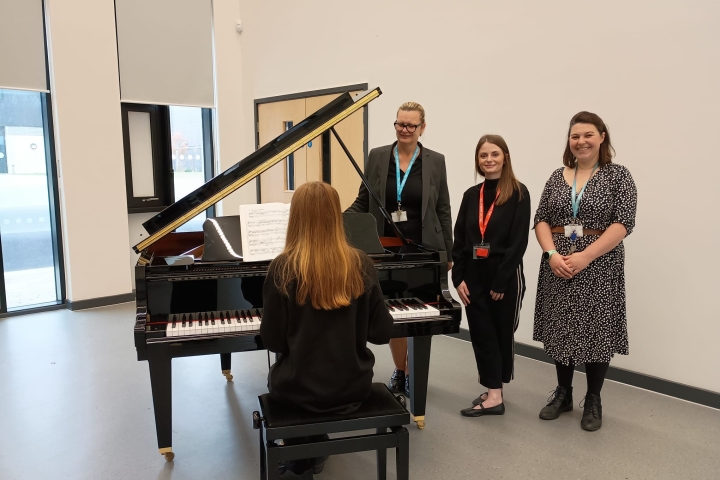
Taylor Wimpey East Anglia has donated £7,000 towards the purchase of a baby grand piano at Cambourne Village College, located near its West Cambourne development. The contribution marks another step in the ongoing partnership between the developer and the school, and represents a long-term investment in music education and community life in Cambridgeshire.

Cambourne Village College, part of the CAM Academy Trust, has welcomed the new instrument as a valuable resource for students across all year groups. The piano will not only enrich the school’s music department but also support the college’s broader mission as a community hub. Village colleges in Cambridgeshire have always been designed to serve both students and local residents, following the vision of educational pioneer Henry Morris, who described the village college as “the community centre of the neighbourhood”.

To celebrate the new addition, Cambourne Village College is launching an annual Taylor Wimpey Piano Competition. The contest will be open to all abilities, offering every student the chance to showcase their skills and musical development. The piano will make its public debut at the school’s GCSE music showcase in late October 2025, when Year 11 pupils will perform their solo coursework pieces to a live audience. It will also feature prominently in other events throughout the year, including the first rounds of the Taylor Wimpey Piano Competition in December and January, as well as the popular Sixth Form “Carols around the Piano”.

Lynn Mayes, Principal at Cambourne Village College, said: “We are delighted to have such a beautiful grand piano in our school. It’s a resource that will inspire pupils across all year groups and provide opportunities that we simply couldn’t have offered without Taylor Wimpey’s support. Already, it has become a hub for creativity and performance, and we are excited to see how our pupils will continue to benefit from it.”

Claire Heald, CEO of the CAM Academy Trust, added: “Partnerships like this are transformational for our schools. Taylor Wimpey’s generosity demonstrates a shared commitment to raising aspirations and providing extraordinary opportunities for young people. As our Trust continues to develop, investments in facilities and resources like this piano make a lasting impact on pupils, staff, and the wider community.”

For Taylor Wimpey East Anglia, the project reflects its ongoing commitment to supporting the local communities where it builds. Olivia Peters, Head of Sales at Taylor Wimpey East Anglia, said: “Giving back to the community is so important to us at Taylor Wimpey. Partnerships with schools are vital to help strengthen children’s education, whilst encouraging them to pursue other opportunities, such as music. We hope this donation will benefit all students and teachers for years to come, and we can’t wait to see the children’s progress at the Taylor Wimpey Piano Competition.”

Cambourne Village College opened in 2013 as the first secondary school in Cambourne and now accommodates around 1,250 pupils and 100 staff. The college continues the proud Cambridgeshire tradition of village colleges, offering both education and community facilities in one place. These schools have long been central to the life of their towns and villages, promoting lifelong learning and social inclusion. Cambourne Village College was rated “outstanding” by Ofsted in 2015 and has become an integral part of the growing Cambourne community.

Taylor Wimpey East Anglia is closely connected to the area, with two developments currently in Cambourne: Burghley Green and Chivers Rise at West Cambourne. Situated just nine miles from Cambridge, West Cambourne offers a convenient location with easy access to amenities and strong transport links. St Neots station is just 16 minutes away, providing fast connections to London King’s Cross in 44 minutes.

The £7,000 donation from Taylor Wimpey East Anglia has already begun to make a difference, with the baby grand piano acting as a new centrepiece for music, creativity, and community engagement at Cambourne Village College. As the partnership grows and the Taylor Wimpey Piano Competition takes shape, the instrument will continue to inspire the next generation of musicians and strengthen the bond between the college and its community.

King’s Lynn’s New Library to Open February 2026 as £17.3m Project Nears Completion

The new King’s Lynn Library is set to open its doors to the public in February 2026, as Norfolk County Council confirms the project has entered its final stages.

Located in the heart of the town centre, the landmark redevelopment is transforming the former Argos building on New Conduit Street into a modern community hub designed for learning, creativity, and connection. Construction, which began in 2024, is now progressing toward internal completion, with finishing works underway.

The scope of the project has recently been expanded to include significant external improvements, such as ground levelling, drainage upgrades, and utility realignments. These works will not only enhance access to the new library but also prepare the wider Baxter’s Plain area for future regeneration.

Reflecting these additional works and the council’s commitment to delivering a sustainable, high-quality building, the overall project budget has been revised from £15.1 million to £17.3 million. The extra cost will be covered by a reallocation within Norfolk County Council’s capital programme.

Councillor Jane James, Cabinet Member for Corporate Services at Norfolk County Council, said:
“This is a landmark investment for King’s Lynn and West Norfolk. While the need for additional works has extended the timeline and increased costs, we remain absolutely committed to delivering a high-quality, sustainable and welcoming space that meets the needs of our community. The library is really starting to take shape with the installation of the exterior tiles, which give a real sense of the building’s character and presence on the high street. The new library will be a real catalyst for learning, creativity and connection.”

Once open, the three-storey library will feature a modern main library space alongside adult learning rooms, flexible event areas, a business support zone, and a fully equipped training kitchen. Among its standout features will be:

  • A bespoke children’s and young person’s library

  • Quiet study spaces and a dedicated business library

  • A permanent home for Norfolk’s historic collections

  • Adult learning and multi-purpose event spaces

  • A green roof equipped with solar panels and rainwater harvesting technology

The project represents one of King’s Lynn’s most significant recent investments. It is jointly funded by £7.4 million from the UK Government, managed through the King’s Lynn Neighbourhood Board, with the remaining funding provided by Norfolk County Council.

The initiative aims to support local regeneration, boost town centre footfall, and provide accessible public services in a welcoming, central location.

Meanwhile, the current Carnegie Library on London Road will remain part of the community. Arts charity The Garage Trust is set to take over the space, continuing its cultural and educational work in the town.

The existing library will close a few weeks before the opening of the new site to allow time for books and equipment to be relocated. Norfolk County Council will release further details of the move closer to the transition date.

October Property Auction Raises Over £11 Million at Auction House East Anglia

Auction House East Anglia reported a highly successful livestream property auction on Wednesday, 22nd October, with 74 lots sold and total sales exceeding £11.6 million. The auction featured a wide variety of properties, ranging from small plots of land to substantial residential homes and unique buildings.

Prices started from £6,500 for a half-acre parcel of land in Saxmundham, Suffolk, and went as high as £400,000 for a public house in Harlow, Essex.

Properties with modernisation potential proved particularly popular. Stonebeck, a four-bedroom bungalow set in 10 acres of woodland at 2 Cromer Road, Hainford, attracted competitive bidding and sold for £392,000, significantly above its guide range of £250,000–£300,000.

Two former places of worship were also highlights of the auction. Thetford United Reform Church, a Grade II listed building dating back to 1817, sold for £211,000, while Bethel Gospel Hall, a Victorian detached building near Gorleston seafront, went for £107,000. Both properties present opportunities for conversion, subject to planning consent.

Notably, ready-to-move-in investment properties performed strongly as well. 14 Sea View Road in Mundesley, a five-bedroom semi-detached house boasting cliff-top views, sold for £113,000 against a guide of £100,000, appealing to buyers interested in holiday let potential.

Land sales also exceeded expectations. A self-build plot on Woodbastwick Road, Blofield, measuring around a quarter of an acre and benefiting from outline planning permission for a detached house, sold for £216,500, surpassing its £130,000–£150,000 guide. Additionally, the 10-acre parcel of amenity land sold alongside the Hainford bungalow reached £150,000, equating to £15,000 per acre.

Robert Hurst, auction surveyor at Auction House East Anglia, commented: “We were delighted with the results of the October auction, which demonstrated strong demand across a diverse range of properties and land despite concerns about what might come out of the Budget next month. Buyers were particularly attracted to unique opportunities, such as the former places of worship, but their appetite for well-presented homes and prime self-build plots has also revived. This led to these lots far surpassing pre-auction expectations, a clear sign that the market remains active and competitive for sensibly priced lots as we approach the end of the year.”

Auction House East Anglia is now inviting entries for its final livestream property auction of 2025, scheduled for Wednesday, 10th December.

Hunstanton School Backs Lifesaving First Aid and AED Training

Hunstanton Town Council has agreed to support Smithdon High School with funding to provide First Aid and AED (defibrillator) training for students, continuing a long-standing programme that has already equipped hundreds of young people with essential lifesaving skills.

At the council’s Full Meeting on Wednesday, 22nd October 2025, councillors unanimously approved a grant of £1,203.20 to fund the training of 114 students. Each participant will earn a nationally recognised Emergency First Aid at Work Certificate with AED instruction, valid for three years.

The initiative began several years ago after a group of students raised money to install a defibrillator in the local community, inspired by the absence of nearby lifesaving equipment. Since then, Smithdon students have consistently demonstrated dedication to helping others, acquiring skills that benefit both themselves and the wider Hunstanton area.

Over the past seven years, hundreds of students have participated in the programme, including young people from low-income backgrounds and those with special educational needs. The training has also supported GCSE studies, Duke of Edinburgh Awards, and career development, with many former students returning to thank the school for equipping them to respond to real-life emergencies, increase their confidence, and enhance their prospects for further education or employment.

Numbers of students trained in recent years include 68 in 2018/19, 140 in 2020/21 (including those affected by COVID-19), 130 in 2022/23, 120 in 2023/24, and 48 in 2024/25.

A spokesperson from Smithdon High School commented on the council’s decision: “This is amazing news to end the half term! We’re so grateful to Hunstanton Town Council for supporting this initiative once again. I’ll be booking in the training dates very soon, and it would be wonderful to welcome the Mayor and Deputy Mayor to join us when the sessions take place.”

The council said it was proud to back a project that not only equips young people with life-saving skills but also strengthens the safety and resilience of the local community. With an ageing population and increasing demands on NHS services, more residents trained in First Aid can make a tangible difference in emergencies.

Research highlights the importance of these skills. A recent study presented at the British Cardiovascular Society Conference revealed that public access defibrillators are used in only 10 percent of out-of-hospital cardiac arrests where the devices are available. Data from the East of England Ambulance Service and The Circuit, the national defibrillator network, showed that of 1,649 cardiac arrests between April and September 2022, defibrillators were accessible within 500 metres in 1,302 cases but used in just 132.

Experts warn that public awareness and education are key to increasing the use of defibrillators. Dr Thomas Keeble of Essex Cardiothoracic Centre and Anglia Ruskin University said: “Our study highlights strikingly low numbers of publicly available defibrillators being used in the event of a cardiac arrest. Much more needs to be done to promote awareness and education around CPR and defibrillation.”

Dr Simon Walsh, Medical Director at the East of England Ambulance Service, noted that since September 2022, over 1,500 Public Access Defibrillators have been added to the service’s database, along with the expansion of community first responder schemes to improve access during emergencies. Judy O’Sullivan, Director of Innovation in Health Programmes, added: “Prompt CPR and defibrillation from bystanders can be the difference between life and death. More needs to be done to encourage people to use these lifesaving devices when they are available.”

Hunstanton Town Council’s support for Smithdon High School continues a vital programme that ensures young people gain practical, life-saving skills while fostering a safer, more prepared community. By training students in both First Aid and AED use, the initiative helps increase survival chances in emergencies and promotes confidence, responsibility, and community engagement..

Agri-TechE partners with leading farming voices in new ambassador programme

Agriculture is undergoing rapid transformation, fuelled by new technologies, innovative thinking, and the need for greater efficiency and sustainability. Recognising this evolution, Agri-TechE — the UK’s leading independent agri-tech membership organisation — has launched the Agri-TechE ambassador programme to bridge the gap between farmers and innovators, bringing real-world farming insights directly into the development of emerging technologies.

The initiative will officially launch at this year’s REAP Conference, taking place on 4 November at the KingsGate Centre in Peterborough. The conference is one of the most influential events in the UK agricultural calendar, bringing together farmers, researchers, entrepreneurs, and policymakers to explore new inventions, unconventional ideas, and the potential for commercialising agricultural innovations.

The Agri-TechE ambassador programme brings together well-known farming voices, influencers, and technical experts to spark genuine conversations between the agricultural community and the technology sector.

The first three ambassadors — Louise Penn, Todd Jex, and Luke Abblitt — have been chosen for their expertise, passion for progress, and ability to communicate both the challenges and opportunities that define modern farming.

Dr Belinda Clarke, Director of Agri-TechE, said: “The ambassador programme is a fantastic opportunity for farmers and innovators to really share their stories, offer on-the-ground opinions and showcase what Agri-TechE has to offer. At Agri-TechE, we are excited to partner with the first cohort, especially as they join us at this year’s REAP Conference.”

The ambassadors will attend REAP to engage with other leaders, explore the latest technologies, and take part in discussions that shape the future of food production and agricultural policy.

This year’s conference will also feature a keynote address from Minette Batters, farmer and member of the House of Lords, who will discuss her findings from The Farm Profitability Review just days after its release. Her talk will explore how technology and collaboration can help address the challenges facing UK farming, from shifting policies to unpredictable weather and financial pressures.

Attendees will also witness a live demonstration of the Antobot, an autonomous robot designed to revolutionise farming operations. Developed by the Warwick Agri-Tech team, the Antobot uses a modular robotic platform capable of dynamic path planning, obstacle avoidance, and adaptive navigation across diverse farm environments. Designed for scalability and commercial viability, the system reduces manual labour and improves operational efficiency, showing the kind of future-ready innovation the Agri-TechE ambassador programme aims to promote.

Meet the ambassadors

Louise Penn supports her family’s mixed farm in Northamptonshire, working across 550 acres with 2,500 breeding ewes and continuous wheat rotation. As a Ceres Rural agronomist, she focuses on regenerative agriculture, soil health, and precision farming.

“Technology is so important in agriculture. There is so much that we can do to be more efficient and ultimately more profitable. Within my job as an agronomist, I see there are so many things that we can be doing to adopt technology and make the job more precise,” she says.

Louise shares her work and insights with nearly 10,000 followers on social media under @louisepennagronomy, where she documents life in the field, industry events, and the latest tools transforming modern agriculture.

“It’s really great to be part of Agri-TechE, go to different events and be part of the network, so I know what cutting-edge technology is available and how I can adopt that on my family farm as well as across my clients,” Louise adds.

Todd Jex, a leading agronomist and National Technical Adviser for Regenerative Farming at Agrii, brings deep expertise in soil health, crop nutrition, and sustainable agriculture.

“UK farming is changing at a pace probably not seen since the introduction of tractors. The opportunity to work alongside forward-thinking researchers, scientists and tech businesses to help improve on-farm profitability and overcome some of the challenges facing the industry is most exciting,” Todd says.

Todd has been recognised with multiple national awards, including Arable Advisor of the Year (Farmers Weekly Awards 2023) and Young Agronomist of the Year (National Arable and Grassland Awards 2024). He will use his role in the Agri-TechE ambassador programme to encourage adoption of regenerative practices that deliver both economic and environmental value.

Luke Abblitt is based in the Cambridgeshire Fens and farms 400 acres of cereals, sugar beet, and potatoes. He recently invested in a robotic potato stacker to boost efficiency and sees technology as key to achieving long-term sustainability.

“I’m very excited to be an ambassador. With the pressure facing the industry, we are looking at new ways to increase our productivity and margins. Embracing new technology is one of the ways we can make ourselves more sustainable,” Luke says.

Outside of his farm, Luke works with NFU Education’s Farmers for Schools initiative and meets with MPs to discuss farming policy. His educational social media videos under @downondaintreefarm have generated tens of thousands of views, inspiring the next generation of agricultural professionals.

Agri-TechE is a not-for-profit, independent membership organisation dedicated to advancing agricultural innovation and sustainability. For over a decade, it has worked to connect farmers, researchers, and technology developers, accelerating the application of cutting-edge research into practical solutions for the field. What makes Agri-TechE unique is its independence and integrity — it operates without government funding, ensuring its priorities remain focused on the needs of its members. Its longevity and expertise have made it a trusted voice within the agri-tech sector, while its regional roots and national impact have helped it expand from the East of England to a UK-wide network with global influence.

Through initiatives like the Agri-TechE ambassador programme and events such as REAP 2025, the organisation continues to promote collaboration, strengthen the link between technology and agriculture, and inspire confidence in the future of farming.

This November, attendees of the REAP Conference will have the chance to meet the ambassadors, witness live technology demonstrations like the Antobot, and engage in discussions shaping the future of UK agriculture. With innovation, integrity, and collaboration at its core, the Agri-TechE ambassador programme marks an important step toward a more connected, sustainable, and technologically empowered farming industry.

Are hot cocktails the drink of the season? We definitely think so!

There’s no doubt that the weather has taken a turn for the worst.

With the Autumn season rolling in, the days are definitely becoming colder, and people are brushing the dust from their thick coats, hats, scarves and umbrellas, to prepare.

These can feel like miserable months – where we lose our positivity when our feet get wet and our hands get cold – but this can also be the very best time of the year – where we can get ourselves all comfy… Embrace the wooly blankets, smell the spicy fragrances that fill the air, and enjoy the cosy movie nights in. And how better to do it, than with a warming drink?

We know – a warming, ALCOHOLIC drink!

The East Anglia Gazette have just been sent some delicious hot cocktail recipes, which promise to bring the heat (in different ways) in your evening tipple.

We know what you’re thinking – a hot cocktail? But trust us, it really does work.

From creations including apples, berries and chocolate – you are sure to find your new favourite drink with these recipes. And better yet, they are easy to make yourself at home, where they can be enjoyed by the fire… and of course, the tele.

Apple Mulled Cider 

Serves 4

Ingredients:

  • 120ml Whisky
  • 280ml Jazz Apple juice (4-5 large apples depending on the size)
  • 100ml Lemon Juice
  • 80ml Honey
  • 2 Cinnamon Sticks
  • 1 tbsp Cloves
  • 1 orange peel
  • 1 thumb of ginger (peeled and sliced)

Method:

  1. Add all the ingredients to a saucepan and warm through on a low heat for 3-4 minutes.
  2. Strain into the glass.
  3. Glass: Mug or strong rocks glass
  4. Garnish: Cinnamon stick

Santa’s Cocoa Cheer

Serves 6-8

Ingredients:

  • 1 cup Brunette Cold Brew Liqueur
  • 1 cup Goslings Rum or Karisimbi Rum (light or spiced)
  • 1/2 cup chocolate syrup (or 100g melted dark chocolate for richness)
  • 4 cups milk (increased from 2 to avoid curdling when heated with alcohol — whole or semi-skim works best)
  • Optional: 1 cup single cream for extra indulgence

Method (Hob or Slow Cooker):

  1. Heat the milk (and cream, if using) gently in a saucepan or slow cooker on low heat — do not let it boil.
  2. Stir in the chocolate syrup until fully blended and smooth.
  3. Once hot (but not simmering), add the rum and cold brew liqueur.
  4. Keep on low heat to warm through — avoid boiling once alcohol is added as it may evaporate or split.
  5. To serve: Ladle into mugs and top with whipped cream, marshmallows or a dusting of cocoa/cinnamon.

Keep Warm Tip:
Ideal in a slow cooker on ‘keep warm’ mode for serving over a few hours — give it a stir now and then.

WRITER’S PICK: If you’re a fan of a Mocha – this is absolutely the cocktail for you! This offers a creamy balance of chocolate and coffee.

Our sister site, the Thames Gazette, recently tried out the Brunette Cold Brew Liqueur, and we must admit that it is exceptional. Read more now.

Jazzy Mulled Wine

Serves 4-6

Ingredients:

  • 1 bottle of Red wine
  • 280ml JAZZ™ Apple juice (approx. 4-5 large apples)
  • 100ml Lemon Juice
  • 2 tbsp Honey
  • 2 Cinnamon Sticks
  • 6-8 Cloves
  • 1 star anise
  • Sliced lemons, apples and clementine’s

Method:

  1. Add all the ingredients to a saucepan and warm through on a low heat for 15 minutes.
  2. Too high or too long and you will lose the alcohol.
  3. Strain into the glass and add a few of the fruit chunks.
  4. Glass: Mug
  5. Garnish: Clementine segment

Zignum Mezcal Hot Chocolate

Serves 1 – plus additional toasted marshmallow syrup

 Ingredients:

  • 30ml Zignum Anejo Mezcal
  • 250ml milk
  • 1 tbsp cocoa powder
  • Zest of ½ orange
  • 1 tbsp toasted marshmallow syrup (alternatively use simple syrup)
  • 1/8 tsp ground cinnamon
  • 1/8 tsp chilli flakes
  • Pinch sea salt
  • Miniature marshmallows, to garnish

For the marshmallow syrup:

  • 250ml water
  • 200g sugar
  • 60g miniature marshmallows
  • 1 tsp vanilla extract
  • Pinch salt

Method:

To make the toasted marshmallow syrup:

  1. To make the toasted marshmallow syrup, place the marshmallows on a foil-lined baking tray and place under a hot grill until well toasted.
  2. Remove from the grill and set aside.
  3. Add the water and sugar to a pan, bring to a boil then simmer, whisking occasionally, until the sugar dissolves and the liquid begins to thicken.
  4. Once thickened, add the marshmallows to the pan and stir until the marshmallows are melted and smooth.
  5. Leave to cool slightly and avoid stirring, to prevent separating the mixture.
  6. Once cooled, strain through a fine mesh sieve, whisk in the vanilla extract and a small pinch of salt, then store in an airtight container, in the fridge, for up to 2 weeks.

To make Zignum Mezcal Hot Chocolate:

  1. Add the milk, cocoa powder, cinnamon, chilli flakes, salt and orange zest to a saucepan.
  2. Whisk to combine and heat on low until the mixture comes to a gentle boil.
  3. Remove from the heat and froth the milk mixture until foamy.
  4. Add the Mezcal and toasted marshmallow syrup to a heatproof glass, then pour over the frothed hot chocolate.
  5. Stir gently to avoid aerating the drink, then garnish with miniature marshmallows.

These cocktails will not only be perfect on bonfire night, but will also be the perfect treat for many occasions on the run up to Christmas. From sipping on one whilst watching the fireworks, to producing party show-stoppers for all your friends and family, to simply enjoying them yourself on a cosy night in, why not give them a try?

Skip to content Skip to content