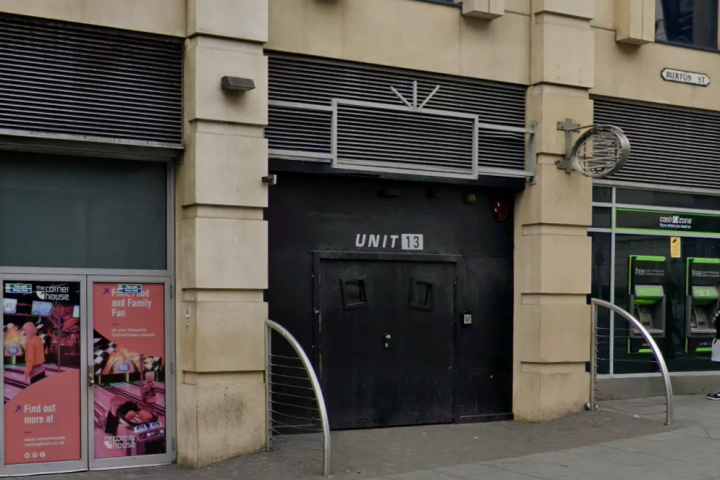
The national issue of safety for university students has been highlighted recently following an incident at a Nottingham nightclub.
A Nottingham nightclub bouncer has been suspended following a viral video that appeared to show a clubber being struck in the face and falling to the ground outside a popular city venue.
The footage, filmed outside Unit 13 on Burton Street, was uploaded to TikTok on Thursday, 30 October, and has since been viewed more than one million times. It appears to show a security guard approaching a man dressed in orange prison overalls before reportedly punching him, causing him to fall onto the road. Nottinghamshire Police confirmed that the man suffered a head injury as a result of the incident.
The altercation took place on Wednesday, 29 October, during a Halloween-themed event at the club. Police have said they are investigating the matter and are appealing for witnesses to come forward.
In a statement, Unit 13 said the member of security staff seen in the footage had been suspended immediately. A spokesperson told the press: “We are aware of an incident involving a member of our security team and a member of the public outside the Unit 13 premises on 29 October 2025. We take all incidents of this nature extremely seriously. The member of security that was involved has been suspended with immediate effect and an ongoing investigation is now underway.”
PC Lindsey Webster of Nottingham Police said: “The victim suffered an injury to his head that could’ve quite easily been far more serious. He was reportedly assaulted by a member of door staff outside a nightclub in the city centre, which we know will have been witnessed by multiple people. If you were in the vicinity of this incident and witnessed it first hand, we’d ask you to please get in touch with our officers, so that we can establish the full facts about what happened.”
The force has also appealed to the public not to share footage of the incident online. “We’re aware of videos circulating online reporting to be of this incident, which we’d ask people to please take down and not share on social media,” police said in a statement. “Doing this could seriously prejudice what is an ongoing investigation, so we’d ask anyone with footage of this incident to please share it with the police directly.”
The Nottingham nightclub bouncer suspended case has sparked widespread discussion online, with police and club officials both stressing the importance of allowing the investigation to proceed fairly and without interference from social media.
In the minds of many commentators in the security and safety spheres, this incident highlights the urgent need for more grassroots safety options for students and other elements of the community.
Monica Ghuman, project manager of the Student Safety App said this in a comment to the Midlands Gazette: “It’s exactly these kinds of incidents that make the need for better protections for students in this country plain and simple.
“Sometimes threats come from unexpected places, even places where we might normally think are there for our safety. Sometimes the best people to protect students is other students. That’s why the Student Safety App is there. To offer that kind of interconnected protection. Students reporting on situations to keep students safe.”
Explaining the functions of the Student Safety App, Ms Ghuman said “It’s a kind of personal safety toolbox — a resource designed specifically for students, both on and off campus. It’s something you can rely on at any time of day, wherever you are.
“The main idea is to give students a real-time view of what’s happening around them, so they can stay alert and make informed decisions. Its core feature is incident reporting — students can see alerts about nearby incidents as they happen — but it’s also much more than that. It brings together everyone involved in the student experience: the university, accommodation providers, local services, and of course, students themselves.”
Ipswich MP Jack Abbott has fired the starting gun on an ambitious Ipswich City of Culture bid, describing it as a “once-in-a-generation opportunity to show the country what Ipswich is made of.” The UK City of Culture 2029 competition officially opened this week, and Abbott has confirmed that he wants his town to be in the running for the prestigious title.
The UK City of Culture scheme is designed to celebrate the creativity and character of places across the country, with previous winners including Derry, Hull and Coventry. Bradford holds the 2025 title, and the next competition will be the first to include a £10 million prize fund to help the winning location deliver cultural events and activities. Ipswich is eligible to apply despite not being officially designated as a city, as the competition is open to any UK local area outside Greater London.
Abbott said the bid could help transform Ipswich’s future. “This is a once-in-a-generation opportunity to show the country what Ipswich is made of,” he said. “A City of Culture bid will attract more visitors, investment and new jobs, while supporting and celebrating the local artists, venues and organisations that make our town special. It’s about boosting opportunities, ambition, and pride too.”
He continued, “Our town has so much talent. This competition gives us the chance to show that to the whole country, and I’m determined to make sure our story is heard. I am proud of Ipswich, and that is why I am firing the starting gun on our City of Culture bid. Join me and help build a new future for our town!”
The Ipswich City of Culture bid comes at a time when the government is encouraging towns and cities to use culture-led regeneration to drive investment and civic pride. The Department for Digital, Culture, Media and Sport, which runs the scheme, has said the competition builds on the success of Liverpool’s year as European Capital of Culture in 2008. That event brought lasting social and economic benefits to the city, inspiring the creation of the UK City of Culture programme in 2013.
Abbott has already begun discussions with local leaders about what a successful bid could mean for Ipswich, and further meetings are planned in the coming weeks. The process will see all longlisted areas receive £60,000 to support their applications, while three shortlisted contenders that do not win the title will each be awarded £125,000 to take forward elements of their proposals.
For Abbott, the campaign is about more than culture alone. He believes an Ipswich City of Culture bid can unite the community and create opportunities that last far beyond the competition itself. If successful, Ipswich could join the growing list of places that have used the title to spark investment, celebrate creativity, and redefine their identity on a national stage.
Two members of staff from the Norfolk and Suffolk NHS Foundation Trust (NSFT), along with one of its lived experience partners, have been recognised at the Mental Health Awards 2025.
Honouring outstanding contributions to improving mental health care across the UK, the national awards celebrate successful interventions and inspirational stories of recovery, highlighting the compassion, innovation and dedication shown by those making a difference to people’s lives.
The awards ceremony was held on Thursday 9th October in reading, where the winners were announced, and three people connected to NSFT were shortlisted across several categories.
Trevor Stevens was named winner of the ‘Inspirational Story’ Award for his exceptional contribution through his courageous and generous sharing of lived experience following the tragic death of his daughter, Tobi, who was in the Trust’s care in 2020.
Since then, Trevor has worked with Making Families Count, a national organisation that supports families affected by serious incidents in health and social care, partnering with NSFT on initiatives such as the Listening into Action Think Family and Carer programme. His work has helped to shape meaningful improvements in how the Trust involves families and carers in care and decision-making. In a letter to Trevor, the Awards organisers said: “The judges were very moved by your story and the impact it has on others.”
Trevor said: “Even to be nominated for the award was a surprise, so when I won I felt very honoured, especially alongside many who have used their own mental health struggles to help others.
“The recognition of my efforts makes me optimistic that I can make a difference and encourages me to continue to work with NSFT to support families who deserve to be given the chance to help their loved ones and keep them alive.”
Jodie Millard, NSFT’s Staff Health and Wellbeing Manager, was named winner of the ‘Nominate a Professional’ Award.
Jodie has led several highly successful health and wellbeing campaigns with measurable results, introducing long-term initiatives to support colleagues. These include the award-winning Menopause Aware programme, Menstrual Health, Get Active, Get Outdoors and Get Better Sleep campaigns, as well as a one-page wellbeing toolkit. She has also grown the network of volunteer Wellbeing Champions to more than 280 colleagues across the Trust.
Jodie said she was “absolutely delighted” to receive the award. “At NSFT, we’ve worked hard to create a culture where staff wellbeing is seen as fundamental to providing the best possible care for our service users. Knowing that these initiatives are making a difference means a lot, and I’m so proud to be part of a Trust that recognises the importance of looking after its people.”
Jodie Millard
Dr Jo Baines, Consultant Clinical Psychologist and Associate Director of Psychology – West Suffolk Children and Young People Service, was named a finalist for the ‘Innovative Mental Health Intervention’ Award.
Jo and her team developed the IDEAS intervention to better support young people with complex emotional needs. The approach has been so effective it is now part of NSFT’s core offer across Suffolk, with plans to expand into Norfolk.
Cath Byford, Chief Patient Experience Officer and Deputy Chief Executive Officer, said: “We are incredibly proud of Trevor, Jodie and Jo for this fantastic national recognition. They have shown extraordinary commitment and compassion in helping us improve the way we care for both our service users and our staff.
“Their achievements demonstrate the positive change that comes from listening to lived experience, supporting our people’s wellbeing, and embracing innovation in mental health care.”
Despite lacking any legal power to control the issue, Local Government Secretary Steve Reed has criticised South Cambridgeshire’s four-day-week working policy.
In a letter first seen by the Telegraph, Mr Reed highlighted declines in “rent collection, reletting times, and tenant satisfaction with repairs, especially where vulnerable residents may be affected.”
“If social housing is being built by this government and your team are unable to move residents into them so that they are standing empty then I must reiterate my deep disappointment with your conduct.”
“I am therefore seeking assurance about the arrangements your council has in place to consider the impacts of your policy and that value for money for residents is being delivered.”
“In particular, I would like to understand how the council is seeking to mitigate the impact to those services which have worsened over the course of the four-day working week trial. I would like you to meet with my officials in the coming weeks to provide that assurance.”
A government source said on the matter. “We trust councils to run their own affairs in the best interest of their constituents, but we reserve the right to call out behaviour that lets down voters. They deserve more.”
South Cambridgeshire’s four-day-week experiment began in 2023 and resulted in furious condemnation from the then Conservative central government. The then Local Government Minister Lee Rowley wrote to the council leader in 2023 to “ask that you end your experiment immediately” citing concerns over “value for money” for local taxpayers.
In the overall report on the success of the trial, which was published in 2024, while some areas did see issues, many other positive features were widely mentioned.
According to South Cambridgeshire Council, staff turnover rates fell by 39%, resulting in a saving of £371,500 due large part to lower reliance on agency staff.
There were also accelerations in planning applications, as regular planning applications were completed ten days ahead of schedule on average, and 15% more of major planning applications were completed within the regular timescale, compared with the five-day-week normalcy.
Housing benefit and council tax relief also were accelerated, as time between application and provision shrunk.
While the council does accept that rent collection and the filling of empty council houses did slow, this was attributed to cost of living issues, and lingering affects of Covid-19 disruptions on local systems.
The South Cambridgeshire Council leader, Bridget Smith, expressed strong disappointment at Mr Reed’s attitude.
“We have delivered an annual saving of almost £400,000, maintained and improved performance, our turnover has decreased by 41% and the number of applications for roles advertised has surged by 123%.” Ms Reed said.
“Where we previously struggled to recruit and retain expert colleagues such as planners, we now have a full planning service which has just published our most ambitious local plan proposals ever, delivering on the government’s agenda to increase housing and jobs in our area. These results speak for themselves.”
The 4 Day Week Foundation’s campaign director, Joe Ryle, took a dim view of Mr Reed’s words “Sometimes it seems like this government is actively seeking ways to be unpopular.” He said.
“As hundreds of companies in the private sector have already shown, a four-day week with no loss of pay can be a win-win for both workers and employers. The 9-5, five-day week is a century-old model that no longer fits the way we live and work today.”
“This is deeply disappointing from the government. Councils must be allowed to innovate.”
Local leadership of the city of Peterborough has invited the wider public to participate in the remembrance events this November.
Commemorations are being organised and conducted jointly by both by Peterborough City Council and the Peterborough Branch of the Royal British Legion.
The annual remembrance service will be taking place at 10:45 on Sunday 9th November, at the War Memorial outside the Town Hall on Bridge Street. It will consist of a Wreath Laying and later a service at the Cathedral, followed by a parade along Bridge Street.
The Armistice two-minute silence service will be starting at 10.45 on Tuesday 11 November, also at the War Memorial.
The general public is invited to join both events at the War Memorial or alternatively can watch the Remembrance Sunday wreath laying on a large screen in Cathedral Square.
The wreath laying service and silence will also be streamed on Peterborough City Council’s YouTube channel, as will the Armistice Two Minute Silence which can be accessed here
This will be the thirteenth year since the new war memorial was first dedicated in 2012. It consists of an Ancaster white limestone obelisk set on a two step platform with chain link surround.
It was funded by public donations, and moved to a more prominent position than the previous memorial which was described by one report as being “tucked away” behind the Cathedral.
At the time of the memorial’s initial installation, then Councillor Irene Walsh, chair of the Peterborough War Memorial Committee, said: “We must not forget that without the generosity of members of the public, school children, local businesses and everyone else who made a donation to the appeal, we would not be where we are today.”
In October 2024 the memorial suffered a graffiti attack, which has since been removed.
Speaking on the upcoming remembrance events, Councillor Judy Fox, Mayor of Peterborough, said: “Please come along to these poignant ceremonies if you can to remember those who have served for their country. Remembrance Day gives us all the chance to pay our respects to all those who have been killed or injured whilst serving their country in conflicts.
“I would also encourage everyone to support this year’s Poppy Appeal. The purchasing and wearing of a poppy is a lovely way to remember those who lost their lives and it also supports the serving and former servicemen and women of today.”
As the nights draw in and Halloween celebrations light up campuses across the country, it’s the perfect time to think about personal safety — not just for one night, but all year round. Whether you’re heading out to a party, walking home from the library, or exploring a new city, staying aware and connected can make all the difference.
That’s where the Student Safety App comes in — a new tool designed by students, for students, to help everyone feel safer on and off campus. The app gives users real-time alerts about nearby incidents, offers features like “Track Me” location sharing and a “Fake Call” escape option, and connects directly with university and accommodation safety teams. Most importantly, it’s built on community — the idea that by looking out for each other, we can all help make student life safer.
To learn more about how it works, we spoke with Monica Ghuman, the app’s creator, about the inspiration behind it, the challenges of changing safety habits, and the difference it’s already making for students across the UK.
Screenshot
MG: To start off — if someone asked, “What is the Student Safety App?” how would you describe it?
Monica: I’d describe the Student Safety App as a kind of personal safety toolbox — a resource designed specifically for students, both on and off campus. It’s something you can rely on at any time of day, wherever you are. The main idea is to give students a real-time view of what’s happening around them, so they can stay alert and make informed decisions. Its core feature is incident reporting — students can see alerts about nearby incidents as they happen — but it’s also much more than that. It brings together everyone involved in the student experience: the university, accommodation providers, local services, and of course, students themselves.
MG: You mentioned real-time alerts — how exactly does that work?
Monica: When a student reports an incident through the app, that information goes straight to our control room. Within about ten minutes, our team verifies the report and sends out alerts to other students in the area. So, if something concerning is happening — whether it’s a safety issue, a suspicious situation, or a hazard — everyone nearby can be made aware instantly. Traditionally, students might only hear about something serious days later, through social media or the news. We wanted to change that delay and make sure students can actually act in the moment to stay safe.
MG: Who’s responsible for reporting those incidents?
Monica: It’s entirely crowd-sourced, meaning students report things themselves. The app relies on the community — it’s built on the idea that we all look out for one another. The more people use it, the more effective it becomes. We encourage students to report anything they see or experience that could impact safety — it’s quick, it’s anonymous, and it can genuinely make a difference for someone else nearby.
MG: And how does the app know where an incident has taken place?
Monica: When students download the app, they can give permission for it to access their location. That means when they submit a report, it automatically includes a pin on the map showing where it happened. It’s precise but secure — location data is only used for that moment and only to ensure the alert reaches people nearby.
MG: What kind of incidents can be reported?
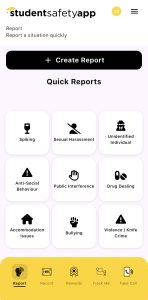
Monica: We’ve built ten different reporting categories to cover a wide range of situations. These include things like suspected spiking, harassment, environmental hazards, and theft. The idea is to cover not just physical safety but also wellbeing — for example, unsafe environments or anti-social behaviour. Students can select a category and then add a short description to help the control room understand what’s happening.
MG: What inspired you to create this app in the first place?
Monica: It really came from my own experience at university. I remember how unsettling it was to hear about incidents long after they’d happened — especially tragic ones like the 2023 Nottingham attacks, where students Grace Kumar and Barnaby Webber were killed. Those events really stuck with me. I kept thinking: if students had access to something like this — a live alert system — maybe more people could have been warned or protected. That idea, of giving students real-time awareness and control over their own safety, is what drove me to develop the app.
MG: How have people responded to it so far?
Monica: The response from students has been amazing. They love how practical it is — especially the Fake Call feature, which lets them schedule a call to appear on their phone if they ever need an excuse to leave an uncomfortable situation. It’s a simple feature, but it’s one of the most popular because it’s something everyone can relate to. Universities have shown a lot of interest too, although their procurement processes can be lengthy. Student accommodation providers have been especially enthusiastic, because they see it as a way to keep their residents safe and build trust.
MG: What’s been the biggest challenge so far?
Monica: The hardest part has been encouraging students to make reporting a habit. This kind of app is brand new — there’s nothing else quite like it — so it takes time for people to get used to using it naturally. Students are great at adapting to technology, but reporting safety issues isn’t always instinctive. Once they see how easy it is and how much it helps others, though, engagement really grows.
MG: And what’s been the most rewarding part of developing it?
Monica: For me, it’s definitely been the connection with students. I’ve only recently graduated myself, so when I speak to students at Freshers’ events, I can talk about real experiences — nights out, walking home late, the kinds of things every student deals with. Seeing them respond with enthusiasm, knowing that something I’ve created could make them feel safer — that’s incredibly fulfilling.
MG: Tell me more about the control room you mentioned earlier.
Monica: Every report that comes through the app is reviewed by our 24/7 control room team. We have trained staff on duty at all times who are familiar with the platform and with safety protocols. When a report arrives, they verify it, remove any personal or sensitive details to keep the user anonymous, and then issue alerts to students within the relevant area. It’s a nationwide system, so no matter where you are, it works in the same way.
MG: Where do you see the app going next?
Monica: We’re already working on a version for colleges. It’ll use the same basic platform, but with different safeguards in place since college students are minors. We’re partnering directly with colleges to handle permissions and parental involvement properly. It’s exciting — the same principles of safety and community, just adapted to a younger audience.
MG: Is there any cost for students?
Monica: For university students, no — the app is completely free. For the college version, we’re exploring a subscription model that would be covered by the institutions themselves, not the students. The goal is always accessibility: we don’t want cost to be a barrier to safety.
MG: Where have you seen the most uptake so far?
Monica: Leicester and Nottingham Trent University have both shown fantastic interest, especially after Freshers’ Week where we had stands and demonstrations. Students there were really engaged — they asked great questions and downloaded it right on the spot.
MG: Do you have specific goals for growth this year?
Monica: Yes, we’re aiming for around 10,000 active users by the end of the year. That’s a realistic goal based on our current campaigns, which focus on awareness, partnerships, and on-campus presence. The more students we reach, the stronger the network becomes.
MG: You mentioned marketing campaigns — what kind are you running?
Monica: We run themed campaigns each week, each one tackling a sensitive but important issue — things like drink spiking, sexual harassment, or drug use. These aren’t easy topics to talk about, but we believe they’re vital. We use social media, student events, and university partnerships to raise awareness and show exactly how the app can help in those scenarios. The idea is to start honest conversations and build a culture of care and vigilance.
MG: You’ve described the app as a “toolbox.” What other features are included?
Monica: There’s quite a few. One is Track Me, where a student can share their live location with chosen contacts — like friends, flatmates, or family — for a set period. It’s great for those late-night walks home.
Another is the SOS Button, which sends an emergency text with the student’s location to their pre-set contacts if they feel unsafe.
We also have a Secret Record feature that lets users discreetly capture photos or audio — useful if they ever need evidence for a report.
And finally, there’s a Helpline Directory, preloaded with university-specific support services, so students can access help instantly if they need it.
MG: Are you planning to add more features over time?
Monica: Absolutely. The app is designed to evolve with students’ needs. We’re constantly gathering feedback from users to see what would make the biggest difference for them. For example, we’re exploring partnerships with local safety organisations and charities to expand the range of in-app support. Continuous improvement is a huge part of our philosophy.
MG: Have you partnered with local venues like nightclubs or student bars?
Monica: Yes, that’s something we’re actively doing. We’ve had really positive conversations with nightclubs and student venues. We’re not here to criticise or hurt anyone’s reputation — quite the opposite. We want to complement existing safety measures and show that we can all work together to make student nights safer and more enjoyable.
MG: And how do you ensure users’ data stays private?
Monica: Data security is absolutely central. Everything uploaded through the app is encrypted and stored locally for up to 30 days — we don’t keep it on our own servers. Any personal data is stripped before alerts are shared, so no report ever includes identifiable information. Students can report with complete confidence that their privacy is protected.
MG: Finally, what would you say to students who think it might be too much effort to use, or that they’ll never need it?
Monica: I’d say that’s understandable — no one wants to imagine themselves in a dangerous or uncomfortable situation. But the truth is, things can happen when you least expect it. Having this app isn’t about living in fear — it’s about being prepared, informed, and empowered. Even if you never need to use it yourself, you might use it to help someone else. That’s what community safety is all about.
MG: And just to confirm — it’s available on both iOS and Android?
Monica: Yes, it’s available now on both the App Store and Google Play. Anyone can download it and start using it straight away.
Drivers in Cambridgeshire can now charge their electric vehicles using clean, renewable energy at the St Ives Park & Ride.
Nine new solar-powered EV charging points have been installed beside the bus stops, making it simple for drivers to top up while taking the bus. Eight standard chargers are available to all users, along with one accessible PAS-compliant charger and a designated disabled parking bay.
The 22 kW chargers are powered entirely by renewable electricity generated by the site’s smart energy grid, a network of solar panels mounted on canopies throughout the car park. This makes the new facility one of the greenest EV charging options in the UK.
Drivers can charge via the Genie Point app or pay contactlessly, with rates set at 50 pence per kWh plus a £1.25 connection fee. Revenue from the chargers, along with electricity exported to the national grid, supports key council services such as social care.
Councillor Ros Hathorn, Chair of Cambridgeshire County Council’s Environment & Green Investment Committee, said: “We’re committed to becoming a net zero county by 2045, so it’s great to see innovative projects like the St Ives Smart Energy Grid deliver some of the renewable energy we need right here on our own Park & Ride site.”
The solar-powered grid has already saved over 110 tonnes of CO₂e since it began generating energy, while also raising revenue for vital local services.
The county council is now rolling out similar infrastructure across other sites. Later this year, Babraham Road Park & Ride will introduce 35 solar-powered charging points, including three accessible bays, using the same system and app as St Ives.
Hunstanton is getting ready to sparkle this winter with the arrival of the North Pole Safari — a magical, free adventure that will transform the town centre into a festive playground from 30 November 2025 to 4 January 2026.
Santa needs a bit of help this year. A flurry of Christmas magic has escaped from the North Pole, scattering clues and hidden letters all around Hunstanton. Families are invited to join the hunt, track down the clues, and meet the North Pole’s secret inhabitants through the magic of augmented reality.
The trail is being brought to life by Hunstanton Town Council, with support from Norfolk County Council and the Borough Council of King’s Lynn and West Norfolk. It’s completely free, fun for all ages, and designed to get families exploring the town together this festive season.
There are two enchanting routes to discover. The Workshop Route whisks adventurers into Santa’s busy workshop, full of mischievous elves and animated toys. The Winterwood Route takes explorers into a snowy forest to meet the magical creatures who roam the frozen wilderness. Families can complete one trail or both for the full North Pole experience.
Armed with a smartphone, participants can scan QR codes dotted around town to reveal the next part of the story in vivid augmented reality. Each stop holds a clue and a secret letter — collect them all, solve the final festive password, and unlock a special digital e-book prize. There will also be the chance to win extra festive rewards, with one lucky winner announced at the Hunstanton Light Switch-On at 4:50pm on 30 November.
No downloads or registrations are needed — just scan, explore and enjoy. The trail is designed to be easy for everyone to join in, whether you’re a local family looking for festive fun or a visitor exploring Hunstanton’s winter charm.
Councillor Julie Marziano said: “We’re thrilled to bring the interactive North Pole Safari to Hunstanton this year – come and join in, and also enjoy our Light Switch-On event on 30th November 10-5pm.”
The North Pole Safari is set to add an extra sprinkle of Christmas magic to Hunstanton’s town centre. With glowing shop windows, festive decorations, and a cast of virtual elves, reindeer and snow creatures, it’s the perfect way to make memories and enjoy a cheerful day out.
The full list of story points and the official trail map will be announced soon, so families can start planning their North Pole adventure. Grab your coat, charge your phone, and get ready to help Santa save Christmas — one clue at a time.
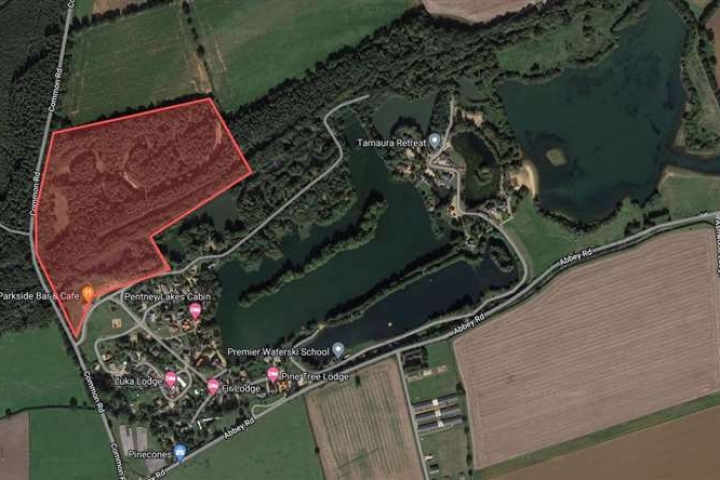
A campaign group has formed in Pentney, Norfolk to preserve woodland access against encroaching development.
The goal of the “Woodland Watchers” is to guarantee that Pentney Woods can continue to be enjoyed and used by local residents and those travelling from further afield, without obstruction caused by regulation due to private ownership.
The site owner, Colin Pennington, and his firm Forestscape, have now been granted permission to develop the site into ecolodges for tourists. The plan has been reported to include 36 such lodges, a reception area, car park, health centre, and facilities for wild swimming.
At earlier stages West Norfolk Council refused to grant development permissions, but Mr Pennington later won an appeal against this decision, after a High Court judge refused to grant the area the status of “asset of community value”.
Mr Pennington has also previously agreed to pay £10,950 towards efforts to mitigate and offset any negative affects on the environment.
Despite this setback, local community members remain determined that the woodland will still remain something that they can visit and enjoy without obstruction caused by the land being privately owned.
Natalie Chumak, a member of Woodland Watchers, said: “We will continue with our efforts to protect the local woodland and the rights of the local community to enjoy it.
The woods are known as a haven for a variety of birds, otters, bats, reptiles, deer, and water voles.
One villager previously commented “This wood is truly beautiful and has many species of mature trees and fauna, it is magnificent and we do not want to lose it.”
Following a meeting at the local village hall to discuss next steps, the Woodland Watchers have agreed to attempt to demonstrate to the local council that the footpath through the woodland has been used widely for more than 20 years.
The option to purchase the land outright from Mr Pennington was considered, but it was deemed too difficult to convince him to sell.
Ms Chumak has said that she and her group are open to speaking further with Mr Pennington and his representatives, saying “Our invitation to the developer of Pentney Woods to engage with us in a constructive dialogue remains open.”