[directorist_search_result]

Volunteers restore Whipsnade chalk lion with dancing and stomping

Volunteers have restored a massive hillside chalk lion near Whipsnade Zoo, Bedfordshire, using an unusual method: dancing and stomping the chalk into place.

The 147-metre-long lion, believed to be the largest hill figure in England, was refreshed with 1,100 tonnes of chalk. Around 60 volunteers helped stamp the new chalk, with some groups performing line dances or “lion dances” to compact their sections.

Sara Nicholas, volunteer advisor at the zoo, said the creative approach ensured the chalk was well-set. The figure, originally constructed over two years starting in 1931, was covered during World War Two to prevent enemy aircraft from using it as a navigation point.

Previous chalk refreshes took place in 2018, but the latest restoration coincides with the Zoological Society of London’s 200th anniversary. Volunteers also removed weeds as part of the project.

Sentence tripled for man who made grotesque threats against air stewardess

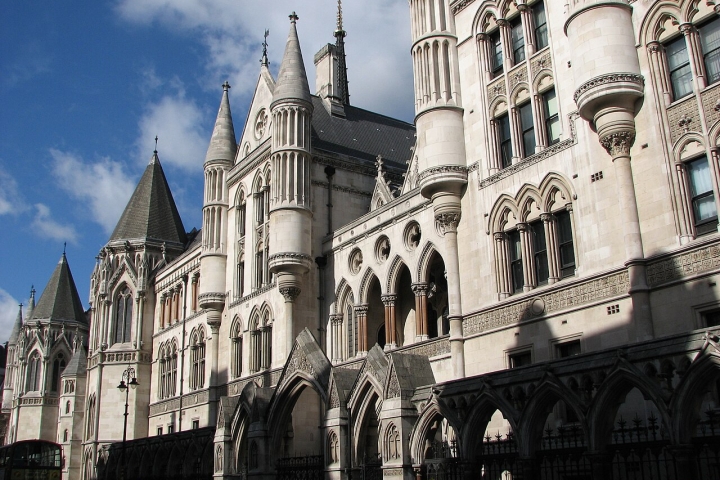
A man who threatened to rape and murder a flight attendant has had his prison sentence more than tripled following a Court of Appeal ruling.

Salman Iftikhar, 38, from Iver near Gerrards Cross in Buckinghamshire, made the threats while intoxicated on a London to Lahore flight in February 2023. During the eight-hour journey, he also told other cabin crew that their hotels would be blown up, prompting discussions about diverting the aircraft to Turkey due to the severity of his behaviour.

Iftikhar was originally sentenced in August at Isleworth Crown Court to 15 months in prison for one count of making threats to kill and one count of racially aggravated intentional harassment. Following a referral under the unduly lenient sentence scheme by the law officers, his sentence has now been increased to four years and three months.

The main victim of Iftikhar’s abuse said she remained “haunted and traumatised” by the incident and had to take 14 months off work. Solicitor General Ellie Reeves described the threats as “horrific” and emphasised the distress caused to both the cabin crew and passengers during the flight.

Reeves added that the case had been referred to the Court of Appeal after “several requests” from members of the public to review the original sentence.

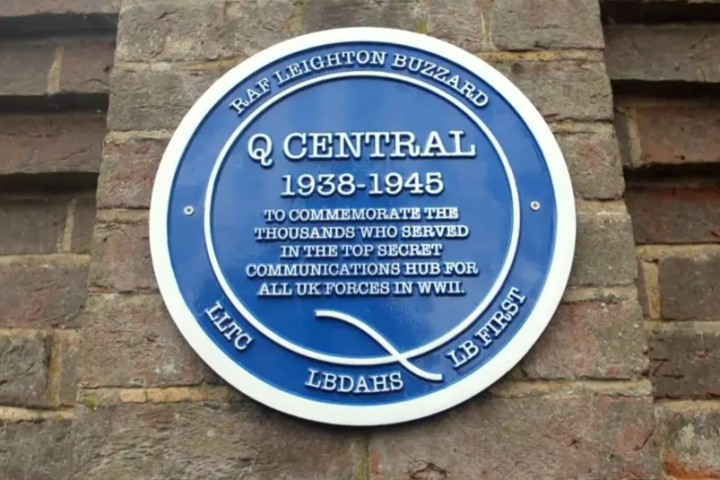
Q Central WWII plaque unveiled to honour secret wartime workers

A commemorative plaque has been unveiled in Leighton Buzzard to honour the secret work carried out at Q Central during World War Two, with one family reflecting on what it would have meant to their relative.

Justine Pearson said her grandmother, Joan Spencer, who died last year aged 102, would have been proud and emotional to see recognition for her service. Ms Spencer worked at Q Central, a top-secret communications base in underground tunnels at the former RAF Leighton Buzzard site, although she was unaware of the full scope of the operation at the time due to the strict secrecy surrounding it.

During her lunch breaks, Ms Spencer recalled discovering her bicycle had been spray-painted to conceal staff activity at the base, initially believing her task was a mundane chore rather than part of a vital wartime operation. In later years, she shared stories about helping the war effort but tended to downplay her role, enjoying recounting them only within her family.

Q Central operated the largest telephone exchange in the world during the war, with over 5,000 staff managing critical military communications. The base co-ordinated key operations including the Battle of Britain and D-Day, working alongside the more widely known Bletchley Park code-breaking centre. Its location near Leighton Buzzard was chosen for transport convenience and minimal military visibility.

The plaque was unveiled by Alex Mayer, the first female MP for the Leighton Buzzard area, who emphasised the importance of recognising the contributions of the thousands of women who worked at the site. Ms Pearson said: “If she could have been here, she would have been absolutely emotional. She would have been really, really happy.”

Weekend rail disruptions in East of England for signalling upgrades

Rail passengers across the East of England are being warned to expect significant disruption over several weekends this month as major maintenance and signal upgrade work takes place on the Norwich line.

The multi-million pound project will see parts of the 40-year-old analogue signalling system at the Norwich end of the Great Eastern Main Line to London replaced with modern digital components. Network Rail said the work will improve reliability and punctuality for passengers travelling between Norwich, Ipswich and London.

Sections of track between Norwich and Diss, and near Stowmarket, will be affected on the weekends of 15–16 and 29–30 November. During these periods, rail replacement buses will be in operation, including on the weekend of Norwich City’s home fixture against Queens Park Rangers.

Rail replacement buses will operate between Norwich and Ipswich on Saturday 15 and Sunday 16 November, while trains will continue to run between Ipswich and London. On the final weekend of the month, Saturday 29 and Sunday 30 November, buses will again replace trains between Norwich and Ipswich, as well as between Ipswich and Bury St Edmunds. Train services will continue to run between Ipswich and London, Bury St Edmunds and Cambridge, and Bury St Edmunds and Peterborough.

Further disruption is also expected on Sunday 23 November at the London end of the line, as well as on the Southend and Southminster branch lines in Essex. Engineers will carry out work to replace a faulty section of track at Forest Gate, where a 50mph (80km/h) speed restriction is currently in place. Repairs will also be made to a nearby bridge.

During this time, buses will operate instead of trains between Ingatestone and Shenfield into London, affecting journeys from Norwich, Ipswich and Clacton. Passengers travelling between Southend Victoria and Newbury Park, or to and from Southminster and Wickford, will also need to complete part of their journey by bus.

Greater Anglia’s managing director, Martin Beable, said: “We appreciate that this work will cause inconvenience to passengers, but it’s essential to modernise the railway and maintain punctuality and reliability in the long term.”

Network Rail said the digital upgrade is part of a wider programme to replace ageing systems across the region, ensuring safer and more efficient train operations in the future.

“Selfless” Suffolk Police Officer Dies Aged 32

A “selfless” Suffolk detective who specialised in safeguarding has died, believed to be from a cardiac arrest. Acting Detective Sergeant Matt Burgin-Powell, 32, had served with Suffolk Police for seven years and passed away on Monday.

In a statement released by Suffolk Police Federation, his husband Luke described him as “a selfless young man in life, and in death,” noting that Matt had already saved three lives by donating his organs.

A federation spokesperson said Burgin-Powell was known for his “outstanding professionalism, along with his care for colleagues and the public.” Federation chairman Darren Harris added: “Matt represented the best of Suffolk Police and his loss is undoubtedly being felt right across the force – and will be for some time. He was a dedicated, respected and popular officer who wanted to protect the public while also being there for his colleagues as well.”

Acting Det Sgt Burgin-Powell joined Suffolk Police in 2018 and worked closely with some of the county’s most vulnerable residents in his safeguarding role. Emma Arthurs-Newman, the federation equality and wellbeing lead, said: “Matt was a brilliant police officer and will be a massive loss to policing. He will be hugely missed.”

She also encouraged colleagues to “be there for one another” following the news of his death, and reminded staff that support from the federation is available.

Suffolk Police confirmed that Acting Det Sgt Burgin-Powell’s life will be honoured with a force funeral, with details to be shared once arrangements are confirmed.

“Highway Robbery” Council Slams Huntingdonshire Boundary Plans

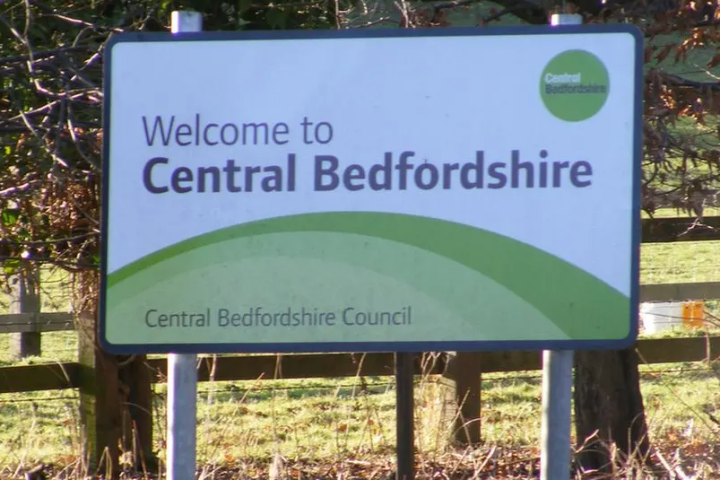
The leader of Central Bedfordshire Council has criticised proposals that could see parts of Bedfordshire absorbed into a new Cambridgeshire authority, describing the idea as “highway robbery.”

Adam Zerny, an independent councillor, raised concerns over documents from Huntingdonshire District Council suggesting that areas including Roxton, Wyboston and Chawston, Tempsford, Everton and Sandy could be transferred into a standalone Cambridgeshire authority. The proposals are part of wider discussions about replacing local authorities with newly created unitary councils.

Zerny highlighted that government guidance recommends any standalone unitary authority should have a population of at least 500,000, while Huntingdonshire currently has around 186,000 residents. A report by Huntingdonshire District Council noted that the planned construction of a new town in Tempsford could increase the population in Bedfordshire to approximately 317,000 by 2040.

The councillor also expressed frustration that Central Bedfordshire Council and Bedford Borough Council were not consulted before the document’s release. In a letter to Sarah Conboy, the Liberal Democrat executive leader of Huntingdonshire District Council, Zerny said: “I am left with the impression this land grab appears to be an attempt to justify the idea of Huntingdonshire as a standalone local authority, rather than what it should be – an effort to benefit local residents. Little did I expect to see a modern day highway robbery being proposed so close to us.”

In response, Conboy clarified that no boundary changes are currently planned. “As part of the government’s plans for local government reorganisation, we’re exploring a range of options, including a standalone unitary authority for Huntingdonshire known as Option E. We’re not currently proposing any boundary changes as part of Option E – references to Tempsford simply form part of wider analysis looking at how to support sustainable growth and effective local services. These options are exploratory and intended to inform future discussions about how best to manage growth and deliver effective governance in the long term,” she said.

The exchange highlights ongoing tensions between neighbouring councils as local authorities across the country consider restructuring into unitary authorities, with debates continuing over population thresholds, governance, and potential impacts on residents.

Essex Fire and Rescue Funding Concerns Raised Over Potential Cuts

Essex County Fire and Rescue Service has raised concerns that crucial safety programmes could be at risk if proposed funding reductions are implemented next year. Draft figures suggest the service could face a 13.7% cut for 2026-27, equating to £5.1 million, though the government has stressed that no final decisions have been made and the figures should be “treated with caution.”

Chief Fire Officer Rick Hylton told BBC Essex that his priority is to protect frontline firefighting jobs, calling for a “fair, risk-based approach” to any allocation of funds. He warned, however, that difficult choices may be unavoidable if budgets tighten further. “Then some of those decisions become much, much harder to make and we’ll need to start having some really difficult conversations about what we stop doing,” he said.

The service indicated that any initial cuts would likely affect prevention and education schemes rather than frontline staff. These initiatives include home smoke alarm visits, road safety education, and multi-agency work with police and health authorities.

Essex’s fire service emphasised that its risk profile is particularly complex due to the county’s extensive coastline, three major ports, and two airports. Firefighter numbers in the county are currently 25% lower than a decade ago, adding to the challenge of maintaining services under potential funding pressures.

The proposed changes are part of the Ministry of Housing, Communities and Local Government’s Fair Funding Review 2.0, which is assessing financial allocations for around 800 public services, including councils and fire authorities. Final decisions on the funding packages are expected in December.

A ministry spokesperson said: “No final decisions have been made and these figures should be treated with caution. We’re committed to fixing the outdated funding system we inherited and ensure that funding is properly aligned with need. As part of our Plan for Change, we will give people across the country the high-quality public services they deserve, and have made £95m available for Essex Fire and Rescue Authority this year alone.”

Mr Hylton said the service is “in a good place” in terms of preparedness but warned that safeguarding frontline staff while balancing budget constraints will require careful planning and potential cuts to non-emergency programmes.

Carpenter Michael Kempson sentenced for £15,000 worth of fraud

A Bedfordshire carpenter has been handed a suspended prison sentence after admitting to defrauding customers out of thousands of pounds for work he never completed. Michael Kempson, 39, of High Road, Beeston, ran TwistedKnott, a business operating across Bedfordshire, Cambridgeshire and Hertfordshire, and took upfront payments for jobs ranging from window glazing to room renovations, which he subsequently failed to carry out.

Kempson appeared at Luton Crown Court, where Recorder Kate Aubrey-Johnson described his victims as “vulnerable” and left feeling “violated” by his actions. The court heard that over a two-year period between 2022 and 2024, ten victims lost a combined total of approximately £15,000.

Prosecutor Victory Abang explained that Kempson had used a consistent pattern to defraud his clients. He advertised services on social media, visited homes to provide quotes on letter-headed paper, and requested half of the payment upfront. Once the money was paid, he would fail to complete the work, offering a variety of excuses such as hospital visits, a poorly child, or even the death of his father, who was in fact still alive. Most of those affected were elderly.

Barrister Victoria Gainza, representing Kempson, stated that he had not deliberately targeted vulnerable individuals and emphasised his remorse and willingness to make restitution. She added that Kempson, of previous good character, was now training to become a driving instructor. The victims’ average age was reported to be 56.

Recorder Aubrey-Johnson sentenced Kempson to 18 months in prison, suspended for two years. He must also complete 150 hours of unpaid work, pay £15,000 in compensation within three years, and participate in a mental health treatment programme as part of his sentence.

The judge told Kempson: “He has gone into their own homes. He has told everyone lies in order to win their trust and get them to part with money. They are left violated.” While acknowledging the seriousness of the offences, she also noted that there was a “really big prospect of rehabilitation” for Kempson.

The case highlights the dangers of trusting tradespeople without proper verification and the lasting impact that fraud can have on victims, particularly older and more vulnerable members of the community.

Gorleston Man Convicted After 18-Hour Crossbow Stand-Off

A 53-year-old man has been convicted after pointing a loaded crossbow at his neighbours, sparking an 18-hour police stand-off in Gorleston, Norfolk.

Darren Mahoney, of Potters Field, was found guilty of affray over the incident on 21 September. He refused to attend his trial at Chelmsford Magistrates’ Court in Essex and was convicted in his absence. Magistrates deliberated for 23 minutes before delivering the verdict, and Mahoney is due to be sentenced at Great Yarmouth Magistrates’ Court on 26 November.

Neighbours described terrifying scenes during the incident. One witness recalled being woken at around 06:30 BST by a “really loud bang,” initially thinking his five-year-old granddaughter had caused it. When he banged on the wall to ask Mahoney to keep the noise down, Mahoney responded with expletives and returned to the back door in his wheelchair holding a crossbow.

The neighbour said: “As I was ducked down I heard a click, [it] sounded like the cocking of a weapon, and I stood up with him pointing the crossbow at me and that’s when I then ducked down behind the fence and said to my wife ‘Call the police; he’s got a crossbow’.”

Mahoney’s wife also gave evidence, describing the ordeal as traumatic for the family, including their young granddaughter and daughter with learning difficulties. “I didn’t even know it was a crossbow until I saw it pointing at my husband’s head. I still hear it to this day,” she said.

Police arrived at the scene, and after nearly 18 hours Mahoney left the house voluntarily and was arrested. Officers recovered the loaded and cocked crossbow, multiple sharpened bolts, and a magazine capable of firing several bolts. Tests showed he had not consumed alcohol or recreational drugs, though he was prescribed methadone.

In interviews, Mahoney claimed he believed his neighbours were “invading his thoughts” and described himself as a “prepper,” stating the weapon would allow his children to hunt and gather food in the event of a Russian invasion or chemical attack. He denied pointing the crossbow at his neighbours or making threats.

Chairwoman of the bench, Kate Atherton, confirmed the court’s finding that Mahoney had threatened unlawful violence. “We are satisfied that Mr Mahoney threatened unlawful violence and [pointed] a loaded, sprung crossbow at his neighbour’s head. We found a reasonable person would fear for their safety,” she said.

Mahoney had previously pleaded guilty to possessing a zombie-style knife but sacked his defence solicitor before the trial. He was unrepresented in court, with no defence evidence or witnesses called.

The case has left the local community shaken, highlighting the dangers of armed confrontations and the serious consequences of threatening behaviour.


Skip to content Skip to content