[directorist_search_result]

Essex couple cut bills using garden shed data centre to heat home

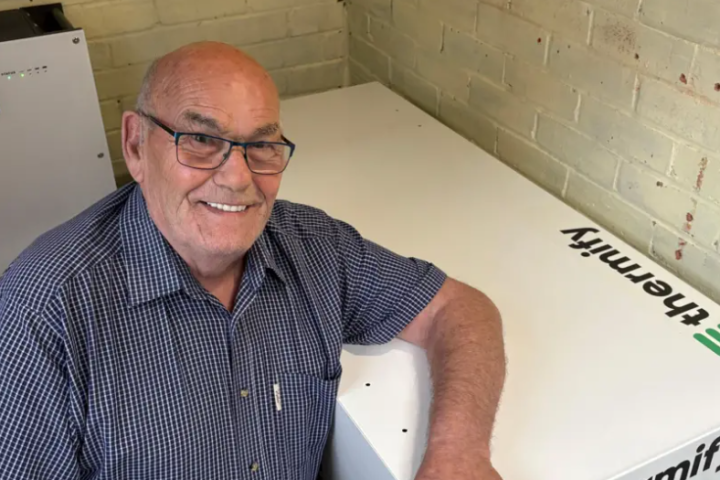
An Essex couple have become the first in the UK to heat their home using a data centre installed in their garden shed. Terrence and Lesley Bridges have reported a dramatic drop in energy bills, from £375 a month to as low as £40, after replacing their gas boiler with a HeatHub, a compact data centre containing more than 500 computers.

Data centres are essentially banks of computers that carry out digital tasks. As they process data, they generate significant heat. In the Bridges’ system, this heat is captured by oil and transferred into their hot water system. Mr Bridges, 76, explained the importance of reliable heating, saying it was necessary to keep their two-bed bungalow warm as his wife suffers from spinal stenosis and experiences “a lot of pain” in the cold.

“It truly is brilliant,” he said. “I’m over the moon that we got picked to trial this out. You can’t fault the heating system – it is a 100% improvement on what we had before.” His wife, Lesley, 75, added: “You don’t need to go to a sauna after coming here.”

The HeatHub was developed by Thermify as part of UK Power Networks’ SHIELD project, which explores innovative ways for low-income households to transition to net zero. Through the programme, the Bridges also received solar panels and a battery system, contributing further to their savings.

Despite turning the heating up to keep the house comfortable, Mr Bridges said their monthly bills were now “between £40 and £60 each month”. He described the system as “fantastic because it’s eco-friendly… we’re not burning any gases, so it’s green – it’s environmentally friendly.”

Thermify CEO Travis Theune explained that the Bridges’ HeatHub could eventually form part of a “remote and distributed” network of data centres, processing client data while simultaneously providing heat. He said: “The system provides clean, green heat at a low-to-no price point because the electricity that’s generating that heat is paid for by somebody else.”

Eastlight Community Homes, the Bridges’ landlord and a social housing provider, is also involved in SHIELD. Daniel Greenwood, their head of asset management, said: “We’ve seen great results for the current installation, and although this is the first of its kind, we’re looking to roll that out more broadly.” The next phase could see 50 homes fitted with HeatHubs.

Meanwhile, Mike Richardson, founder of DSM, is using an artificial lake and solar panels to cool a small data centre near Peterborough. Warm water from the servers is pumped into the lake and cooled before returning inside in a closed loop. “Keeping away from chemicals is an important thing for us,” he said, noting that the system uses less electricity for cooling compared with traditional setups.

As more UK homes and facilities explore innovative uses of data centre heat, experts say water-based systems are highly efficient for transferring heat. From garden sheds to artificial lakes, these initiatives could play a key role in reducing household energy costs while supporting a greener future.

Fifa Reports Over 30,000 Abusive Posts as Football Safety App Nears Launch

Fifa has revealed it has reported more than 30,000 abusive posts to social media platforms so far this year, as concerns around online harassment in football continue to rise.

In its latest report, world football’s governing body confirmed eleven individuals were referred to law enforcement authorities in 2025, with a further case submitted to Interpol. Those identified were based in Argentina, Brazil, France, Poland, Spain, the UK, and the US, following abuse directed at players, coaches, and match officials during Fifa competitions.

Marking the International Day for Tolerance, Fifa president Gianni Infantino said that football must remain a safe and inclusive environment at all levels — on the pitch, in the stands and online.

“Through the Fifa Social Media Protection Service and by deploying advanced technology and human expertise, Fifa is taking decisive action to protect players, coaches, teams and match officials from the serious harm that online abuse causes,” Infantino said.

The Fifa Social Media Protection Service (SMPS), created in partnership with FIFPRO in 2022, monitors abusive or threatening behaviour across major social platforms. During this year’s Club World Cup in the United States, SMPS tracked 2,401 active accounts, analysed almost 5.9 million posts, flagged 179,517 for review and reported 20,587 directly to the relevant platforms.

Fifa says more than 65,000 abusive posts have been reported since the service began, and individuals responsible may be banned from purchasing tickets for future tournaments.

Football Safety App to Launch This Year Amid Rising Safeguarding Pressures

As the issue of abuse continues to affect football at all levels, a new tool designed to support fans and protect victims is preparing for release.

The Football Safety App, now in the final stages of testing, will launch before the end of the year. Built to empower supporters, the app allows users to report incidents quickly and securely, whether the abuse takes place online, inside a stadium or in surrounding areas.

The app’s features include:

  • Instant reporting tools for abusive or discriminatory behaviour
  • Raw evidence captures through screenshots, video, and audio.
  • Anonymous reporting options, protecting those who fear repercussions.
  • A dedicated support hub, directing victims towards help and guidance.
  • Direct links to safeguarding teams, clubs, and relevant authorities.

The platform is already prompting interest across the sport, with discussions underway between developers and several professional clubs as safeguarding concerns grow.

Organisations, leagues, clubs and supporter groups interested in partnering with the project or becoming early adopters can register interest at:
www.footballsafetyapp.com
See it. Report it. End it.

Public Input Sought on Tackling Online Abuse

With online abuse showing no signs of slowing, the Football Safety App team is calling for public participation to help shape the future of safeguarding in the sport.

Supporters, players, club staff, and officials are encouraged to share views on:

  • The most effective ways to report abuse.
  • What protections and tools fans need
  • The level of support victims should receive.
  • What consequences offenders should face?

Feedback will help guide continued development of the app and inform wider conversations around safeguarding in football.

Peterborough councillors favour Option D to merge with western Huntingdonshire

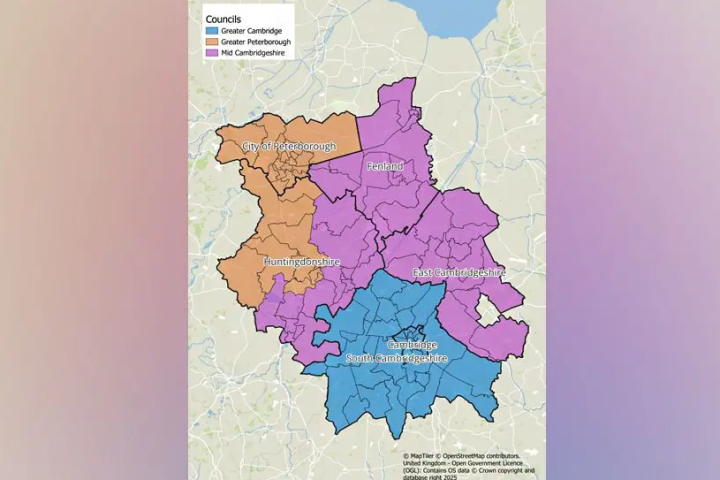
Peterborough city councillors have indicated a preference to merge with parts of western Huntingdonshire if local government is reorganised into larger unitary authorities. The government has directed councils in England to consolidate, aiming for new authorities with at least 500,000 residents each.

A majority of councillors in Peterborough voted in favour of “Option D”, which would combine the city with western Huntingdonshire, while creating two other councils covering Greater Cambridge and Mid Cambridgeshire. The council’s ruling cabinet is expected to make a final decision in the coming days before submitting their preferred option to central government, which will have the ultimate authority on which structure is implemented.

Five options are under consideration by the seven councils that make up Cambridgeshire and Peterborough.

Option A would merge Peterborough with Huntingdonshire and Fenland, leaving Cambridge, East Cambridgeshire, and South Cambridgeshire in a second unitary authority.

Option B would pair Peterborough, East Cambridgeshire, Fenland, and Huntingdonshire, with Cambridge and South Cambridgeshire forming another.

Option C combines Peterborough, East Cambridgeshire, and Fenland, while Cambridge, Huntingdonshire, and South Cambridgeshire would form the second.

Option D places Peterborough with parts of western Huntingdonshire, leaving eastern Huntingdonshire, Fenland, and East Cambridgeshire together, and Cambridge with South Cambridgeshire as the third authority.

Option E keeps Huntingdonshire as one council, Cambridge and South Cambridgeshire in another, and Peterborough, Fenland, and East Cambridgeshire in a third.

At a meeting on 12 November, councillors from Labour, Liberal Democrat, and Green Party groups, as well as some Peterborough First members and independents, backed Option D, emphasising its ability to preserve Peterborough’s identity. Conservative councillors and some Peterborough First members argued for Option A, highlighting financial advantages.

Wayne Fitzgerald, leader of the Conservative group, described the local government reorganisation process as a “farce” and claimed Option D, promoted by Labour MPs Andrew Pakes and Sam Carling, was being pursued for “political purposes”. Peterborough First councillor Gavin Elsey added: “It’s really disappointing that when we have this opportunity to restructure.. we’ve only looked inside Cambridgeshire.”

Labour council leader Shabina Qayyum dismissed the accusations, calling them “insulting”. The final submission from the local authority must be made to the government by 28 November, setting the stage for the next phase of the reorganisation process.

Former Norfolk police officer banned for sharing racist, misogynistic and pro-Nazi messages

A former Norfolk police officer has been permanently barred from policing after exchanging “hateful” messages containing pro-Nazi, misogynistic and racist content. Connor Rowley, 31, was found to have breached professional standards following a misconduct hearing at Norfolk Police headquarters in Wymondham.

Rowley, who was a constable in Norwich when the messages were sent, had thousands of messages uncovered that contained antisemitic, homophobic and misogynistic material. Some messages were said to trivialise violence against women, while others displayed pro-Nazi imagery and far-right ideology. The messages even included depictions of animal cruelty.

Assistant Chief Constable Nick Davison said Rowley had committed “serious and significant breaches” of the standards “key to the role of an officer in society”, which amounted to gross misconduct.

“Rowley would have been dismissed from the force had he not resigned with immediate effect on 9 September 2025, and he can never work in policing again,” Mr Davison added.

The messages were discovered as part of a separate investigation unrelated to Rowley or any other serving officer. Norfolk Police suspended him on 15 August after reviewing the content.

Deputy Chief Constable Dave Marshall described Rowley’s conduct as “hateful”, adding: “I’m appalled by these vile messages. The public we serve rightly expect the highest standards of honesty, integrity, and fairness. His behaviour fell woefully short of the standards we set ourselves and those expected of us. He has breached my trust, the trust of every dedicated member of our service and the trust of the communities he promised to protect and serve.”

The misconduct hearing highlights ongoing concerns over the conduct of former officers and the need for policing organisations to maintain strict professional standards, even in private communications. Rowley’s actions serve as a reminder that the responsibilities of a police officer extend beyond the workplace, reflecting the importance of integrity and respect in all areas of life.

The decision to bar Rowley from policing permanently comes as the force continues to enforce zero tolerance for discrimination and behaviour that undermines public trust. Norfolk Police emphasised that the highest standards must always be maintained to preserve the confidence of the communities they serve. 

Milton Keynes swan bird flu outbreak prompts urgent plea for PPE and donations

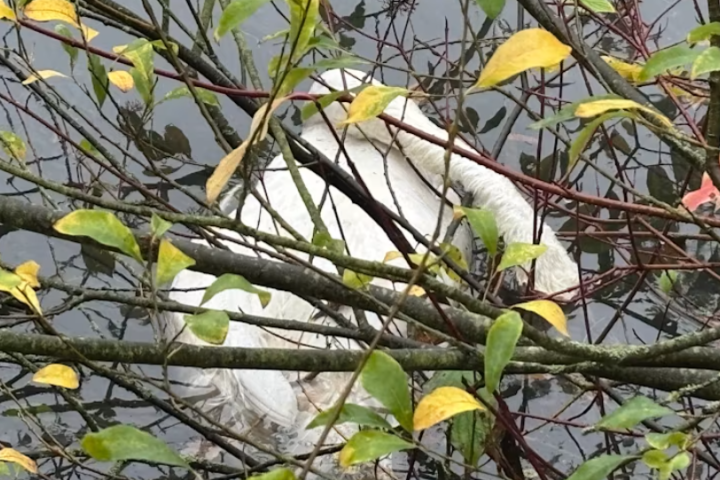
Swan rescuers in Milton Keynes are urgently appealing for donations of PPE and financial support as they battle a suspected bird flu outbreak that has already claimed six swans at Tongwell Lake. Volunteers fear the situation could deteriorate further in the coming days.

Avian flu is a highly infectious virus that can be fatal to birds if transmitted directly or indirectly. MK Swan Rescue, a not-for-profit organisation, has already spent £1,000 on protective equipment dealing with the current outbreak. Volunteers have been donning masks and rubber gloves while removing dead swans, sometimes using kayaks to reach them. Disinfectant spray is being used on shoes, hands, and equipment to prevent the virus from spreading.

Four of the deceased swans have been sent to the Department for Environment, Food & Rural Affairs (DEFRA) for testing. While it is up to DEFRA to confirm the cause of death, the director of MK Swan Rescue, Allie Humphries, said she has “no doubt” avian flu is responsible.

“Currently we’ve had six fatalities at this lake, while there are many that are still not looking too good,” Ms Humphries said. She explained that migratory birds appear to be introducing the virus inland, putting domestic flocks at risk. “It’s heartbreaking. The majority of the birds that we’re seeing affected are young adults, yearlings that we’ve known since they hatched the cygnets. So we’ve got a very, very close bond with them. It’s soul destroying.”

The rescue group is urging members of the public to report any sick or dead birds to the council or MK Swan Rescue. People are also advised to keep dogs on leads, avoid disturbing the swans, and remain on paths. Ms Humphries warned: “Be mindful of your footwear because if you’re picking up the droppings from the swans and you are then walking, you are potentially spreading the infection. So ideally, stay on the path. Disinfect your feet when possible, especially if you’re going home where you’ve got any sort of birds that you keep as pets because they’re at risk too. This is not just affecting the waterfowl.”

For the volunteers, the outbreak is emotionally taxing. Colin Bennett, a volunteer, said: “I thought it’d be great to volunteer to help them, because swans are such graceful creatures, beautiful on the water. But sadly, all I’ve been doing the last few days is, is body recovery, which isn’t the nicest part, but it’s necessary. They’re so graceful, magnificent creatures. And to see them at this particular time with this bird flu that’s coming across, it’s just awful.”

MK Swan Rescue has highlighted the symptoms of bird flu, noting that infected swans may appear withdrawn, uninterested in food, or swim in small circles shortly before death. To continue their work safely, the CIC organisation has a wishlist on its website detailing the PPE and supplies needed to care for swans while disinfecting affected areas.

The charity hopes public support can help prevent the outbreak from worsening and protect the swans they have nurtured for years.

Garden House Hospice Care funding crisis forces staff consultation amid major shortfall

The Garden House Hospice Care funding crisis has deepened as the charity warns that more than 20 members of staff may face redundancy. The hospice in Letchworth Garden City has described the situation as the “most serious” financial challenge in its history. It has now begun a 30 day consultation with staff to identify possible savings as it struggles with a £1.1 million shortfall. Earlier this year the Garden House Hospice Care funding crisis led to the closure of a quarter of its bedrooms, a move that left both staff and patients distressed.

The hospice launched a public appeal in an attempt to close the gap and maintain services. So far, £133,033 has been raised, but the total remains far from what is required to safeguard its future. Patients who rely on the hospice for vital end of life care have spoken out about the impact of the Garden House Hospice Care funding crisis. Patient Roz Gordon said: “I’m absolutely devastated that the hospice crisis is something we even have to talk about.” She added that the hospice “gives all of us in a similar situation to me the dignity to be able to end our lives as we wish”.

Lisa Hunt, chief executive of Garden House Hospice Care, said the organisation was being forced to take “drastic action”. In a statement she thanked local people for their efforts to help. “We are deeply grateful for the generosity and belief shown by our community,” she said. “But despite this incredible support, it isn’t enough. Today, we face the most serious challenge in our hospice’s history.”

The hospice costs £8.5 million a year to run, which equates to £11.53 every minute, and the scale of the Garden House Hospice Care funding crisis reflects a wider national problem. Garden House receives just 29% of its funding from the NHS for commissioned services. The remaining 71% must be raised through voluntary donations. Across the sector two thirds of hospices reported a shortfall last year and 40% are reducing services in 2025. That number is expected to rise.

Mrs Hunt said: “This is not just a funding crisis. It is a care crisis.” She explained that hospices are vital within the health system and that “without sustainable funding, that safety net is collapsing”. She said pressure on health and social care was severe, adding: “It’s gut wrenching. Hospice care should not be left until last to be considered.” Calling for government support, she said: “The government must wake up and see the stark reality of this situation not just for Garden House Hospice Care, our staff, volunteers and services users but for all hospices.”

A spokesman for the Department of Health and Social Care said the government understood the “incredibly tough pressures” facing hospices. He said the government had invested £100 million to improve hospice facilities and committed £80 million for children and young people’s hospices over three years. He added that there was more to do and that work was underway to improve the sustainability of palliative and end of life care as part of the 10 year Health Plan.

Early Bird Survey 2026 Forecasts 30% Rise in Oilseed Rape Area

The latest Early Bird Survey (EBS) suggests that the UK could see a significant increase in oilseed rape plantings for 2026. Published on 13 November 2025, the provisional survey results indicate a 30 per cent rise in oilseed rape area compared with last year, while wheat is expected to increase slightly by 1 per cent. Conversely, barley and oats are forecasted to decline, with regional variations across the country.

The EBS combines official provisional estimates from England and Scotland with estimated areas for Wales and Northern Ireland. Final official figures for 2025 are yet to be published by Defra, so these forecasts should be treated as provisional. Historical trends show that extreme weather can affect planted and harvested areas, meaning actual outcomes may differ from early projections.

Helen Plant, Senior Analyst for AHDB Cereals & Oilseeds, explained: “Oilseed rape is the stand-out crop for 2026, with a projected rise to 316 Kha. While this is a large year-on-year increase, it follows the forty-two-year low recorded in 2025 and remains below 2023’s 391 Kha. Autumn drilling conditions were generally good in 2025, but the market environment is challenging. Lower cereal prices, reduced milling and malting premiums, and rising costs for all crops have influenced planting decisions. Oilseed rape likely offered a more favourable margin outlook, combined with strong yields in 2025. Other factors, including poor cereal yields over the past two years and commitments to agri-environment schemes, are also expected to impact 2026 planting plans.”

The Early Bird Survey is carried out each autumn by The Andersons Centre with support from agronomists affiliated with the Association of Independent Crop Consultants (AICC) and the Agricultural Industries Confederation (AIC). Nearly 70 agronomists contributed data covering 600 Kha of UK arable land, providing a snapshot of cropping changes to inform national forecasts. Data was mainly collected by 1 November 2025, with some submissions received up to 7 November.

While the survey has a strong track record for accuracy, it represents a point-in-time snapshot. Estimates for winter crops and larger crops are generally more reliable, whereas spring crop intentions are subject to change. AHDB will publish final adjusted results, including regional breakdowns, following the release of the UK June survey results for 2025 in mid-December.

Basildon Hospital Breast Unit Fundraising Hits £10,000 After Everest Trek

A Wickford woman has raised over £10,000 for the Basildon Hospital Breast Unit by trekking to Everest Base Camp in a remarkable show of gratitude. Natalie Robinson, 37, completed the 18-day journey in September alongside her husband, James, raising £10,195 through donations from friends, family, and local fundraising events.

Natalie was diagnosed with early-stage breast cancer in May 2023 after discovering a small lump and being referred to Basildon Hospital. She underwent a mastectomy the following month, followed by 16 weeks of chemotherapy starting in August.

After finishing her treatment, Natalie decided to take on the Everest challenge, seeing it as both a personal achievement and a way to thank the medical team that supported her. She said: “It’s something I’ve always dreamed of doing, but this gave it meaning, a way to thank the people who helped me through my hardest days, and to do something incredible for myself. Throughout my treatment the team at Basildon were so supportive. They were always there when I had questions or needed reassurance. I always felt listened to and truly cared for. Even now, I can call them anytime I need support.”

An active and fit individual, Natalie trained for the trek with her husband and their five-year-old daughter, Millie, who joined them on hikes and daily walks to prepare for the challenge.

Vanessa Kendle, Basildon Breast Unit Manager, said: “We will be forever grateful for Natalie’s hard work in raising such a significant amount of money, which will help improve patient facilities and make it a more welcoming place to receive care. That includes enhancing our patient treatment areas by refurbishing them and adding more comfortable couches in the clinical rooms.”

Clair Dade, Fundraising Coordinator for Mid and South Essex Hospitals Charity, added: “Our charity and Breast Unit teams have all been following Natalie’s journey on social media and are so proud of what she’s achieved. Her fundraising will make a real difference for other patients for years to come. We’re so grateful for such incredible fundraising.”

Cambridgeshire police seize £280k of illegal goods in city shop raids

A three-week police crackdown has uncovered nearly £280,000 worth of illegal goods across Cambridgeshire, including counterfeit vapes, alcohol, and cigarettes.

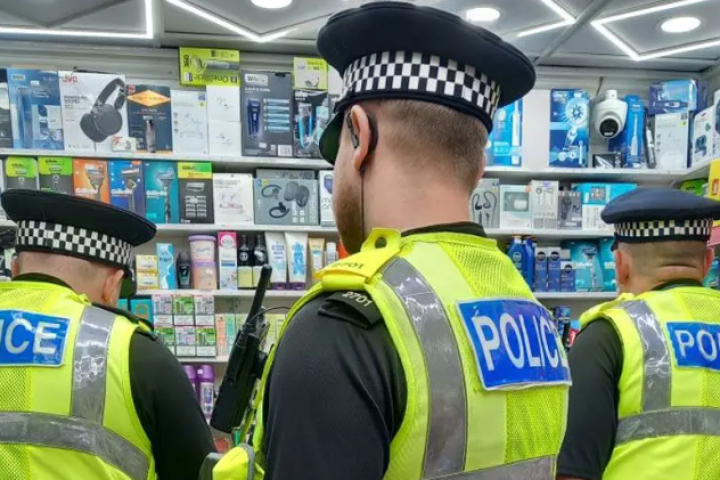
The joint operation, led by Cambridgeshire Police in partnership with local authorities, saw officers visit 36 businesses in Peterborough and Whittlesey during October. These cash-based premises included convenience stores, barber shops, and hand car washes identified as potential hotspots for criminal activity.

During the raids, police seized more than 8,000 suspected illegal vapes and 8,500 bottles of alcohol from unlicensed venues. A further 280,000 cigarettes and 20 kilograms (44 pounds) of hand-rolled tobacco were confiscated. The estimated total value of goods recovered stands at almost £280,000.

Detective Inspector Shish Thind said the results sent “a clear message that we will not tolerate criminal activity hiding behind cash-rich businesses.”

The operation, part of Operation Machinize 2 — a nationwide National Crime Agency (NCA) initiative — also investigated possible links to money laundering, modern slavery, and drug supply. The NCA said the wider action across the UK had led to £10.7 million in criminal proceeds being seized.

As part of the Cambridgeshire crackdown, six drug-related arrests were made, and police confirmed that investigations remain ongoing. Closure orders are also being pursued for 11 shops found to be selling illegal goods.

Christian Hogg, Peterborough City Council’s cabinet member for housing and regulatory services, praised the operation and urged residents to help root out illicit trade. “We would encourage anyone who has any knowledge of suspected illegal alcohol and tobacco sales to report it to Peterborough and Cambridgeshire Trading Standards – reports can be made anonymously,” he said.

The campaign reflects a broader effort to clamp down on cash-intensive high street businesses being used for criminal purposes, as well as to protect consumers from unregulated and potentially dangerous products.

Skip to content Skip to content