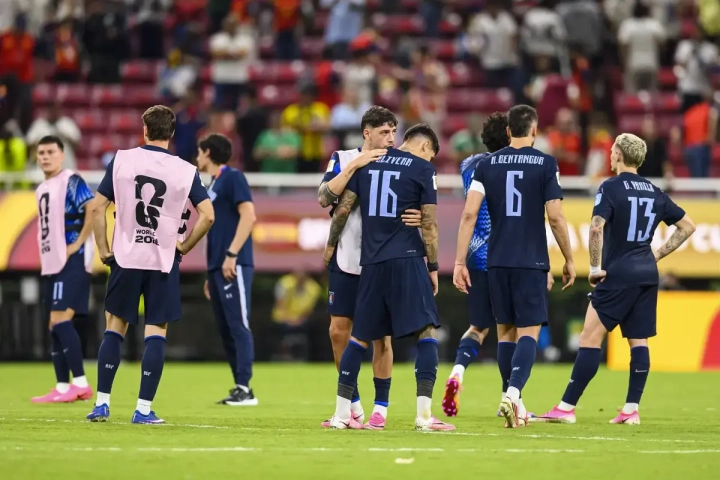
Spain secured top spot in Group H of the 2026 FIFA World Cup with a tense 1-0 victory over Uruguay in Guadalajara, a result that booked La Roja’s place in the knockout rounds and brought a disappointing end to Uruguay’s campaign. In a contest that rarely reached the technical heights many expected from two traditional footballing nations, a single moment of quality – aided by a costly goalkeeping mistake – proved enough to separate the sides.
The decisive goal arrived three minutes before half-time when Álex Baena struck what ultimately became the winner. Uruguay goalkeeper Fernando Muslera, one of the most experienced players in the tournament and a long-serving servant of his national team, failed to deal with the effort and could only watch as the ball crossed the line. That moment defined a match in which opportunities were limited, tensions were high and every challenge carried enormous significance.
Heading into the final group fixture, the stakes could hardly have been greater. Spain entered the evening sitting at the top of Group H after opening their campaign with a goalless draw against Cape Verde before producing a convincing victory over Saudi Arabia. Uruguay, meanwhile, had drawn both of their previous matches and knew that anything less than a victory could leave them vulnerable. Marcelo Bielsa’s side therefore approached the game with urgency, aware that their World Cup future rested on the outcome.
The opening exchanges reflected the pressure both teams were under. Spain enjoyed the majority of possession as expected, patiently moving the ball across the pitch and looking for spaces in the Uruguayan defensive structure. Uruguay responded with aggression and intensity, pressing high whenever possible and attempting to disrupt Spain’s rhythm. The South Americans knew they could not simply sit back and absorb pressure, and they sought to unsettle Spain’s creative players from the outset.
Lamine Yamal attracted particular attention. The young Spanish star was frequently targeted by Uruguay’s defenders, who recognised the danger he posed whenever he received possession in advanced areas. Every touch seemed to draw a challenge, and the teenager spent much of the evening navigating physical attention from multiple opponents. While Uruguay succeeded in limiting some of his influence, they could never fully remove him from the contest.
Spain’s patient build-up began to create openings as the first half progressed. Pedri, operating in midfield, attempted to dictate the tempo while Martín Zubimendi provided balance behind him. The European side were not at their most fluid, but they consistently looked the more likely team to produce a breakthrough. Uruguay, despite their commitment and energy, struggled to create clear opportunities in the final third.
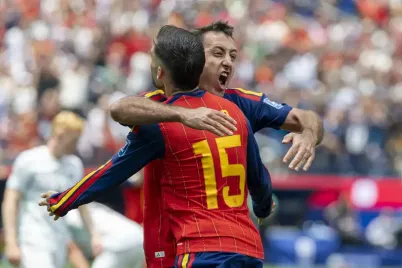
The breakthrough arrived in the 42nd minute. Spain worked the ball into a dangerous area and Baena found space to unleash a shot that appeared manageable for Muslera. Instead of making a routine save, the veteran goalkeeper misjudged the effort and allowed it to slip through his grasp and into the net. The Spanish players immediately celebrated what could prove a tournament-defining moment, while Muslera stood in disbelief.
For Uruguay, the goal was a devastating blow. The timing could hardly have been worse. After spending much of the half competing effectively and frustrating their opponents, they suddenly found themselves trailing in a match they simply could not afford to lose. The reaction from the Uruguayan players was one of frustration, while Spain sensed an opportunity to take control.
Half-time arrived with Spain leading 1-0, and the mood inside the stadium reflected the contrasting emotions of the two camps. Spanish supporters sensed qualification was within reach, while Uruguay fans feared another early World Cup exit. Muslera’s mistake dominated the conversation during the interval, and there was widespread recognition that the error had dramatically altered the trajectory of the match.
Uruguay emerged for the second half determined to respond. Bielsa’s side pushed forward with greater urgency and attempted to inject more pace into their attacks. Federico Valverde, one of the team’s key figures, sought to inspire a comeback through his energy and leadership. Darwin Núñez worked tirelessly in attack, trying to stretch Spain’s defensive line and create opportunities for his teammates.
Yet despite their efforts, clear chances remained scarce. Spain defended intelligently and with discipline. Aymeric Laporte marshalled the back line effectively, while his defensive colleagues remained composed whenever Uruguay attempted to increase the pressure. The Spanish structure rarely looked vulnerable, and goalkeeper Unai Simón enjoyed a relatively quiet evening.
As the clock ticked down, the game became increasingly physical. Challenges flew in from both sides and the tension became obvious. Uruguay’s desperation to rescue their tournament led to a more direct approach, while Spain focused on protecting their advantage and managing the match. The quality of football occasionally suffered amid the intensity, but the drama remained compelling.
Spain had opportunities to extend their lead. Several promising attacks developed through quick passing combinations, and there were moments when a second goal appeared possible. However, the final touch often deserted them. Had they been more clinical, they might have avoided the nervous final stages that followed.
Uruguay continued to push forward but struggled to produce meaningful attempts on goal. Spain’s defensive organisation proved difficult to break down, and the South Americans increasingly looked short of ideas. Every passing minute strengthened Spain’s position while weakening Uruguay’s hopes.
The final stages were played against a backdrop of rising frustration from Bielsa’s team. Knowing elimination was approaching, Uruguay threw more bodies forward in search of an equaliser. Spain, meanwhile, remained composed and focused on seeing out the result.
Any remaining hope for Uruguay effectively disappeared in stoppage time when Agustín Canobbio was shown a red card following a reckless challenge. The dismissal summed up a difficult evening for the South Americans. Their frustration had boiled over, and they finished the match with ten men. It was a disappointing conclusion to a campaign that had promised much more.
When the final whistle sounded, Spanish players celebrated a hard-earned victory and qualification for the knockout rounds. The result ensured Spain finished first in Group H with seven points from three matches. Just as importantly, they progressed without conceding a goal during the group stage, highlighting the defensive solidity that has become a hallmark of Luis de la Fuente’s side.
For Uruguay, the final whistle confirmed elimination. Despite entering the tournament with considerable expectations and a squad containing several accomplished players, they failed to win a single group match. Draws against Saudi Arabia and Cape Verde left them with little margin for error, and the defeat to Spain ultimately ended their hopes. It represented a hugely disappointing outcome for a nation with such a rich footballing history.
Speaking after the game, Spain manager Luis de la Fuente praised his players for navigating a difficult and highly physical contest. He highlighted their maturity, resilience and concentration, emphasising that knockout qualification is never straightforward at a World Cup. The Spanish coach acknowledged that the performance was not always spectacular but stressed that tournament football often requires patience and discipline rather than flair alone. He also expressed satisfaction with his side’s defensive record and the mentality shown under pressure.
De la Fuente reserved particular praise for Baena, whose goal proved decisive. The midfielder’s willingness to take responsibility in a crucial moment was applauded, and the coach noted the importance of contributions from across the squad as Spain prepare for the challenges ahead. He also praised the collective effort of the team, insisting that qualification had been achieved through hard work rather than individual brilliance.
Baena himself admitted the goal was among the most important of his international career. He described the feeling of scoring in such a significant match as special and expressed delight at helping Spain reach the next stage. The midfielder also acknowledged that fortune sometimes plays a role in football but insisted his focus had simply been on testing the goalkeeper whenever opportunities arose.
Marcelo Bielsa cut a more sombre figure after the match. The Uruguay manager accepted responsibility for the team’s elimination and acknowledged that his side had not performed to the level required during the group stage. While disappointed by the result, he praised his players for their effort and commitment, noting that they had fought until the final moments despite the growing odds against them.
Bielsa also reflected on the costly mistakes that influenced Uruguay’s campaign. Without directly criticising individuals, he recognised that small errors can have enormous consequences in tournament football. The experienced coach admitted the group-stage exit would be difficult to accept but insisted that the team must learn from the experience and use it as motivation moving forward.
The defeat raises questions about the future direction of Uruguay. With several veteran players approaching the latter stages of their international careers, attention will inevitably turn toward rebuilding and preparing for future competitions. The talent remains present within the squad, but the inability to convert potential into results at this tournament will undoubtedly lead to scrutiny.
For Spain, however, the mood is entirely different. While their performance against Uruguay was far from perfect, they achieved exactly what was required. They topped the group, remained defensively secure and advanced into the knockout rounds with confidence intact. Tournament football often rewards efficiency as much as entertainment, and Spain demonstrated both qualities when it mattered most.
There will still be areas for improvement. At times Spain lacked creativity in the final third and struggled to translate possession into clear-cut opportunities. Stronger opponents may punish such inefficiency in later rounds. Yet there is also plenty of encouragement. The defensive unit appears reliable, the midfield remains technically gifted and players such as Yamal, Pedri and Baena possess the ability to influence major matches.
The significance of finishing first should not be underestimated either. Spain avoided additional complications in the knockout bracket and can now prepare for the next phase with momentum behind them. The confidence gained from an unbeaten group campaign could prove invaluable as the tournament progresses.
Ultimately, this was not a match that will be remembered for breathtaking football or attacking brilliance. Instead, it was a contest shaped by pressure, determination and a single decisive mistake. Baena’s goal separated the teams, Muslera’s error proved costly, and Spain emerged with the prize they sought. Uruguay fought hard but could not find the breakthrough they desperately needed.
As Spain look ahead to the knockout rounds, belief will continue to grow that they can challenge for the biggest prize in world football. Uruguay, meanwhile, must begin the difficult journey home, left to reflect on missed opportunities and a campaign that never truly came to life. On a night when margins were tiny but consequences enormous, Spain found a way through, while Uruguay’s World Cup adventure came to an abrupt and painful end.