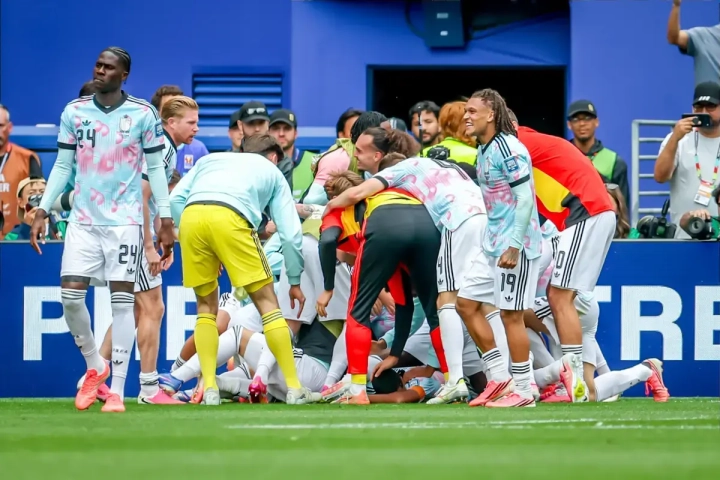
Belgium produced one of the most dramatic comebacks of the World Cup so far as they recovered from two goals down to beat Senegal 3-2 after extra time in a remarkable Round of 32 tie in Seattle. For long periods, Senegal looked set to claim a famous knockout victory after goals from Habib Diarra and Ismaïla Sarr placed them in command, but Belgium refused to accept elimination. Late goals from Romelu Lukaku and Youri Tielemans dragged the contest into extra time before Tielemans completed the turnaround with a controversial penalty deep into the additional period.
It was a match shaped by momentum, nerve and regret. Senegal were composed, brave and dangerous for much of the evening, yet Belgium somehow found a route back when their campaign appeared to be slipping away. The result sends Belgium into the last 16, where they will face the United States, while Senegal are left to reflect on a painful exit from a match they had largely controlled until the closing stages.
The first half belonged to Senegal’s structure and sharpness. They pressed Belgium intelligently, disrupted their rhythm in midfield and repeatedly looked dangerous when space opened in transition. Belgium, despite their technical quality, struggled to establish control and too often moved the ball without enough pace or penetration. Senegal’s confidence grew as the half progressed, and their reward arrived when Diarra struck to give them a deserved lead.
That goal changed the emotional balance of the match. Senegal began to play with greater belief, while Belgium looked increasingly tense. The Belgian defence was forced into hurried clearances, and their midfield lacked the authority required to settle the team. Senegal were not simply protecting a lead; they were threatening to extend it.
After the interval, Sarr delivered what appeared to be the decisive moment. His second-half goal gave Senegal a 2-0 advantage and placed them within touching distance of the last 16. At that point, Belgium were staring at elimination. Their passing was becoming desperate, their attacks predictable, and Senegal’s supporters could sense a major result approaching.
Yet knockout football rarely allows comfort, and Belgium’s bench changed the game. Lukaku’s introduction gave Belgium a focal point, while the increased urgency around him finally forced Senegal deeper. Belgium began sending more bodies forward, not always with precision, but with enough pressure to unsettle a Senegal side that had looked so composed for most of the match.
Lukaku’s goal in the 86th minute transformed the contest. Suddenly Belgium had belief, Senegal had doubt, and the stadium atmosphere shifted dramatically. The striker’s finish gave Belgium a lifeline, but it was also a psychological blow to Senegal, who had been minutes away from managing the game to a famous victory.
The equaliser followed quickly, with Tielemans arriving at the crucial moment to make it 2-2 and complete a stunning late rescue act. Senegal, who had spent most of the evening looking in control, were now trying to survive. Belgium, who had looked short of ideas, had found energy, conviction and emotional force when it mattered most.
Extra time carried the tension of two teams living on the edge. Senegal still threatened, and Belgium needed Thibaut Courtois to remain alert in key moments. But the decisive incident arrived late, when a challenge by Lamine Camara was reviewed and Belgium were awarded a penalty. Senegal protested fiercely, feeling the decision was harsh at such a decisive stage of a World Cup knockout tie, but Tielemans stayed calm and converted to complete a remarkable Belgian comeback.
Belgium head coach Rudi Garcia praised his side’s character afterwards, pointing to the impact of his substitutes and the refusal of the players to stop believing even when the match seemed beyond them. He accepted Belgium had suffered for long spells and acknowledged Senegal’s quality, but felt the response in the final minutes showed the resilience required in tournament football. His message was clear: Belgium had survived because they kept playing until the final whistle.
Senegal coach Pape Thiaw was understandably devastated. He felt his team had done enough to win for most of the contest and described the ending as cruel. While he avoided turning his frustration solely towards the officials, there was no disguising the pain caused by the late penalty decision and the collapse that preceded it. His players had executed the plan impressively for 85 minutes, only to see the match escape them in the most dramatic fashion.
For Belgium, this was not a flawless performance, but it was a powerful statement of survival. They showed vulnerability, but also experience. Lukaku’s presence changed the attacking picture, Tielemans delivered at the biggest moments, and Courtois produced the authority needed behind an increasingly stretched defence.
For Senegal, the defeat will be difficult to process. They had the lead, the organisation and the chances to finish the job. Instead, they leave the tournament after one of the most painful collapses of the knockout stage. Their performance deserved respect, but football at this level punishes even brief lapses in concentration.
Ultimately, Belgium advanced because they found clarity in chaos. They were second best for long spells, but when the match demanded courage, they responded. Senegal produced a performance full of discipline, pace and ambition, yet Belgium delivered the moments that mattered most. In a World Cup built on drama, this was a contest that will be remembered for its late twist, its emotional swing and a Belgian comeback that looked impossible until it suddenly became reality.