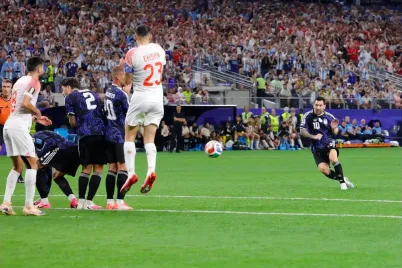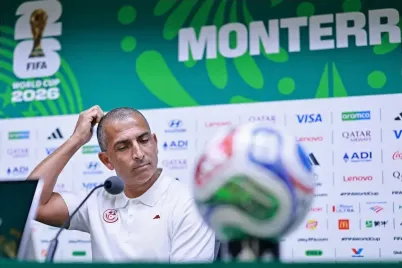
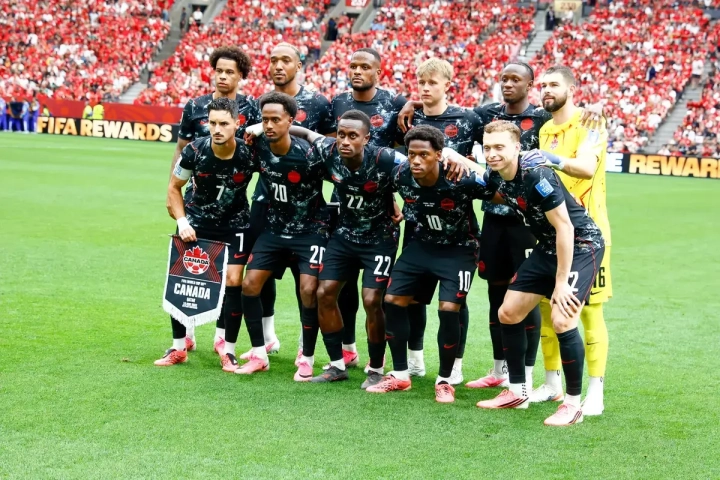
The sprawling, sun-drenched expanse of Southern California is set to host a genuinely historic encounter in the newly expanded knockout phases of the 2026 FIFA World Cup. Scheduled for a midday local start, translating to exactly 20:00 BST on Sunday, 28 June 2026, this monumental Round of 32 fixture will see South Africa clash with tournament co-hosts Canada. Unfolding beneath the spectacular, translucent canopy of the Los Angeles Stadium in Inglewood, the match represents entirely uncharted territory for both proud footballing nations. Neither side has ever progressed beyond the group stages of a World Cup prior to this landmark tournament. Consequently, the impending ninety minutes offer an unprecedented opportunity to secure a berth in the Round of 16 and permanently etch their names into national sporting folklore.
The Journey to the Round of 32
Arriving on the West Coast riding a monumental wave of euphoria, Hugo Broos’s squad has fundamentally rewritten their World Cup narrative. The African representatives commenced their North American campaign with a sobering 2-0 defeat against Mexico, a result that immediately raised questions regarding their tactical resilience on the grandest stage. However, they subsequently displayed immense character to grind out a gritty 1-1 stalemate with the Czech Republic, setting the stage for a dramatic, winner-takes-all group decider.
Conversely, the Canadian team has experienced a fiercely contrasting emotional journey over the past fortnight. Guided by the energetic, tactically astute Jesse Marsch, the co-hosts confidently navigated their opening assignments. A hard-fought 1-1 draw against Bosnia and Herzegovina was emphatically followed by a ruthless 6-0 demolition of Qatar, demonstrating their lethal attacking capabilities when afforded space in the final third.
Official Match Facts & Information
Category | Details |
Competition | FIFA World Cup 2026 – Round of 32 |
Date | Sunday, 28 June 2026 |
Kick-off Time | 20:00 BST |
Venue | Los Angeles Stadium, Inglewood, California |
South Africa Manager | Hugo Broos |
Canada Manager | Jesse Marsch |
A Look Back at Recent Competitive Form
South Africa’s Pragmatic Triumph
Bafana Bafana secured their knockout berth through a highly disciplined, tactical masterclass against South Korea, ending with an exact final score of 1-0 in their conclusive Group A encounter. After absorbing immense territorial pressure—with the Asian side dominating 68 percent of the possession—manager Hugo Broos made a game-changing in-game adjustment. In the 61st minute, he introduced substitute Tshepang Moremi to stretch the opposition defence. The impact of the substitution was instantaneous. Just two minutes later, in the 63rd minute, Moremi sprinted down the left flank and delivered a precise pass to Thapelo Maseko. The 22-year-old winger showcased phenomenal close control before slotting a low finish into the net. Outstanding individual defensive performances from Ime Okon and Mbekezeli Mbokazi ensured the clean sheet, while full-back Aubrey Modiba picked up a 72nd-minute yellow card for a cynical tactical foul. The hard-fought victory represented South Africa’s first-ever progression from the group stages.
Canada’s Bitter Stumble
The co-hosts arrive in Los Angeles looking to rebound from a deeply frustrating 2-1 defeat to Switzerland in their conclusive Group B fixture. Despite operating in front of a passionate home crowd at BC Place in Vancouver, Marsch’s side fell victim to a rapid Swiss double-strike. Rubén Vargas broke the deadlock in the 46th minute, followed swiftly by Johan Manzambi in the 57th minute. Facing a damaging defeat, Marsch attempted to shift the momentum through aggressive substitutions, introducing powerful forward Promise David in the 74th minute. The change paid immediate dividends, as David scored a spectacular goal in the 76th minute with his very first touch of the match. However, despite relentless late pressure, an early yellow card for Cyle Larin in the 31st minute, and an 87th-minute yellow for Liam Millar following a desperate tactical foul, Canada could not find an equaliser. The result forced them to settle for the runner-up spot in the section, necessitating a demanding logistical relocation to California.
Injury and Suspension Concerns
Preparation for this monumental knockout clash has presented significant challenges for the North American medical staff. The Canadian midfield remains severely depleted following a devastating broken leg sustained by dynamic enforcer Ismaël Koné earlier in the tournament. His absence has forced Marsch to frantically remodel his engine room, placing immense physical pressure on Nathan Saliba and Mathieu Choinière. Furthermore, the match fitness of vice-captain Stephen Eustáquio is a lingering concern; the influential midfielder was deemed only fit enough for a substitute appearance against Switzerland and will require careful management to complete a full ninety minutes in the punishing Californian climate.
On the opposite side of the tactical divide, the South African camp reports a remarkably pristine bill of health following their intensely physical battle against the South Koreans. Broos completely avoided any fresh injury concerns, granting him the luxurious flexibility of selecting his absolute strongest starting eleven. Both squads must remain acutely aware of the disciplinary tightrope, however. Modiba, Larin, and Millar all carry yellow cards into this fixture. While none of these players are suspended for Sunday’s encounter, another booking would rule them out of a potential Round of 16 tie.
Tactical Battlegrounds
Analysing the granular details of the impending matchup reveals a fascinating clash of overarching footballing philosophies. Marsch is fundamentally wedded to a high-intensity, vertical pressing system. He will instruct his players to aggressively hunt the ball in advanced areas, seeking to force turnovers and launch rapid attacks before the opposition defensive structure can fully reset. The sheer pace of Jacob Shaffelburg and the imposing physical presence of Promise David, who is fiercely pushing for a starting berth following his heroics against the Swiss, will be absolutely central to their offensive blueprint.
Recognising their opponents’ desire for a frantic, chaotic tempo, the African side will likely embrace a much more calculated, reactive posture. Broos has demonstrated a clear willingness to cede territorial possession, relying on a deeply entrenched, disciplined defensive block. By heavily congesting the central channels, they will deliberately frustrate the Canadian playmakers. Once possession is successfully recovered, the devastating transition speed of Maseko and the creative vision of Yaya Sithole will be immediately weaponised to ruthlessly exploit the vast spaces left behind by the advancing Canadian full-backs, Alistair Johnston and Richie Laryea.
Major Talking Points and Conclusion
A major talking point surrounding the fixture is the stark logistical disparity between the two camps. Losing to Switzerland fundamentally stripped Canada of their home advantage in British Columbia, forcing an arduous, unplanned journey down the Pacific coast to Los Angeles. Managing the physical fatigue of international travel alongside the psychological blow of losing their final group game will be a monumental test of Marsch’s managerial credentials. South Africa, meanwhile, transitions smoothly from Monterrey, Mexico, carrying the immense, uplifting momentum of a historic victory.
Encounters between these two distinct footballing cultures are exceptionally rare on the senior international stage, adding a wonderful element of sheer unpredictability to the proceedings. The stark lack of recent historical precedent means there is absolutely no established psychological hierarchy or past tournament trauma to heavily influence the players’ mindsets. Sunday’s clash offers both proud nations a completely blank canvas upon which to boldly paint their World Cup legacy.
For the ambitious co-hosts, the fixture provides a golden opportunity to overcome their recent disappointment, validate their tactical evolution under Marsch, and reward their travelling contingent with a memorable, commanding performance. For the resilient African challengers, it represents one final, monumental chance to defy the overwhelming odds and execute a historic progression on the grandest global stage. Millions of fans tuning in around the world can readily anticipate an intriguing, fiercely contested encounter that perfectly encapsulates the unforgiving, dramatic essence of knockout football.