[directorist_search_result]

AHDB Winter Crop Development Report Shows Strong Early Season Progress

AHDB’s (Agriculture and Horticulture development board) latest crop development report indicates that winter cereal and oilseed crops are progressing well ahead of expectations. The findings show notable improvement compared with recent seasons, particularly last autumn, when prolonged wet weather disrupted drilling and early establishment. The focus key phrase AHDB winter crop development will be used throughout to reflect the central focus of the report.

As of Monday 24 November, only three per cent of planned winter wheat remains to be drilled. Most crops have already emerged and many have developed rapidly. AHDB winter crop development data shows that 83 per cent of the 2026 winter wheat crop, 89 per cent of winter barley, 87 per cent of winter oats and 82 per cent of winter oilseed rape are in good or excellent condition.

These figures contrast sharply with conditions reported in November 2024, when 18 per cent of winter wheat was yet to be planted or emerge and only 44 per cent of crops were classed as good or excellent. AHDB winter crop development metrics suggest that improved drilling conditions this year have been a critical factor. A significant carryover of nitrogen from fertiliser applied between April and June has also been reported, which may have supported the swift early development seen so far.

Comparable figures for November 2023 are not available, though many crops were affected by intensely wet conditions at the time. The current condition ratings are close to those last observed in November 2022 for the harvest 2023 season, marking a return to more favourable early season progress.

The positive outlook is tempered by wider financial concerns. Farmers continue to face low margins following two difficult years, with subdued malting and milling premiums adding further strain. AHDB winter crop development is therefore being interpreted within a broader economic context.

Helen Plant, AHDB Senior Analyst for Cereals and Oilseeds, said: “Overall, crop potential for harvest 2026 looks promising, and there is hope that higher yields will help offset current low prices. However, it’s important to remember that farmers have experienced two exceedingly difficult financial years and low margins remain a challenge, with depressed malting and milling premiums adding further pressure.”

Norfolk Redundancy Support Service Launched Amid Rising Job Loss Risks

Norfolk County Council has announced a new package of support as the county prepares for what could be a significant rise in job losses. A report presented to the authority’s cabinet has warned that Norfolk may face up to 15,000 redundancies over the next couple of years. The focus key phrase Norfolk redundancy support service will be integrated throughout this article to reflect the central theme.

The council is developing a 12 month pilot programme that will introduce an online portal designed to connect businesses and employees with both local and national support where there is risk of redundancy. If an individual requires more tailored assistance, they will be referred to a suitable project or service able to provide bespoke help through a dedicated team. The intention is to ensure the Norfolk redundancy support service offers a coherent and accessible route to guidance.

The backdrop to the new initiative includes the expected loss of up to 550 jobs at Lotus Cars following major cutbacks announced in August, as well as a possible 350 job losses at the NHS Norfolk and Waveney Integrated Care Board. During the 2020 recession, the UK recorded 750,000 job losses. Norfolk specific data was not available but the area is widely estimated to account for around 2 percent of the national average. Based on this, the report suggests that Norfolk could be facing up to 15,000 job losses in the near future.

Businesses have reported financial pressures linked to an increase in employer National Insurance contributions, minimum wage rises and new Day 1 rights relating to sick pay and parental leave. These changes are affecting staffing levels. Other wider factors include US tariffs, international conflicts, inflation, interest rates and the ongoing effects of Brexit. Together these elements contribute to an uncertain economic climate that the Norfolk redundancy support service aims to help residents navigate.

The Department for Work and Pensions operates a Rapid Response Service for employers who formally notify of planned redundancies involving 20 or more staff. The service then discusses potential support with employers. Norfolk’s business landscape is dominated by micro businesses, with 88 percent employing nine people or fewer. Many of these would not meet the threshold for DWP support, yet job losses have equally significant impacts on workers and communities. The Norfolk redundancy support service intends to bridge this gap by offering assistance to businesses of all sizes.

The pilot programme will be reviewed and evaluated throughout the 12 month period. Subject to sufficient demand, the service could continue after future devolution measures and Local Government Reorganisation. The aspiration is to ensure ongoing support for the workforce during a period of economic pressure.

Cllr Fabian Eagle, Cabinet Member for Employment and Skills at Norfolk County Council, said: “As a council we want to do absolutely everything we can to support people who have lost or are at risk of losing their jobs. There is already a lot of support available, and this online portal will simplify access to this for both businesses and individuals. People will also be able to get referred for individual support from a dedicated team.”

Grant Thornton Opens New Colchester Office to Support Local Businesses

Grant Thornton, the business and financial advisory firm, has opened a new office in Colchester, set to accommodate around 50 colleagues. The practice, based at Unit 7, Tollgate Business Park, aims to strengthen the firm’s presence in North Essex, where it has worked with local businesses for more than 25 years.

The Colchester office will also create pathways into professional services careers for alumni of the University of Essex and Colchester Sixth Form College, including school-leaver programmes, graduate schemes, and mentoring. Several team members began their careers locally through apprenticeships or trainee programmes and have since progressed to senior roles within the firm.

Tim Taylor, partner and practice lead for Grant Thornton’s Colchester office, said: “Our roots here run deep. The strength of the local economy and the ambition of businesses in this region have always inspired us. Opening our new Colchester office allows us to build on that heritage, continue supporting our long-standing clients, and forge new relationships with innovative, fast-growth businesses. Colchester is a vibrant city with a brilliant business ecosystem, and we’re excited to play an even bigger role in its future.”

Jake Fewell, entrepreneurial services manager at Grant Thornton, added: “I grew up in the area – not far from Stanway, which is just minutes from our new office – and started my Grant Thornton career through a school-leaver programme. I had the opportunity to gain international experience with Grant Thornton in Sydney, before ultimately returning to Essex with the firm. I’m incredibly proud we’ve made the move to my hometown, helping local businesses thrive and mentoring the next generation of professionals. We’re passionate about giving back to the area.”

Vistry Secures Worcester and Bury St Edmunds Contracts for 3,500 Homes

Vistry has finalised contracts for major developments in Worcester and Bury St Edmunds, setting the stage for the construction of more than 3,500 homes across the two sites.

In South Worcester, the Hopfields development will see Vistry build over 2,000 homes within a mixed-use community that already benefits from outline planning consent. The project will include a local centre, employment land, and up to 2,204 homes, with 20 per cent designated as affordable housing.

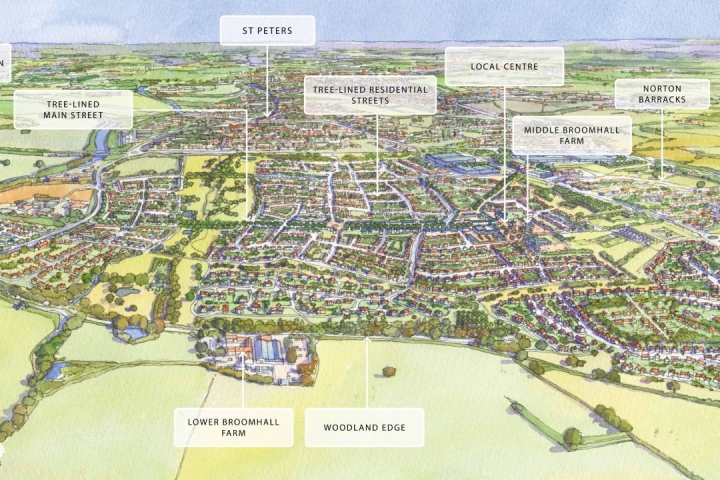
In Bury St Edmunds, Suffolk, Vistry has secured a 194-acre site north-east of the town, enabling the creation of over 1,300 homes as part of one of the region’s largest sustainable urban extensions. The masterplan comprises up to 1,375 homes, a new primary school, commercial space, a local centre, and a country park. At least 30 per cent of the homes will be affordable.

The Bury St Edmunds scheme already benefits from hybrid planning permission from West Suffolk District Council, with 287 homes having secured reserved matters consent.

James Warrington, executive chair for Vistry’s North, South Midlands and East Division, said: “Large sites such as these demonstrate our long-term commitment to building more mixed-tenure homes at scale, working with our partners, and helping to meet the acute shortage of affordable homes across the country. Thanks to the unique strengths of Vistry, we can make use of our retail brands Bovis Homes, Countryside and Linden Homes, as well as taking advantage of the timber frame manufacturing capabilities of Vistry Works.”

Vistry expressed its gratitude to Savills for their work on the Bury St Edmunds contracts, and to Fisher German, Wellbeck Land, and Arc Chartered Surveyors for their support with the Hopfields land purchase.

These developments underline Vistry’s strategy of delivering large-scale, mixed-tenure communities while incorporating local amenities and sustainable planning principles. The combination of housing, community facilities, and commercial space aims to create well-rounded communities that respond to both regional housing needs and long-term urban growth.

Taylor Wimpey Supports Claydon Primary School for Road Safety Week

Pupils at Claydon Primary School have received reflective keychains and wristbands to mark Road Safety Week, thanks to a donation from Taylor Wimpey East Anglia. The initiative aims to improve visibility for children around school grounds and local roads.

Since 1995, road safety charity Brake has worked to raise awareness of road-related injuries and advocate for safer roads. This year’s Road Safety Week, running from 16 to 22 November 2025, carries the theme “Safe Vehicles Save Lives,” emphasising the importance of vehicle safety for everyone on the roads.

Jasmine Munro, teacher and founder of the Junior Road Safety Officer team at Claydon Primary School, said: “Road Safety Week is a fantastic initiative to support, and we are very grateful for Taylor Wimpey’s donation to our school. Walking is a wonderful way to get the day started and wind down on the way home. The reflective keychains and wristbands will keep our pupils visible and safe around school grounds and local roads, which is so important.”

Olivia Peters, Head of Sales at Taylor Wimpey East Anglia, added: “We are very proud to be supporting not only Claydon Primary School but also Brake this November for Road Safety Week. Safety is a huge priority to us, and we want to encourage local families to walk more too. We hope the reflective keychains and wristbands we’ve donated will help the children to get around safely, while easing parents’ minds during the dark winter months. We look forward to spotting any local children out on their walks from our Barham Meadows sales offices.”

The donation forms part of a wider effort to promote road safety in the community, particularly during the darker winter months when visibility is reduced. By equipping pupils with reflective items, Taylor Wimpey East Anglia is helping to make everyday journeys to and from school safer.

Road Safety Week provides an annual reminder of the shared responsibility between drivers, schools, parents, and communities to keep children safe on the roads. Through small but practical initiatives like reflective keychains and wristbands, the campaign encourages safer behaviours and raises awareness of the risks that can be mitigated through visibility and vigilance.

Claydon Primary School is located near the Barham Meadows development in Barham, with prices starting from £320,000. To find out more information, please visit https://www.taylorwimpey.co.uk/new-homes/barham/barham-meadows

Invesco Acquires 109-Unit Marleigh Park Build-to-Rent in Cambridge

Invesco Real Estate, the US-headquartered investment firm, has agreed to acquire a 109-unit residential development currently under construction in Cambridge for approximately £40m. The acquisition covers the upcoming Marleigh Park development on the city’s eastern edge, being built by housebuilder The Hill Group.

The scheme consists of two self-contained buildings, with the first 32-unit block expected to complete by the end of 2025, and the second 77-unit block scheduled for handover in the third quarter of 2026. Once finished, Marleigh Park will provide 1,391 new homes along with community infrastructure and green spaces. Residents will benefit from an established primary school, sports playing fields, restaurants, retail outlets and other community facilities.

The Hill Group has already completed 547 homes and a new community centre around Jubilee Square as part of the first phase of development. All properties are built to high energy-efficiency standards, featuring air-source heat pumps, photovoltaic panels, EV charging points, underfloor heating, integrated kitchen appliances and low-carbon construction methods.

Cambridge is one of the UK’s most undersupplied rental markets, despite having a high graduate retention rate and a median household income of £61,500. Andy Hill OBE, founder and group chief executive of The Hill Group, said: “It’s fantastic to be partnering with Invesco and Savills to bring build-to-rent homes to Marleigh Park. The development has already proven hugely popular in Cambridge, and I’m confident these new apartments will provide another great housing option for those looking to be part of this thriving community.”

Amelia Merrick, director of investments UK & Nordics at Invesco Real Estate, added: “Cambridge has become one of the UK’s most in-demand and dynamic residential markets, underpinned by its world-class university ecosystem, thriving innovation economy and strong population growth. We are delighted to partner with Hill on Marleigh Park – a development that combines placemaking, design quality and sustainability in a location with enduring demand, delivering a compelling opportunity for our client.”

This transaction represents The Hill Group’s third build-to-rent deal of 2025. The company was advised by Savills throughout the deal.

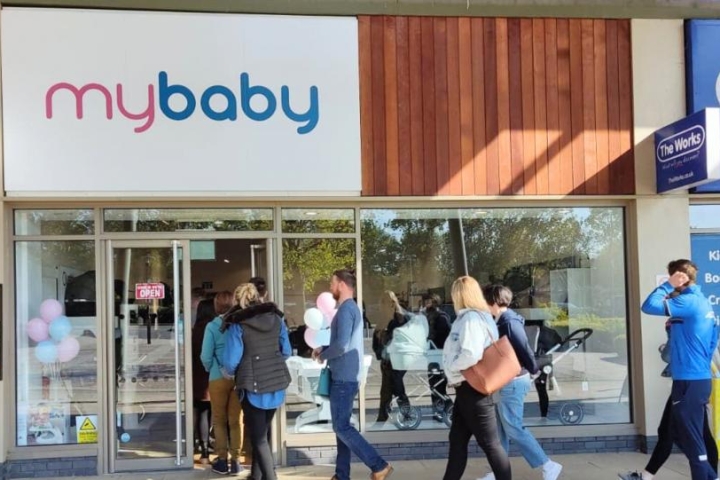
Customers Lose Hundreds Following mybaby Closure

Customers of the baby goods retailer mybaby have reported losing hundreds of pounds following the company’s sudden closure. Karen Betts, from Huntingdon in Cambridgeshire, ordered a £600 pram for her daughter in August from the Peterborough store, with delivery expected after 12 weeks. When the pram did not arrive, Ms Betts discovered that the company had gone into insolvency.

An out-of-office email from mybaby stated: “Unfortunately, due to insolvency, the business is unable to fulfil outstanding orders or issue refunds. Further information will be provided once the insolvency practitioner is formally appointed.” Customers were advised to contact their bank or card provider to explore chargeback or Section 75 claims.

Ms Betts, whose daughter is now 34 weeks pregnant, said: “I’m disgusted, there’s obviously other pregnant mums that are going to be in the same situation as us.” She added that the Peterborough store had been trading earlier this month and expressed hope that customers could recover their money: “Hopefully we can get our money back – not just me but other people that have paid their money in good faith.”

The company’s three shops, located in Peterborough, Haslingfield near Cambridge, and Bowthorpe, Norwich, are now closed. Ms Betts described attempting to contact mybaby after returning from holiday: “So I rang up and ring, ring, ring, ring ring – no answer.” She also noted that the company’s website and social media accounts had been active until recently, although the TikTok shop remains online.

Other affected customers include Chris McMaster and Natalie Davis from Lowestoft, Suffolk, who spent £1,100 at the Norwich store in preparation for their baby due in January. Ms Davis said: “We spent days calling and calling and calling, and getting no answer.” Mr McMaster added: “The end result — we’ve paid the money, we haven’t got any items, and [we’re] very, very, very angry.”

With finances already stretched, Ms Betts is now seeking an alternative pram for her daughter, a medical pharmacy technician at Hinchingbrooke Hospital. She described the situation as unfair: “It’s just not fair to put that on expectant mums.”

Mybaby, which was established in 2020 and operated stores in Cambridgeshire and Norfolk, has its main address in Crowland, Lincolnshire.

NPK International Acquires Grassform Plant Hire for £35.2m

NPK International, a Texas-based worksite access company listed on the New York Stock Exchange, has acquired Essex-headquartered Grassform Plant Hire for £35.2m. Grassform, with bases in Ingatestone, Essex, and Worksop, Nottinghamshire, specialises in supplying and installing temporary roadways, trackway access roads and site compound areas, operating a fleet of more than 20,000 composite mats.

For the year ended 31 October 2025, Grassform reported revenue of £15m and EBITDA of £6m. The acquisition brings the Essex firm into NPK International’s UK operations, complementing its existing business and expanding its geographic coverage.

Matthew Lanigan, president and chief executive of NPK, said: “We are excited to welcome the Grassform team to NPK and are confident that the acquisition will meaningfully strengthen our UK operations through scale and the addition of a highly tenured and talented team. The acquisition significantly expands our market coverage and is highly complementary to our existing UK operations.”

Lanigan added that the transaction aligns with NPK’s growth strategy, which prioritises scaling its high-return rental business through geographic expansion and increased market share within its core rental and service offerings. He highlighted the opportunities in the UK market, supported by a robust outlook for infrastructure investments over the coming years.

“Further, with limited debt following the transaction, we remain well positioned to continue executing on our disciplined capital allocation strategy, which prioritises investment in organic growth and strategic inorganic opportunities, balanced with the programmatic return of capital,” Lanigan said.

East of England Video Games Cluster Poised for National Growth

The idea that the East of England could become the UK’s next major force in Games is presented not as distant ambition but as a live and immediate opportunity. Beyond Entertainment: Games in the East 2025, released by Norwich University of the Arts and Connected Innovation, opens with a clear message. The building blocks of a high value regional Games sector are already in place. With targeted support the East of England games cluster could become a national leader in creative technology, immersive media and applied digital innovation.

The report positions this potential growth against the backdrop of a global Games industry worth $190 billion, and a UK sector contributing £6 billion GVA while employing over 28,000 people. It highlights that 80 per cent of those roles are based outside London. This distribution is significant. It creates space for regions like Norfolk, Suffolk and Cambridgeshire to leverage their talent pipelines and innovation assets to deliver both cultural and economic impact. The report notes that hundreds of people in the East are already working in Games, either within regional studios or as part of globally distributed teams contributing to major titles such as Fable, Fortnite and Sea of Thieves.

The East is portrayed as a region with rising momentum. Studios like Newfangled Games, Glowfrog Games and Fairer Games are presented as examples of what is already possible. Their commercial success, award recognition and licensing deals illustrate the capability of local creators to compete in a crowded marketplace. These achievements, though individually modest compared to large national clusters, collectively form evidence of a developing ecosystem that could be accelerated through coordinated investment.

Professor Ben Stopher, Vice-Chancellor of Norwich University of the Arts, expresses this clearly. “This report shows how the East can turn creative excellence into economic strength. We have the research capability, the creative energy and the talent pipeline to be a powerhouse of digital growth.” His statement emphasises the report’s central theme. Creative output and educational quality are necessary but not sufficient. Structures that retain talent, support founders and connect expertise are required to translate potential into measurable economic return.

The report calls for six key interventions designed to unlock this next phase of development. At the centre of these recommendations is a proposal to establish a Norwich Games Hub. This would serve as a focal point for the East of England games cluster, offering early stage studios support through the long pre revenue period typical of Games production. It would also act as a retention mechanism for graduates from Norwich University of the Arts, the University of East Anglia and other local institutions who often leave the region to pursue opportunities elsewhere. The report states that each departing graduate represents lost regional productivity.

The second intervention advocates for a regional Games Fund. This fund would address the recognised challenge of access to finance for Games businesses in Norfolk and Suffolk. The report highlights that angel investors in the region have not yet engaged fully with Games, leaving early stage studios dependent on oversubscribed programmes such as Akcela. A dedicated fund would signal confidence in the sector’s long term potential and help attract co investment through national schemes.

Cross sector collaboration is the third proposed intervention. The report notes substantial opportunities for game engines, interactive design and immersive technologies to influence areas such as healthcare, agritech, clean energy and environmental research. It references the region’s pioneering assets, including the Immersive Visualisation and Simulation Lab and the Virtual Production Studio at Norwich University of the Arts, both part of the AHRC World Class Labs portfolio. These facilities enable innovation that extends beyond entertainment, offering simulation tools and visualisation capabilities that can support research, planning and service delivery in multiple industries. The report’s emphasis on applied Games reflects wider national interest in the £1.3bn “spillover” value attributed to game technology by UKIE.

A fourth recommendation calls for a Games Industry Showcase linked to Norwich Games Festival. This initiative is intended to strengthen the visibility of the East of England games cluster, attract investors and provide a platform for business development. The region already hosts a vibrant community of developers through Norfolk Game Developers and other networks. The proposed showcase would consolidate this activity into a recognisable brand for the sector.

Fifth, the report argues for mapping and strengthening the region’s Games infrastructure. This includes studios, research centres, community groups and distributed professionals whose expertise could be connected more effectively. The East’s Games workforce is described as both experienced and under connected, with many professionals contributing to large international productions without being integrated into the local development ecosystem.

The final intervention addresses mid career skills development. The report recommends new regional initiatives to support leadership training, cross sector skills mapping, commercial capability and technical upskilling. These would help retain experienced workers and enhance the maturity of local businesses.

Associate Professor Mark Wickham summarises the report’s assessment of regional strengths: “The East already has all the ingredients of a thriving Games cluster — world-class education, applied research, and entrepreneurial talent. What we need now is a structure that connects them and enables our region to scale its success.” His comment reinforces the report’s argument that the East of England games cluster is constrained less by capability and more by coordination.

Innovation assets play a central role in the report’s analysis. The Immersive Visualisation and Simulation Lab and the Virtual Production Studio offer specialist facilities for 360 immersive technology, volumetric capture and virtual production. These are matched by the DigiTech Centre at Adastral Park and the Institute for Creative Technologies. Together they form a foundation for applied research, knowledge exchange and technology transfer.

Regional collaboration is also highlighted through Connected Innovation, which supports cross sector partnerships and runs the Future Tech Programme. James Allen, Programmes Manager at Connected Innovation, explains: “Within our innovation ecosystem we are seeing Gaming and immersive technologies increasingly applied into agriculture, life sciences, healthcare and beyond, providing a real opportunity for growth and cross industry innovation, and demonstrating that the Eastern region can be a leader in the UK in creative technology as well as entertainment gaming. We just need to make sure that the opportunities and connections are visible as well as investable.”

The report aligns with national strategies including the Creative Industries Sector Plan and the UK Games Growth Plan, but its distinct focus is regional delivery. It emphasises that sustainable economic growth requires targeted support at local level, shaped by the ambitions of the Norfolk and Suffolk Business Boards and informed by the existing capabilities of the East’s creative communities.

Its conclusion presents a confident assessment. The East of England is not a peripheral participant in the UK Games industry. It is an active and connected ecosystem with the potential to lead future phases of creative economy growth. The East of England games cluster, as outlined in the report, is emerging with clarity and direction. With investment and coordination, it could become one of the UK’s most significant centres for Games and creative technology.


Skip to content Skip to content