[directorist_search_result]

UK small business growth plans 2026 reach five-year high

UK small business growth plans 2026 have reached their highest level in five years, according to new research released in January.

Data from Novuna Business Finance shows that 84 percent of small business owners are starting 2026 with plans to invest in new growth initiatives. The aim is to make their enterprises stronger in the year ahead.

The figure marks a steady rise over time. In 2022, 77 percent of small businesses prioritised growth. This increased to 79 percent in 2023, 81 percent in 2024 and remained at that level in 2025 before rising again this year.

The findings follow a difficult trading period. During 2025, the proportion of small business owners predicting growth fell for four consecutive quarters, reaching 25 percent.

Despite that backdrop, the data suggests a more resilient mood as the New Year begins. UK small business growth plans 2026 appear to reflect a renewed focus on strengthening operations rather than short-term forecasts.

The research is based on a nationally representative survey of 1,000 small business owners. Regional differences are clear.

London leads the way, with 90 percent of small businesses planning to invest in new growth initiatives for 2026. The East Midlands follows closely at 89 percent. The North West stands at 84 percent.

Sector trends show a similar pattern. Manufacturing is the industry most likely to be working on UK small business growth plans 2026, with 94 percent of firms prioritising new initiatives. This is up from 90 percent last year.

Across the ten sectors surveyed, most recorded year-on-year increases. Retail and finance remained unchanged at 79 percent and 84 percent respectively.

Media was the only sector to record a decline, falling from 92 percent to 84 percent.

Other sectors showed notable rises. Property and real estate, transport and distribution, legal services and medical services all reported increased focus on growth. Education also rose to 77 percent.

Looking at priorities within UK small business growth plans 2026, increasing new business income remains the most common focus. This was cited by 46 percent of respondents, up from 43 percent a year earlier.

Cost control is also rising sharply. The proportion prioritising the reduction of fixed costs increased from 24 percent to 40 percent.

More businesses are focusing on resilience. Building financial reserves rose from 23 percent to 31 percent. Diversification into new products and services increased from 20 percent to 25 percent.

Operational efficiency is gaining attention. Reviewing back-office operations rose from 12 percent to 20 percent.

Contingency planning is also more prominent. Seventeen percent of businesses are prioritising plans for prolonged market uncertainty, up from 12 percent last year.

Jo Morris, Head of Insight at Novuna Business Finance, said: “As we all prepare to start a New Year, our data paints a picture of determination and resilience from UK small business owners. Last year was, for many, a low-point – with small business growth forecasts hitting a record low and many concerned about external factors, such as US tariffs and fears of tax rises in the Autumn Budget. Despite all this, more than eight in 10 small business owners are going into 2026 determined to find new ways to make their enterprises stronger and more resilient. We last saw this during the pandemic era and the determination of small business owners then to flex and adapt played out in a bounce-back of sector confidence in 2022. After an economically challenging 2025, the sheer scale of businesses prioritising plans to build strength into their enterprises for the year ahead will hopefully result in a much-needed upturn in positive growth outlook from the small business community in the early months of 2026.”

Overall, the data highlights the scale of UK small business growth plans 2026. Across regions and sectors, firms are entering the year focused on rebuilding strength and stability.

Local authority fostering documentary follows Adam Buxton meeting foster families

Foster families in Norfolk and Suffolk take centre stage with a new documentary by Adam Buxton being launched today.

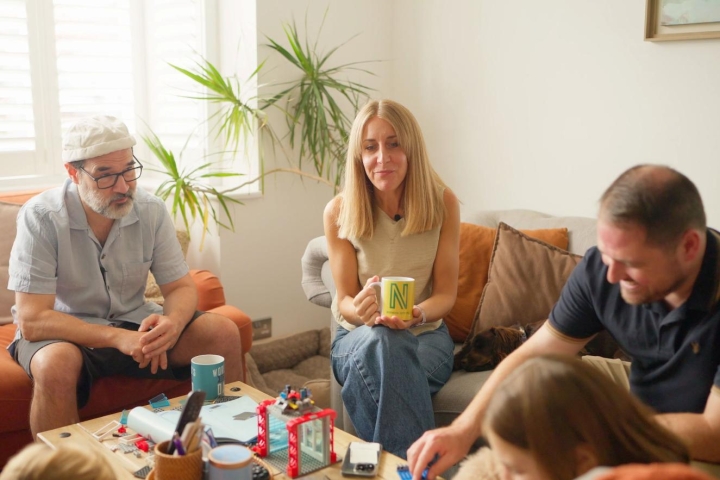
Adam approaches the experience without prior knowledge of fostering or caring for looked-after children. The film looks at everyday moments rather than formal interviews.

Conversations take place over cups of tea, while emptying the dishwasher, playing Top Trumps, walking the dog and kicking a football around the garden. These settings allow Adam to ask the kinds of questions people often raise when they first consider fostering, a central theme of the local authority fostering documentary.

The full documentary is available to view at www.fostereast.org.uk

Reflecting on the experience, Adam Buxton said, “I didn’t really know very much about fostering before I spent time with Gary, Shannon and Catherine. We’ve got 3 children and a dog at home, and the thought of adding another child or more children into our family life blows my mind.

“What they do, for kids who haven’t asked to be brought into care, amazes me. And Shannon’s reflections as a young person who has helped her parents to foster were just incredible. I’m full of admiration and respect for them and their families.”

One of the families featured in the local authority fostering documentary is Catherine, a Norfolk library book scheme co-ordinator, her husband Sean and their two children. They have been fostering for six years.

Although they initially intended to foster on a short-term basis, they later became long-term foster parents. During Adam’s visit, conversation unfolds amid games of Top Trumps and repairs to a Minecraft sword. When asked why they foster, Catherine gestures around the lounge and explains that they are giving a child a chance.

The second family includes Gary, a former logistics manager who now works in a factory, his wife and their two daughters. They have fostered for their local authority for 12 years. Their experience has mainly involved short-term fostering, alongside caring for a young girl with disabilities over a longer period. In the film, Gary becomes emotional when Adam asks why they foster, replying tearfully that they do it to give children a childhood.

The documentary also includes comments from Norfolk County Council. Cllr Penny Carpenter, Cabinet Member for Children’s Services, said: “Fostering is an essential role that we need more people to fulfil. In Norfolk, we urgently need to recruit an additional 50 foster carers. As Norfolk foster carer Sean says, ‘if you’re living family life anyway, could you add in another child?’

“I urge more families to talk about fostering and if fostering could fit into their everyday life.”

Start 2026 at Taylor Wimpey’s New Year, New Home Event in East Anglia

Taylor Wimpey is inviting homebuyers to start 2026 with a fresh opportunity at its ‘New Year, New Home’ events across East Anglia. Taking place on Saturday 17th and Sunday 18th January from 10am to 5pm, the events offer visitors a chance to explore a wide range of properties in Suffolk and nearby areas.

The weekend will include visits to several developments including The Arboretum in Haverhill, Stour View in Brantham, Northfield View in Stowmarket, Barham Meadows in Barham, Lark Grange in Bury St Edmunds, Wolsey Grange in Ipswich, and both Auster Place and Deben Park at Brightwell Lakes in Martlesham.

Attendees can view show homes and discover the full selection of available properties. Taylor Wimpey’s Sales Executives will provide guidance, while Independent Financial Advisors will offer mortgage advice and support, helping potential buyers make informed decisions.

Olivia Peters, Head of Sales for Taylor Wimpey East Anglia, said: “We’re excited to welcome homebuyers to our first event of the year. It’s a great opportunity for visitors to imagine life at their chosen development, while gaining extra information and looking at available homes.

“We encourage anyone interested in making their move to a Taylor Wimpey home to pay us a visit at our developments across Suffolk to explore our new homes, while discussing the options on offer with our lovely Sales Executives. We look forward to seeing you on the 17th and 18th January!”

The Arboretum in Haverhill offers homes from a two-bedroom mid-terrace at £290,000 to a five-bedroom detached at £540,000.

Stour View in Brantham has properties ranging from £335,000 for a three-bedroom semi-detached to £550,000 for a five-bedroom detached.

Northfield View in Stowmarket features homes from £315,000 for a three-bedroom detached to £480,000 for a four-bedroom detached.

Barham Meadows in Barham has four-bedroom detached homes starting at £425,000 and five-bedroom detached homes up to £670,000.

Lark Grange in Bury St Edmunds offers three-bedroom homes from £335,000 and four-bedroom homes up to £575,000.

Wolsey Grange in Ipswich includes two-bedroom semi-detached homes from £285,000 and five-bedroom detached homes up to £560,000.

Auster Place at Brightwell Lakes has two-bedroom coach houses starting at £260,000 and three-bedroom homes from £410,000.

Deben Park at Brightwell Lakes offers homes from £315,000 for a two-bedroom to £585,000 for a five-bedroom.

These events provide a structured opportunity for buyers to explore homes, receive guidance from experts, and consider their options for moving in 2026.

Twenty six tips for your new years resolutions in 2026

Sometimes it’s healthier to think of “New Years” as more of a season than a single specific event.

New year’s day and eve are pretty clear and marked on the calendar, but the period of the first few weeks of the new year are still well outside the realm of ‘normal’ life, so it’s still a good time to be reflecting, recalibrating, and realigning yourself for the year ahead. The traditional way to do that is, of course, New Year’s Resolutions.

But how does that work in practice? How can you make the changes to your life imagined in January actual real shifts in who you are and how you live?

To help you achieve that in 2026, here’s twenty six tips on making your New Years resolutions really stick.

1. Have clear goals – Things like “eat healthier” and “read more” might sound good, but how will you know if you’ve made progress without real numbers/records?

2. Set small steps – Trying to lose two stone is a lot, and on a given day it can feel like you can’t make any meaningful progress towards that goal. Set smaller steps that can be regularly reached.

3. Use “if-then” systems – Set yourself up for success by planning for situations you know you will encounter. Pre-decide, and you will feel less hesitancy when you get to places where the changes you want will be challenging.

4. Positive framing – It is easier to think of changes in your life as “I will accomplish X” or “I will do Y” rather than “I must do less of Z” or “I’ll stop doing Q”. This can seem difficult if you do want to stop something, but try to reframe the decision in a different light. Instead of “I will eat less fast food” think “I will become an accomplished cook”

5. Visual tracking works – Have a chart, a book, a page on a notes app. However you do it, a visual record of your goals and accomplishments will really help you make actual progress in this field. You will know about your progress and feel better as you do it.

6. Celebrate small wins – Simply waiting till the end to celebrate will make the process of change feel too boring and sad. Be happy with yourself in the intervening moments too.

7. Get accountable – Don’t just let your friends, family, co-workers, or anyone else you regularly engage with know what you are doing. Give them permission to call you out and gently but firmly redirect you as you need to be put back on course.

8. Plan actions over intent – Plans aren’t for how we feel or the vibe or mood or atmosphere. They are for actions and accomplishments. Plan out what you will do and when you will do it, not ‘I’ll do X when I feel Y’.

9. Use existing routines – Change works best when it is a reform and remaking rather than a wholly upended shift. Look for the places in your present life where change can fit and adjust around those.

10. Shift identity and outcomes – When your goals are in sync with who you believe yourself to be, they become a whole lot easier. Start to actively think of yourself as the person the goals imply. As James Clear, the famed American writer of Atomic Habits said “The goal isn’t to run a marathon, it’s to become a runner.”

11. Anticipate obstacles – If you expect things to be easy all the time, the shock that comes when they are not will be too much. Plan for the possibility of problems, and be ready to keep going even as they arise.

12. Practice self-compassion – It’s one thing to be self critical. It’s another to be so hard on yourself it becomes demotivating. Keep trying. Keep going. Reflect honestly, but don’t beat yourself up.

13. Imagine the end goal – Push yourself in the present with a picture of the future. Mental imagery allows you to have stronger motivation and keep going towards the goal amidst difficulty. To make a dream real, it first has to be a dream. Let yourself dream.

14. Don’t force the timeline – If you are still in the planning stages, and have not got things ready, you are still allowed to prepare. Don’t force timelines because you think fast = better. Preparing is still progress. Go when you are ready.

15. Reflect regularly – Progress without reflection is just motion. It can feel good, but it may not be useful. Take time, weekly or monthly, to look at what is working and what isn’t. Adjustment is not failure; it is how improvement actually happens.

16. Shape your environment – Willpower is unreliable, but surroundings are powerful. Make the good choices easier and the bad ones harder by adjusting what is around you, not just what is in your head.

17. Focus on one thing at a time – Trying to change everything at once usually means changing nothing for very long. Pick the most important shift first, and give it your attention until it sticks.

18. Make it something to care about – Goals that matter only on paper don’t last. When a resolution connects to what actually matters to you personally, motivation comes from within rather than pressure from outside.

19. Keep goals visible – If you never see your goals, you will forget them. Put reminders somewhere unavoidable so your intentions don’t quietly fade into the background.

20. Treat setbacks as information – Falling short doesn’t mean you’re bad at this. It means you’ve learned something about what doesn’t work. Use that knowledge and keep moving.

21. Choose accountability partners wisely – Accountability works best when it is supportive rather than shaming. Pick people who want you to succeed and will help you course-correct, not give up.

22. Use reminders and prompts – Memory and motivation are inconsistent. Gentle nudges, alarms, notes, or prompts help bridge the gap between intention and action.

23. Simplify wherever possible – If a goal feels complicated, it probably is. Strip it back to the core action that actually moves things forward and focus on that.

24. Learn how habits really work – Understanding how habits form makes change less mysterious and less personal. You stop thinking “what’s wrong with me?” and start thinking “how can I redesign this?”

25. Anchor change to who you are becoming – Sustainable change isn’t about punishment or control. It’s about becoming someone for whom the new behaviour makes sense. Act as that person would, even before it feels natural.

26. Stay flexible – Life will interfere, plans will wobble, and perfection will never arrive. Adapt rather than abandon. Progress survives flexibility far better than rigidity.an.

Third man arrested after tracking device discovered under car in Norwich

In an ongoing dramatic case, a third man has been confirmed as having been arrested on suspicion of stalking following the discovery of a tracking device underneath a car in Norwich.

Norfolk Police said a man in his 50s was arrested on 19 December and later questioned before being released on bail. Two other men, one in his 30s and another in his 50s, have also been arrested in connection with the investigation and are bailed until 10 March.

The arrests follow an incident in September last year when part of Norwich city centre was cordoned off after a suspicious object was reported underneath a vehicle on Bank Plain. Emergency services were called to the scene at about 15:30 BST, with people evacuated from nearby buildings and roads closed as a precaution.

An Army bomb disposal team was deployed and two loud bangs were heard later that evening as the device was made safe. The road remained closed until the early hours of the following day.

Police later confirmed the object was not explosive and posed no wider risk to the public. It was subsequently identified as a tracking device and the incident became the focus of a stalking investigation.

The vehicle belonged to Norwich businessman Besnik Ademaj, who said the discovery left him shaken. He said he became aware of the device while returning to his car after a meeting.

“I was in a business meeting with an ex-colleague of mine and as I was approaching the car a lady said ‘you have had something put under your car’,” he said.

Mr Ademaj initially thought the object was debris before realising the seriousness of the situation. He said: “I was scared and shocked and I did not know how to act.

“I do not feel safe anymore. It feels life-threatening for me.”

Norfolk Police said officers were assisted at the scene by the Explosive Ordnance Disposal team and confirmed no-one was injured during the incident. All roads were later reopened and inquiries have continued since.

A police spokeswoman previously said: “Inquiries have since established that the device was not dangerous and there is no wider risk to the public.

“It is believed to have been a tracking device and this is now being investigated as a stalking offence.”

The investigation remains ongoing.

Basildon house fire dog rescue after overloaded socket blaze

Five dogs were rescued from a house fire in Basildon after a blaze broke out at a mid-terrace property on New Year’s Day, fire services have confirmed.

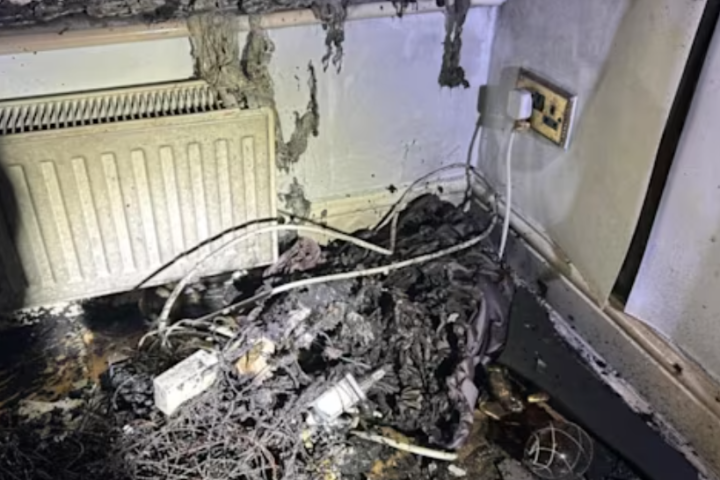
Firefighters were called to a house in Takely End just after 5pm after a fire started in the lounge. Essex County Fire and Rescue Service said the incident was caused by an overloaded plug socket, with Christmas tree lights and several other electrical items connected.

Two occupants were inside the property at the time of the fire. They managed to escape through an upstairs window with assistance from a neighbour and were treated for smoke inhalation. Fire crews later rescued five dogs from the house, who were left in the care of the RSPCA following the Basildon house fire dog rescue.

Crews attending the incident found that the fire had spread due to the electrical fault. Firefighters said the lack of working smoke alarms in the property meant the occupants were slower to become aware of the fire while upstairs.

Watch Manager Kevin Smith said: “The property didn’t have working smoke alarms and because the occupants were upstairs it delayed how quickly they realised there was a fire.

“Unfortunately, the front and back doors were both locked, delaying how quickly the occupants could get out.

“Thankfully, a neighbour was able to help them to safety via the roof of the porch.

“As well as highlighting the importance of having at least one working smoke alarm on every floor, the incident shows how vital it is to plan an escape route and make sure your exits are accessible in case of an emergency.

“Plugging too many things into a socket can cause it to overheat, as we believe happened in this incident.

“Extension leads have a limit on how much electrical current they can take, so make sure you’re not overloading them.”

Essex County Fire and Rescue Service said the incident serves as a reminder of the risks associated with overloading sockets, particularly during the winter period. The Basildon house fire dog rescue resulted in no fatalities, with both occupants and animals safely accounted for.

10 days till Suffolk’s Primary school application deadline – 15 January 2026

Parents and carers in Suffolk have until Thursday 15 January 2026 to apply for a primary, infant, or junior school place for September 2026.

Applications should be submitted for children born between 1 September 2021 and 31 August 2022. This applies even if a child is already attending a nursery class, pre-school, or family hub near a school.

Councillor Andrew Reid, Cabinet Member for Education and SEND, emphasised the importance of planning for travel to and from school. He also advised parents to apply for more than one school, with up to three preferences listed in order.

“If you are planning to move house, or you think your circumstances may change before September, it is still essential to make an application on time using the child’s current address,” Cllr Reid said.

Applications are recommended to be made online to receive confirmation. Parents can then log in on National Offer Day, Thursday 16 April 2026, to see their school place offer, which will also be confirmed via email.

Those unable to apply online can submit a paper application (CAF1), though these will not be acknowledged. Proof of postage is advised. Offer letters for paper applications will be sent by second class post on National Offer Day.

Eligibility for school travel is based on attendance at the nearest suitable school that has available places, which may not always be the catchment area school. More information is available at www.suffolkonboard.com/schooltravel.

Last year, Suffolk County Council allocated 96.3% of children a place at the primary school listed as their first preference when applications were submitted on time. Late applications may not be processed until after places have been offered to on-time applicants.

Further guidance and online applications can be found at www.suffolk.gov.uk/admissions, or parents can call 0345 600 0981 for a paper application.

THE NEW WORLD ORDER IN THE AMERICAS: The US-Venezuela Shockwave and What It Means for Britain and Europe

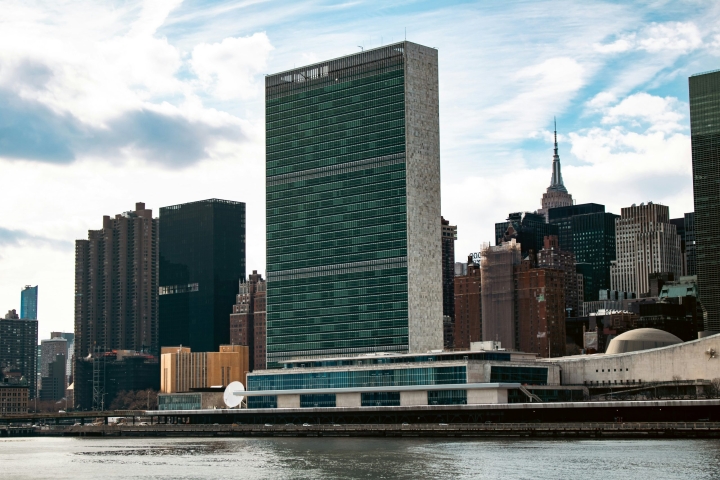
The UN Security Council was built as a kind of post-apocalyptic fuse box.

In 1945, the architects of the United Nations were staring at the smoking ruin of the League of Nations, a second world war, and a simple fear: if the great powers weren’t locked into a single system, they’d drift back into blocs, rival treaties, and “accidents” that weren’t accidents at all. So the UN Charter created a Security Council with “primary responsibility” for peace and security, and then made the big three of the day (the US, the Soviet Union, and the UK) plus France and China permanent members with special voting power. The bargain was blunt: you get a seat that can’t be taken away, and a veto that can stop decisions you consider intolerable, and in return you stay inside the tent.

That’s the origin of the veto problem. The veto wasn’t a bug that crept in later. It was the price of admission.

Why the Council struggles to act

Today the Council has 15 members, but on substantive decisions you need at least nine votes and no veto by any of the five permanent members. In practice, when the issue touches core interests of a permanent member state, the Council turns into a diplomatic roundabout where everyone drives in circles, politely honking.

You can see the pattern in modern conflicts where drafts repeatedly die on the table. The structure almost guarantees stalemate on the hardest questions: China and Russia counterbalance Western initiatives, and Western states block China and Russia when it suits them. The Security Council still does plenty when interests align, but on the headline wars, it can look like a steering wheel welded in place.

There is a workaround, but it’s a lighter tool: the General Assembly’s “Uniting for Peace” mechanism, created in 1950, lets the Assembly make recommendations when the Council is deadlocked. Recommendations, though, aren’t binding in the same way as Security Council measures, and they don’t magically conjure enforcement.

When states bypass the Council

Deadlock doesn’t stop geopolitics. It just changes the route.

Over the past few decades, major military actions have repeatedly proceeded without fresh Security Council authorisation, sometimes justified through contested legal theories, sometimes through moral arguments, sometimes through sheer power. A few clear examples:

Kosovo (1999): NATO intervened militarily in Yugoslavia without a Security Council mandate; the legality and legitimacy were openly disputed, and the Council met amid sharply divergent views.

Iraq (2003): The US and UK advanced a “revival” argument (that earlier resolutions provided authority), but many states rejected that reading; the legal basis remains one of the most contested in modern international law.

Panama (1989): A draft resolution condemning the US invasion was vetoed, underscoring how the veto can shield a permanent member from Council consequences.

Syria strikes (2017–2018): Absent Council authorisation, states reach for alternative justifications (self-defence, humanitarian intervention), and those justifications are heavily argued over.

This pattern matters because it normalises a world where the Security Council is treated less like the gate and more like a comment box: useful for signalling, occasionally decisive, but often bypassed when the stakes are judged existential.

The legal escape hatch: self-defence (and why it’s so contested)

Under the UN Charter, the baseline rule is simple: states must refrain from the threat or use of force against other states. The most cited exception is self-defence, which preserves an “inherent” right of self-defence if an armed attack occurs, at least until the Security Council has taken measures.

The fight is over the edges:

What counts as an “armed attack” (especially with proxies, militias, cyber operations)?

Can self-defence be anticipatory (acting before the blow lands)?

What about force against non-state actors operating from another state’s territory?

Customary law debates often return to the old “Caroline” formulation: necessity and proportionality, with necessity framed as overwhelming and leaving no meaningful choice. Some governments stretch these concepts; many lawyers insist the Charter was designed precisely to prevent elastic self-defence from becoming a blank cheque.

So what happens if a country breaches the Charter?

Here’s the cold reality: the Charter does not come with an automatic, mechanical punishment system.

In theory, the Security Council can determine a threat to peace and impose binding measures under Chapter VII, including non-military sanctions and, if it chooses, authorisation of force. In extremis, a state that persistently violates Charter principles can be expelled, but that requires a Security Council recommendation, meaning a permanent member veto can block even that.

So enforcement is political. If the alleged violator is powerful, the practical sanction is usually reputational damage, reciprocal measures by other states, economic counter-sanctions, and long-term strategic costs. When the alleged violator is a permanent member, the Council is often structurally unable to act against it.

That is why so many countries conclude that the system is unfit for purpose on great-power conflicts: not because international law vanishes, but because enforcement becomes selective and strategic.

The US and Venezuela: a fresh shock to the system

This week, the argument stopped being theoretical.

US forces carried out a major operation in Venezuela that resulted in the ousting and capture of President Nicolás Maduro, who is now in US custody facing narco-terrorism charges in New York. The UN Secretary-General warned the operation sets a dangerous precedent, and legal experts argue it lacks the usual legal foundations: UN authorisation, host-state consent, or a clearly valid self-defence claim.

Economically, the move is being paired with coercive pressure on oil. Venezuela’s oil company has begun cutting output as a US oil embargo and blockade halts exports and storage fills, affecting joint ventures and flows that previously moved under licences.

Europe’s response has been notably careful: supportive of Venezuelan democracy in principle, but emphasising adherence to international law and the UN Charter, with internal EU division visible.

China, meanwhile, publicly pushed back on the precedent rather than promising concrete retaliation. Russia’s senior figures denounced the operation as unlawful and destabilising, while also presenting it as consistent with America treating Latin America as its backyard.

The subtext is loud: if the US is willing to do this in the Western Hemisphere, it is signalling that the combination of geography, oil, and strategic rivalry overrides multilateral constraint.

What precedent does this set?

This is where the playground analogy bites.

When a leading power demonstrates it can use force, achieve a headline objective, and absorb only diplomatic scolding, it changes the incentives for everyone else. Not because other states suddenly become ten feet tall, but because they learn what the costs really are.

Russia will read this through the lens of Ukraine and sanctions endurance: the lesson is not the West will forgive, but power can outlast condemnation.

China will study the legal arguments and the choreography, because Taiwan is the ultimate rules versus power test case.

Middle powers, including India, don’t need to copy the act to benefit from the climate it creates: a looser enforcement world expands room for hedging, transactional diplomacy, and selective alignment.

In other words: the precedent is not everyone can invade everyone. The precedent is the ceiling on consequences is lower than the Charter implies, especially for the strongest states.

The United Kingdom, Europe, and the new isolation problem

Europe’s dilemma is that it is still rhetorically married to a rules-based order, but increasingly forced to live in a power-based one.

The Venezuela episode shows Europe caught between two instincts: relief at Maduro’s removal and anxiety that the method undermines the very legal scaffolding Europe relies on. The result is language that is careful, lawyerly, and, to Washington, easily ignored.

That connects to a broader transatlantic drift. In Trump’s second term, pressure on allies to carry more of their own defence burden has intensified in tone and frequency, reinforcing the idea that the US security guarantee is more conditional than Europeans became accustomed to.

A note on “World War II repayments”

If part of the political mood is shaped by old debts finally being cleared, it’s worth being precise about what ended.

The UK’s final repayments connected to WWII-era and immediate post-war arrangements with the US and Canada were made on 29 December 2006, including the famous post-war Anglo-American loan. These were not reparations in the Versailles sense, but loans and settlements tied to wartime supply and post-war reconstruction finance. Still, symbolism matters in politics, and the last cheque cleared can quietly change how electorates narrate obligation.

Russia versus Britain, in raw scale

If a leader is trading threats with Moscow, it helps to remember the physical asymmetry. By land area, Russia is roughly 70 times the size of the United Kingdom. That doesn’t determine outcomes on its own, but it does shape strategic depth, resources, and the psychology of escalation.

Starmer, Trump, and the optics of strength

On the UK-US relationship, the dynamic you’re pointing at is largely about political signalling.

Trump’s political brand rewards leaders who project blunt capacity, tight borders, and a willingness to ignore polite disapproval. Europe’s current governing style, with its committee-voice and internal splits, is almost designed to lose that particular audition.

And this is where the “slap down” lands. In a widely discussed exchange, Trump rebuked Starmer with the blunt question: can you beat Russia on your own? The point wasn’t to invite analysis or a thoughtful answer. It was to assert hierarchy, to put Britain back in its box, and to remind Europe that in Trump’s world the protection contract is conditional and the price is obedience, spending, and posture.

At the same time, Trump has publicly pushed Starmer hard on immigration and border issues, using Britain as an example of what he sees as a European failure to control borders and manage national cohesion. That combination, rebuke plus conditional praise, is classic leverage: it keeps the UK inside Washington’s orbit while reminding London who holds the megaphone.

Whether Starmer is weak is an argument. What’s less arguable is that Trump’s political ecosystem punishes leaders who look managerial, cautious, or consensus-driven, especially when the moment demands hard power language.

So how does Britain (and Europe) get back to the table?

If the world is sliding toward harder power, the UK can’t compete by pretending it’s 2003 America, and it can’t compete by speaking only in press releases. It competes the way it historically has: by combining credible capability with exceptional statecraft.

Here’s the spine of a serious recovery strategy, without fantasy budgets or cosplay empire:

Britain and Europe need a credible European security pillar that can act when Washington is distracted or disinterested. That means defence industrial capacity, ammunition stockpiles, air and missile defence, and the ability to sustain operations. Trump’s pressure campaigns on NATO spending are a warning flare, not a phase.

They also need diplomacy that the Global South actually believes. Selective outrage is the tax that keeps compounding. If Europe wants international law to matter, it has to sound consistent across theatres, not like a different person depending on the map. Venezuela is a stress test because it tempts Europe into quiet approval, nervous disclaimer.

Britain specifically should lean into being an intelligence, finance, and convening power: sanctions design, anti-kleptocracy enforcement, maritime security partnerships, and coalition-building with countries that share interests even if they don’t share ideology. In a more transactional world, you don’t wait to be invited. You turn up with capabilities other people need.

On energy, Europe must treat supply resilience as national security, not just economics. Venezuela has reminded everyone that oil still sits at the centre of coercion, and disruptions can be engineered quickly.

Finally, Europe should push realistic UN reform agendas that improve legitimacy even if they don’t abolish the veto overnight: veto-restraint initiatives, stronger transparency, and more routinised General Assembly emergency mechanisms. None of this makes the UN perfect, but it stops the slow bleed where the UN becomes theatre and nothing else.

The uncomfortable conclusion

The Security Council was designed to prevent another world war by forcing the great powers to share a room. The veto was the lock on the door. But a lock can also trap you inside during a fire.

The Venezuela operation has become a live demonstration of what happens when a superpower decides the room is too slow and walks out through the wall instead. Europe’s cautious response shows how hard it is to defend rules without the means to enforce them.

If Britain wants to be more than a spectator, it has to do two things at once: rebuild enough hard capability to be taken seriously, and rebuild a diplomatic voice that sounds like a grown-up in a world of megaphones. No empty threats, no moral foghorns, no sleepwalking into other people’s wars, and no assumption that America’s priorities will always align with ours.

The playground is real. The trick is to stop acting like the referee still has a whistle everyone respects, and start acting like a country that can still shape the game.


airBaltic Adds Another Airbus A220 as Fleet Expansion Continues

airBaltic has closed out 2025 by welcoming another new aircraft to its growing fleet, marking a steady end-of-year milestone for the Latvian carrier.

The airline’s latest Airbus A220-300, registered YL-BTB, arrived in Riga at the end of December. It is the third aircraft delivered to airBaltic this year and the 52nd A220-300 to join its all-A220 fleet – a model that has become central to the airline’s strategy and identity.

The arrival further strengthens airBaltic’s ability to operate flexibly across its expanding route network. The A220-300 serves destinations throughout Europe and beyond, while also supporting ACMI operations with partner airlines, allowing airBaltic to shift capacity where demand is strongest and make efficient use of its aircraft year-round.

Since introducing the A220-300 in 2016, airBaltic has built its operation almost entirely around the aircraft. Over the past nine years, the airline has carried more than 23 million passengers on the type, operated around 241,000 flights and accumulated over 530,000 flight hours – figures that underline the aircraft’s suitability for both short-haul and longer regional routes.

For passengers, the A220-300 brings tangible benefits. Wider seats, larger windows and more generous overhead storage are paired with quieter cabins and lower emissions. Compared with older aircraft, the type produces significantly less noise and reduced CO₂ and NOx emissions, aligning with airBaltic’s efficiency and sustainability goals.

The aircraft also joins a fleet that has recently become one of the most digitally connected in Europe. Earlier this year, airBaltic became the first European airline to roll out free high-speed SpaceX Starlink internet onboard. More than 20 aircraft are already equipped, with installations continuing – allowing passengers to stay connected from gate to gate.

Three decades after its launch, airBaltic now connects the Baltic States to around 80 destinations across Europe and beyond, playing a key role in regional connectivity and economic links. With each new aircraft delivery, the airline continues to refine a fleet built for flexibility, efficiency and growth.

Further details on routes and schedules are available here

Skip to content Skip to content