The thrilling group stages of the 2026 FIFA World Cup are rapidly drawing to a close, and Group C is firmly set for a definitive, high-stakes final chapter. On Wednesday, 24 June 2026, a highly motivated Moroccan side will face a determined Haitian outfit looking to salvage their national pride. Scheduled for a late-night kick-off at exactly 23:00 BST, this compelling fixture will take place under the spectacular roof of the Atlanta Stadium in Georgia. While the contrasting tournament trajectories of the two respective nations are vividly clear, the underlying narratives surrounding this encounter promise a deeply intriguing ninety minutes of football. The North African heavyweights are entirely focused on extending their impressive unbeaten run and securing a favourable knockout draw, whereas their Caribbean opponents are desperately chasing their first-ever World Cup point on the global stage.
Group C Permutations and The High Stakes
Heading into Matchday 3, the mathematical permutations within Group C are relatively straightforward, yet the stakes for the advancing teams remain remarkably high. Morocco currently occupy second place in the standings, sitting perfectly level on four points with group leaders Brazil, but trailing slightly on overall goal difference. A positive result in Atlanta will mathematically guarantee their progression to the newly expanded Round of 32, with a commanding victory potentially sufficient to usurp the South American giants for the coveted top spot. Finishing first would theoretically afford them a much more forgiving pathway through the initial knockout phase, making a ruthless performance absolutely essential.
Conversely, the tournament reality has already proven incredibly cruel for Haiti. Having suffered consecutive, frustrating defeats in their opening two fixtures, the Caribbean debutants—who are making an emotional return to the world stage for the very first time since 1974—are officially eliminated from knockout contention. However, for a fiercely proud nation eager to leave an indelible mark on the competition, simply scoring a goal or avoiding defeat against elite opposition would represent a monumental, historic achievement that would be celebrated for generations.
Contrasting Tournament Fortunes
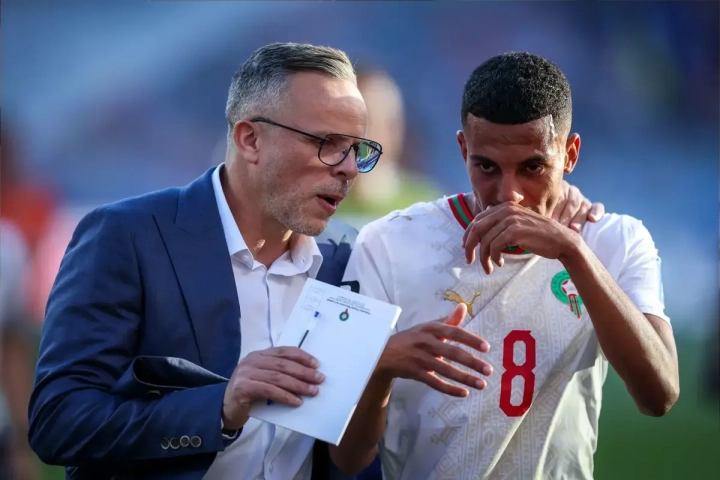
The Atlas Lions arrived in the United States enveloped by enormous expectations, heavily fuelled by their historic, unforgettable run to the semi-finals four years prior in Qatar. Under the astute tactical stewardship of manager Mohamed Ouahbi, they have seamlessly maintained that formidable international pedigree. They opened their 2026 campaign with a fiercely contested 1-1 draw against a star-studded Brazil, a result that emphatically underlined their defensive resilience and tactical maturity.
They subsequently built upon that excellent foundation by securing a gritty, hard-fought 1-0 victory over Scotland. Midfielder Ismael Saibari emerged as the decisive, match-winning figure against the Tartan Army, demonstrating clinical precision to secure maximum points in a tightly contested affair. Remarkably, that crucial victory extended Morocco’s staggering unbeaten sequence to 31 matches across all competitions, reflecting an incredibly settled and unified dressing room that has simply forgotten how to lose.
On the opposite side of the tactical divide, Haiti have experienced the harsh, unforgiving nature of elite international tournament football. Guided by seasoned head coach Sébastien Migné, Les Grenadiers have displayed commendable structural organisation, particularly during the early stages of their matches, but have ultimately lacked the requisite quality and composure in the final third. Their campaign commenced with a narrow, agonising 1-0 defeat to Scotland.
They then faced the daunting prospect of Brazil, producing a heroic, spirited defensive effort to reach the half-time interval locked in a goalless stalemate. Unfortunately, sheer physical fatigue eventually set in, allowing the five-time champions to ruthlessly exploit the expanding gaps and inflict a comprehensive 3-0 defeat. Migné has publicly praised his squad’s unwavering commitment throughout the tournament, insisting they thoroughly deserve their place among the global elite despite the punishing scoreboard reflections.
Tactical Battlegrounds
Analysing the tactical landscape reveals a fascinating impending clash of distinct footballing styles. Ouahbi has meticulously crafted a Moroccan side that consistently thrives on defensive solidity and rapid, devastating vertical transitions. Operating primarily with a highly disciplined low block when out of possession, they expertly suffocate central areas, routinely forcing opponents into harmless, lateral passing sequences. The immense, calming presence of veteran goalkeeper Yassine Bounou provides a reassuring foundation for the defensive line. Once possession is successfully recovered, they immediately seek to utilise the blistering pace of their wide players and the intelligent, penalty-box movement of their forwards to launch lethal counter-attacks.
Fully acknowledging the significant disparity in technical quality, Migné will likely instruct his Haitian side to embrace a highly pragmatic, reactive posture. Congesting the midfield and completely denying the Moroccan playmakers any inviting spaces between the lines will be the absolute priority. The Caribbean outfit will heavily rely on their central defenders to aggressively command the penalty area against inevitable Moroccan crosses and set-piece deliveries. If they can successfully frustrate the North Africans and drag the match into the nervy latter stages, Haiti will look to capitalise on fleeting, transitional opportunities, desperately hoping to snatch that elusive, historic tournament goal.
Anticipated Key Matchups
Area of the Pitch | Morocco Key Figure | Haiti Key Figure | Tactical Significance |
The Penalty Box | Ayoub El Kaabi | Jean-Kevin Duverne | El Kaabi’s elite predatory movement against Duverne’s disciplined defensive positioning. The Haitian defender must command his area to neutralise the tournament’s most reliable penalty-box presence. |
Central Midfield | Ismael Saibari | Danley Jean Jacques | A monumental battle for dictating the match rhythm. Saibari’s creative passing range will be heavily tested by aggressive Haitian pressing and disruption tactics. |
The Flanks | Achraf Hakimi | Fafa Picault | Hakimi’s blistering, overlapping attacking runs against Picault’s defensive tracking. Controlling the wide channels is absolutely paramount for establishing sustained offensive dominance. |
Squad Availability and Players in Form
A significant factor contributing to the positive atmosphere within both respective camps is the total lack of immediate medical or disciplinary concerns. Following their physically demanding encounters against Scotland and Brazil, neither Morocco nor Haiti has reported any fresh injury worries. Furthermore, both managers have successfully navigated the opening two rounds without incurring any costly suspensions. This pristine bill of health affords both Ouahbi and Migné the luxurious flexibility to deploy their strongest available starting elevens, ensuring the final outcome will be decided purely by tactical execution and individual brilliance.
For the Atlas Lions, Saibari has been an absolute revelation during the group stages. His dynamic midfield performances and crucial goalscoring contributions have rapidly transformed him into an indispensable asset for the North Africans. Additionally, El Kaabi’s relentless work rate and positional intelligence continue to pose a constant, terrifying threat to opposition defences.
For Haiti, despite the deeply disappointing scorelines, Jean-Kevin Duverne has emerged from the opening fixtures with his international reputation thoroughly enhanced. The central defender has produced numerous vital interceptions and last-ditch blocks, demonstrating elite concentration under immense, sustained pressure from world-class attackers.
Historical Context and Tournament Storylines
Encounters between these two distinct footballing cultures are entirely unprecedented on the senior international stage. Wednesday’s clash in Atlanta marks the inaugural meeting between Morocco and Haiti, offering both proud nations a completely blank canvas upon which to write their World Cup history. Interestingly, Morocco possess a highly favourable recent record against teams from the CONCACAF region at the World Cup, having secured a vital 2-1 group-stage victory over Canada during their unforgettable 2022 campaign in the Middle East.
The overarching storyline for the Caribbean side heavily revolves around avoiding a highly undesirable slice of World Cup history. Having failed to find the back of the net in their opening two matches, they are desperately seeking to avoid joining Canada (1986) and El Salvador (1970) as the only CONCACAF nations to ever lose every single group-stage fixture without scoring a goal at a tournament finals. Furthermore, a defeat against Morocco would see them unfortunately equal El Salvador’s unwanted record of the most World Cup games played with a 100 percent loss rate, taking their overall tally to six consecutive defeats across their 1974 and 2026 appearances.
The Final Word
As the vibrant, deeply passionate supporters from both nations converge on the magnificent modern architecture of the Atlanta Stadium, the extensive theoretical planning and exhaustive video analysis will instantly give way to raw, competitive reality. For the seasoned North African heavyweights, the evening provides a golden opportunity to emphatically assert their absolute dominance, secure group progression, and send a resounding, intimidating message to their future knockout opponents.
For the ambitious Caribbean challengers, it represents one final, monumental chance to salvage their pride on the grandest global stage, desperately striving to leave a lasting, positive legacy for future generations to emulate. Millions of fans tuning in around the world can readily anticipate an intriguing, fiercely contested encounter that perfectly encapsulates the unforgiving, dramatic essence of the FIFA World Cup.