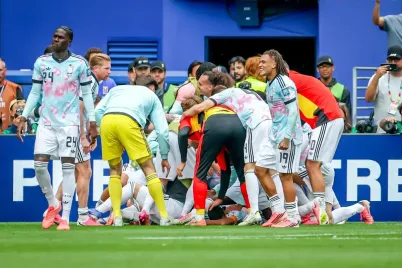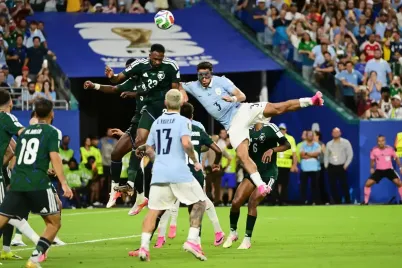
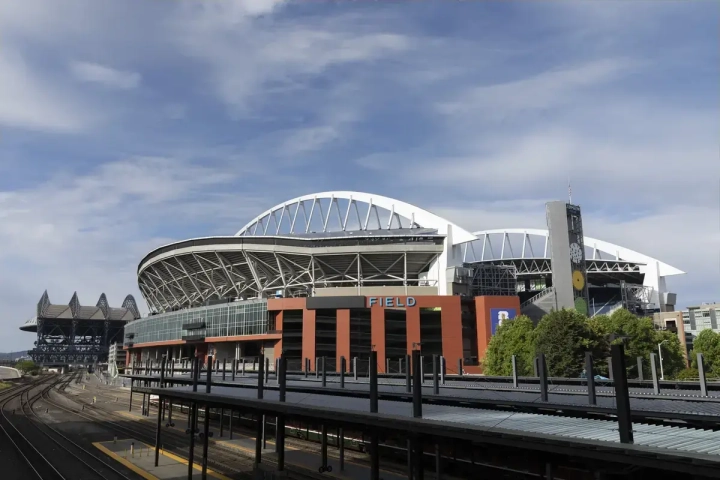
Belgium arrive in Seattle with the chance to turn a steady World Cup campaign into something more convincing, but Senegal stand in their way with the freshness of a side that believes the knockout stage offers a clean break from everything that came before. The FIFA World Cup 2026 round-of-32 tie takes place at Seattle Stadium, the tournament name for Lumen Field, on Wednesday, 1 July 2026, with kick-off at 1pm local time, 9pm BST in the United Kingdom and 10pm in Belgium and Senegal. The winner will move into the last 16 and face either the United States or Bosnia and Herzegovina, adding another layer of consequence to a match already loaded with individual quality and tournament tension.
The expanded World Cup has created a new kind of early knockout jeopardy. Belgium came through Group G as winners after two draws and a decisive final performance, while Senegal squeezed into the knockouts as one of the best third-placed teams from Group I. On paper, the paths appear different enough to suggest a clear favourite, but tournament football rarely follows that script. Germany and the Netherlands have already discovered the danger of assuming pedigree will carry a team through sudden-death football, and Belgium head coach Rudi Garcia has been keen to stress that Senegal’s third-place finish does not reflect the strength of their squad.
There is a sense that Belgium are still trying to define exactly what this version of their national team can become. The golden generation label has faded, but many of the names who shaped that era remain important: Kevin De Bruyne, Romelu Lukaku, Thibaut Courtois and Leandro Trossard continue to provide experience, technical authority and big-match know-how. Around them, younger players have added pace, energy and defensive depth. The challenge for Garcia has been to blend those qualities into a side that looks less like a team living off reputation and more like one capable of growing through the tournament.
Their most recent competitive fixture offered the strongest evidence so far. Belgium beat New Zealand 5-1 in Vancouver on Friday, 26 June, a result that took them to the top of Group G on goal difference after earlier draws with Egypt and Iran. Lukaku’s impact from the bench was one of the major talking points, with the striker producing a goal and an assist late on to help turn a tight group picture decisively in Belgium’s favour. The win did not erase the slow start to their campaign, but it did give Garcia the kind of attacking rhythm he had been seeking.
For much of the group stage, Belgium’s biggest issue was not control but incision. They carried the ball into good areas, yet too often lacked the final pass or penalty-box sharpness needed to break games open. Against New Zealand, that changed. De Bruyne’s ability to dictate tempo remains central, Trossard’s movement between full-back and centre-back channels gives Belgium an important attacking weapon, and Jérémy Doku offers direct running that can alter the emotional temperature of a match within seconds. If Belgium are to go deep, their forwards must turn pressure into goals earlier than they did during the opening phase.
Garcia appears to have a fully fit squad available. Zeno Debast has returned to consideration after fitness management earlier in the competition, while Doku is also available, giving Belgium greater flexibility across both defensive and attacking positions. There are no confirmed suspension concerns for Belgium ahead of kick-off, which leaves selection as a matter of tactical preference rather than enforced compromise. That is valuable in a knockout tie where the ability to change the game from the bench can be just as important as the starting XI.
The tactical question for Belgium is whether they can impose themselves without becoming vulnerable to Senegal’s speed in transition. Courtois provides calm behind the back line, but the spaces either side of Belgium’s central defenders will be closely watched. Senegal have wide forwards and runners capable of punishing loose positioning, and Belgium’s full-backs will need to judge their forward movements carefully. If Doku starts, Belgium will naturally lean towards his flank for ball progression; if he is held in reserve, Garcia may prefer a more controlled opening before increasing the tempo later.
Senegal’s tournament has been more turbulent, but perhaps more emotionally clarifying. Pape Bouna Thiaw’s side lost their first two group matches, beaten 3-1 by France and 3-2 by Norway, results that left their qualification hopes hanging by a thread. Their response against Iraq was emphatic. A 5-0 victory gave Senegal the goal difference and momentum they needed to reach the round of 32 as the eighth-best third-placed team, and it also restored belief in a squad that had looked bruised by earlier defensive mistakes.
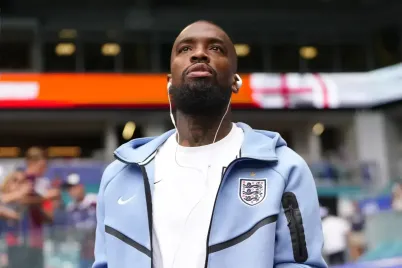
Thiaw has described the knockout stage as a new competition, and that mindset may suit Senegal. They cannot change the group-stage defeats, but they can use the Iraq performance as proof that their attacking quality remains intact. Sadio Mané remains the symbolic figure, still capable of shaping matches with movement, timing and experience. Nicolas Jackson adds physical presence and vertical running through the centre, Ismaïla Sarr brings pace from wide areas, and Pape Gueye offers a midfield route into advanced positions. When Senegal move the ball quickly, they can make a game feel uncomfortable for opponents who prefer long spells of control.
The major confirmed setback is in goal. Édouard Mendy has been ruled out of the Belgium match with a knee injury, meaning Mory Diaw is expected to continue as Senegal’s goalkeeper. Mendy’s absence removes a first-choice presence with significant international and club experience, but Diaw’s task is clear: manage the pressure, communicate effectively with the defensive line and avoid giving Belgium the kind of early encouragement that can shift a knockout tie. No confirmed Senegal suspension concerns have been reported, allowing Thiaw to retain most of his outfield structure.
Senegal’s defensive performance will be scrutinised because the group stage exposed both their ambition and their fragility. Conceding six goals across the first two matches was damaging, even if those games came against dangerous opponents. Kalidou Koulibaly remains a leader and reference point, while Moussa Niakhaté and Abdoulaye Seck offer different defensive profiles. The priority against Belgium will be compactness between the lines. If De Bruyne receives the ball facing forward too often, Senegal will spend the evening chasing runners. If they can block those passing lanes and force Belgium wide, the contest becomes much more evenly balanced.
Midfield will be the area where the match may truly turn. Belgium will look to control rhythm through De Bruyne and the players around him, while Senegal need pressure on the first receiver and quick support once possession is recovered. The Lions of Teranga cannot simply retreat and defend their box for 90 minutes; Belgium have too much crossing quality, too much patience and too many experienced forwards for that to be sustainable. Equally, Senegal cannot press without coordination, because one mistimed jump could leave space for Trossard, Lukaku or Doku to attack.
This is also a meeting with an unusual human connection. Garcia once coached Thiaw at Saint-Étienne, creating a personal subplot between two managers who now meet on the World Cup stage with national ambitions at stake. Sentiment, however, will disappear once the match begins. Garcia is trying to guide Belgium beyond the disappointment of their 2022 group-stage exit and towards a run more befitting a squad that still contains elite-level experience. Thiaw is seeking to lead Senegal towards the later rounds and build on a national history that includes a famous quarter-final appearance in 2002.
Belgium and Senegal have not built up a deep World Cup rivalry, which makes the contest feel less burdened by the past and more shaped by the present. Their first World Cup meeting comes at a moment when both teams are trying to answer important questions. Belgium must show that their final group match was not just a late burst against limited opposition. Senegal must show that their recovery against Iraq can survive a major step up in opponent. The match will not be decided by reputation; it will be decided by who handles the phases of pressure better.
There are wider storylines too. Belgium’s continued stay in Seattle gives them a degree of logistical stability, with the squad spared another immediate journey after topping the group. Senegal, meanwhile, carry wider African interest into the knockout stage and will know that a victory over Belgium would rank as one of the most significant results of the round. The setting should suit a match of contrasts: European control against African power and speed, old leaders against new challengers, and two managers trying to convince their teams that the tournament has only just begun.
Set-pieces could become decisive. Belgium have aerial strength through Lukaku, defenders who attack deliveries and a supply line capable of creating danger from wide free-kicks. Senegal, with Koulibaly and other powerful targets, can threaten in the same way. In a match where both teams may spend long spells cancelling each other out, corners and second balls could provide the breakthrough. Discipline will also matter. The expanded knockout stage has already shown how quickly a game can swing once nerves, fatigue and fear of elimination enter the equation.
As kick-off approaches, Belgium appear to have the cleaner tournament profile, the deeper bench and the steadier selection picture. Senegal have the more dramatic recent story, the sharp warning of their Iraq performance and the kind of attacking pace that can disturb any favourite. That combination gives the tie its edge. Belgium are not simply playing a third-placed qualifier; they are facing a team with enough quality to make a single-elimination evening dangerous. Senegal are not merely chasing an upset; they are trying to prove that resilience, when backed by talent, can become a route through the World Cup.
For Garcia, the demand is progress. For Thiaw, the opportunity is transformation. Seattle will stage a match between two teams who have arrived by different roads but now stand at the same threshold. Belgium want to confirm that they are still a serious tournament force. Senegal want to show that their difficult group stage has made them tougher rather than weaker. Under the pressure of knockout football, one side will move closer to the World Cup’s deeper stages, while the other will be left to wonder how quickly possibility became regret.