
[directorist_search_result]

Netflix Documentary Talent Fund Returns to Champion the UK and Ireland’s Next Generation of Filmmakers

Netflix is once again throwing open the doors to the documentary world’s next wave of talent, as its Documentary Talent Fund returns for a fourth year – and with it, a clear statement of intent: bold new voices belong front and centre.

The initiative, which has quietly become one of the most effective launchpads for emerging filmmakers across the UK and Ireland, will back five new short documentaries in 2026, each with a £30,000 budget and hands-on creative support from Netflix and industry leaders. Since its launch, the fund has been designed not simply to finance films, but to elevate filmmakers who have talent, perspective and something to say – particularly those historically under-represented in the industry. The result has been a growing pipeline of distinctive, festival-ready work and careers that have gone on to gain serious momentum.

Kate Townsend, Netflix Documentaries, said:
“We hope that aspiring filmmakers from across the UK and Ireland will gather their teams over the next month, ahead of applications opening in January, to come up with some amazing and surprising ideas for a short documentary. We are looking to work with creatives who may have some experience within the industry but are looking for the next opportunity to super-charge their careers. This is a great moment for us to engage with the next generation of documentary makers and support where we can.”

Selected teams will receive far more than funding. Under the guidance of Netflix and leading filmmaking professionals, participants will take part in workshops spanning every corner of production – from creative development and legal frameworks to HR, finance and delivery.

The programme is intentionally structured as a stepping stone: a practical, confidence-building route to the next stage of a filmmaker’s career.

The fund’s track record speaks for itself. To date, it has supported 21 films, which have collectively screened more than 65 times at festivals worldwide. Alumni have gone on to secure BAFTA Breakthrough recognition, Screen Scotland funding, Grierson and Critics’ Circle nominations, and placements on programmes including BAFTA Elevate and the Werner Herzog ‘Experience Azores’ workshop. Several have progressed to BFI-backed projects and high-profile industry lists, quietly reshaping the documentary landscape along the way.

Each finished film will run between eight and 12 minutes and will be released on Netflix’s See What’s Next YouTube channel following festival runs.

The creative brief for this year’s fund is succinct: “CHANGE”.

Shortlisted teams will be invited to pitch at Netflix’s UK headquarters in summer 2026. Elisabeth Hopper returns as Lead Producer for the fourth year, joined by Georgie Yukiko Donovan (Unit Director, Heart of Invictus) and Daisy Ifama, herself a Documentary Talent Fund alum.

Post-production support will once again be provided by Molinare Creative Group, whose award-winning team will deliver full end-to-end services for all five films, alongside an in-depth post-production workshop designed to demystify one of the most critical stages of the process.

In an industry where opportunity can be elusive and access uneven, Netflix’s Documentary Talent Fund has become a rare thing: a meaningful intervention that doesn’t just spotlight emerging filmmakers but gives them the tools to stay.


Applications open on 9 January and close on 12 February 2026, with filmmakers asked to submit a one-sentence logline, a short synopsis and a creative statement. Applicants must be based in the UK or Ireland and can submit one project each.

Full details about applications are available here

Octavian IT: A Technology Partner Built for Modern Business

Technology underpins almost every business function, from communication and collaboration to security and continuity. When it works well, it enables growth. When it doesn’t, it becomes a constraint.

Octavian IT was founded in 2016 to provide IT services that align with how businesses actually operate. The company supports organisations across the UK, Europe, North America and the Middle East, delivering practical, enterprise-grade technology services built around reliability, security and clear priorities.

Rather than operating as a traditional outsourced helpdesk, Octavian IT positions itself as a long-term technology partner – combining technical expertise with an understanding of commercial realities.

Ben Solomon, Managing Director and Founder of Octavian IT reflects on the core motivations of the business:

“Technology is evolving fast – and so are we. At Octavian IT, we make technology work for business: secure, scalable and stress-free. Our role isn’t just fixing problems; it’s building partnerships that drive growth and keep organisations ahead of change. By harnessing innovation like AI, we keep organisations ahead of change and build partnerships that drive growth, not barriers.”

Clear Structure, Consistent Support

Every Octavian IT client is assigned a dedicated account manager, project manager and technical team. This structure ensures continuity, faster decision-making and a deeper understanding of each organisation’s systems and objectives.

Support is delivered through UK-based lines, with 24/7 availability for businesses operating outside standard hours or across multiple time zones. The focus is on resolving issues efficiently while reducing repeat problems through proactive management.

Services Designed Around Business Needs

Octavian IT provides comprehensive IT support alongside a broad range of services, including wireless and connectivity solutions, server infrastructure, cloud platforms, telecoms and mobile systems.

Cyber security and business continuity are integral parts of the offering. As organisations rely more heavily on distributed systems and remote access, Octavian IT helps clients manage risk, protect critical infrastructure and recover quickly from disruption. Services are tailored to suit both small and large organisations, ensuring solutions remain proportionate, scalable and cost-effective.

Driving Innovation with AI

As technology continues to evolve, Octavian IT helps businesses stay ahead by implementing AI-driven solutions that support a wide range of needs. This includes anything from automating workflows and enhancing cyber security to improving decision-making and customer experience. By integrating AI into practical, scalable systems, Octavian IT ensures organisations can leverage innovation without complexity, unlocking new efficiencies and competitive advantages.

Experience, Reach and Measurable Delivery

Since launch, Octavian IT has completed over 120 projects and helped create new roles within the cyber security sector. The team brings more than a decade of combined experience, supporting a growing base of long-term clients across multiple regions. The company’s approach prioritises clarity over complexity and outcomes over unnecessary features. Advice is practical, and technology decisions are made with long-term stability in mind.

Built for Long-Term Partnership

Octavian IT focuses on building durable client relationships rather than short-term contracts. The objective is to provide technology that supports business continuity, enables change and remains dependable as organisations evolve.

By combining structured support, global reach and a partnership-led approach, Octavian IT delivers IT services that are reliable, responsive and aligned with modern business requirements.

Learn more about Octavian IT here

University of Suffolk Rainforest Ecotourism Partnership Project Shortlisted for Global Award

A rainforest ecotourism partnership project involving the University of Suffolk has been shortlisted for an international award recognising innovation in sustainable travel experiences.

The project, based in the Peruvian Amazon, is a citizen science initiative delivered by Rainforest Expeditions in collaboration with the University of Suffolk’s Wildlife, Ecology and Conservation Science course. Known as the 8 Primates Project, it focuses on monitoring and protecting primate species through a combination of research, technology and community involvement.

The rainforest ecotourism partnership project has been shortlisted in the travel experience category of the Regenerative Travel Impact Awards 2025. It uses bioacoustics, artificial intelligence and engagement with local communities to record and safeguard species including spider monkeys, howler monkeys and capuchins.

Since its launch, the project has created an extensive library of primate vocalisation recordings. Over the past year, activities have expanded beyond the Tambopata National Reserve to neighbouring communities, where local people are being trained in bioacoustics research methods and conservation practices.

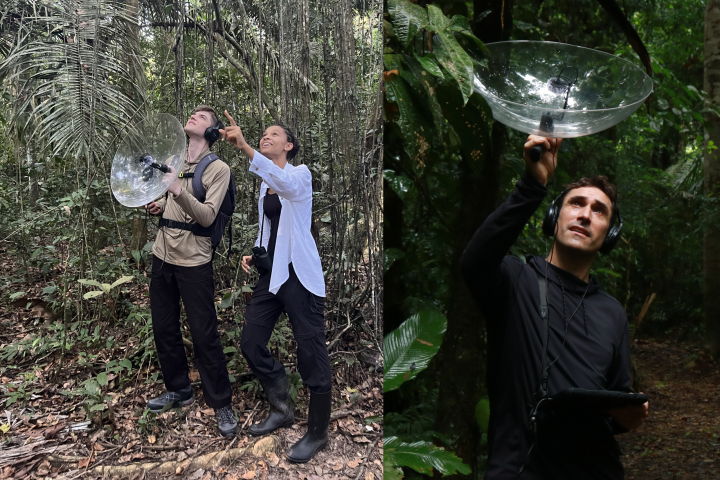
Visitors staying with Rainforest Expeditions contribute directly to the conservation work. Tourists help collect audio recordings of primates using directional microphones and record behavioural observations. Students from the University of Suffolk also play a central role in the rainforest ecotourism partnership project through placements and fieldwork.

Several undergraduate students have completed placements with the project. The most recent visits took place during the summer and involved second year students Dan Beckett and Leyla Huo. Their work included guiding tourist groups into the rainforest to collect audio samples of primates and other species, analysing recordings, and delivering educational talks to visitors.

Leyla Huo said: “The experience that I had at the Tambopata Research Centre was incredible as it is one of the most remote ecolodges in South America, meaning I was able to fully immerse myself in nature and see the different biodiversity up close.

“I also had the opportunity to assist with the research for macaws and discovering new species projects, which allowed me to get a better understanding of how wildlife conservation practices should be managed. These activities really helped to expand my knowledge and get some hands-on experience in the field, making me better prepared for my next placements and future jobs.”

Dan Beckett said: “It was a great experience. A lot of skills I was developing in the weeks running up to the placement, such as recognising different primate vocalisations, but visualising these with sonograms, which I’ve used to look at bat calls in the lab at university, was a good way to build on my existing skills.

“I’ve gained a new appreciation for many of the rainforest species, particularly the primates – there’s something special about seeing them in person.”

Further academic involvement is planned as part of the rainforest ecotourism partnership project. An optional primatology module scheduled for early 2027 will allow 10 students to study bioacoustics alongside primate ecology and conservation directly at the 8 Primates Project site.

Research linked to the project also includes doctoral work. Suffolk PhD student Borislava Gacheva is using the growing archive of recordings to help develop artificial intelligence algorithms capable of detecting species presence in audio surveys.

Dr Mark Bowler, Course Leader for the Wildlife, Ecology and Conservation Science course at the University of Suffolk and Principal Investigator and Project Leader at the 8 Primates Project, said: “It’s fantastic to see the hard work of our team and volunteers in Peru, and our students that have worked on the project, recognised with this award shortlisting.

“The 8 Primates Project allows citizen scientists to make a meaningful contribution to conservation in a practical and sustainable way, and our students get the opportunity to put into practice the skills they learn in the classroom to help protect these hugely important species.”

Mercer & Hole Appoints New Financial Planning Director

Mercer & Hole has appointed a new financial planning director as part of its continued work with clients across London and the Home Counties. The firm operates from offices in London, Buckinghamshire and Hertfordshire.

Michael McManus joins the accountancy firm after more than a decade in financial planning roles at Rathbones and Saunderson House. His professional background includes work across investments, protection strategies, retirement planning, estate planning and tax optimisation.

In his new position, McManus will advise clients throughout London and the surrounding regions. The Mercer & Hole financial planning director role will involve supporting individuals as they manage financial decisions amid changing tax conditions.

“I’m very pleased to join Mercer & Hole and look forward to meeting new clients and working with them to achieve their goals,” he said.

He highlighted the pressures currently facing clients. “It’s a challenging time for clients trying to navigate many tax changes and the consequences they have which may affect their future plans.

“I’m here to listen to them and help them work out how to achieve their long-term financial objectives despite the ‘goal posts’ shifting for many.”

Mark Cassidy, joint managing partner at Mercer & Hole, welcomed the appointment. “We welcome Michael to the financial planning team.

“He brings with him a wealth of knowledge and experience and a great approach to listening to clients ambitions and helping them to come up with a workable plan.”

Mercer & Hole has 28 partners and employs more than 300 staff across four offices located in London, St Albans, Rickmansworth and Milton Keynes. The appointment strengthens the firm’s financial planning offer following the arrival of the new Mercer & Hole financial planning director.

Funding Approved to Progress Active Travel Schemes in Peterborough

Three active travel schemes in Peterborough are moving forward following formal approval to secure external funding and begin delivery work.

At a Cabinet meeting held at Sand Martin House today, members agreed that the council will enter into a Grant Funding Agreement with the Cambridgeshire and Peterborough Combined Authority valued at £1,138,537. This funding will support the progression of three active travel schemes in Peterborough focused on cycling and walking improvements.

The funding will be allocated to the design and delivery of the Bourges Boulevard Cycleway, the Peterborough Station Quarter Citylink scheme, and the Stanham Way Cycleway. Delivery work across all three projects will be undertaken by M group, the council’s highways partner.

Councillor Angus Ellis, Cabinet Member for Transport and Environment, said: “I am delighted that these vital projects can now move forwards and I look forward to seeing them progressed. Each scheme will have positive impacts on the environment enabling people to travel via active and sustainable modes.

“We remain fully committed to providing quality walking and cycling routes across Peterborough so that more people can travel to work, education or for leisure in a sustainable way, tying in with our ongoing work to reduce carbon emissions.”

Mayor of Cambridgeshire and Peterborough Paul Bristow said: “This Combined Authority funding will ensure we can deliver much-needed upgrades to cycling and walking in the city and continue the momentum on the Peterborough Station Quarter. By improving choice and accessibility for locals and visitors, we can help make Peterborough healthier, wealthier and happier.”

Following Cabinet approval, development work will now proceed on upgrading the existing Bourges Boulevard cycleway between Bright Street and Junction 18 at Rhubarb Bridge. A total of £663,537 has been allocated to fund improvements to one or more sections of the route as part of the wider programme of active travel schemes in Peterborough.

Further design work will take place before final decisions are made on which sections will be upgraded. The council has stated that the ambition remains to improve the entire Bourges Boulevard route in the future, subject to securing additional funding.

As part of the Peterborough Station Quarter project, new footways and cycleways will be introduced to support the wider transformation of the area. The Station Quarter scheme has already secured £48 million from the Levelling Up Fund alongside £1.5 million from the Towns Fund. This funding will support the creation of western station access, enhancements to the existing eastern station building, and improvements to the surrounding public realm.

The first phase of the Station Quarter works, known as the Citylink scheme, is scheduled to begin in 2026. This phase will concentrate on the Queensgate roundabout and nearby areas. It includes the removal of two subways and the construction of new footways and cycleways. £200,000 of Active Travel Funding will be used to match fund the walking and cycling components of the Citylink scheme.

Progress will also be made on plans to improve and reopen an existing bridge to provide pedestrian and cycle connections from Crown Lakes Country Park into Stanham Way. This scheme forms another element of the active travel schemes in Peterborough currently being advanced.

The council has already secured £106,000 in s106 funding to support this project. Construction costs are currently estimated at £275,000. Additional investigative work will be carried out on the bridge structure to establish the measures required to ensure it can be safely opened for public use.

Universal Studios UK theme park granted planning permission

Planning permission has been approved for the first Universal Studios UK theme park, marking a significant development for Bedfordshire.

The Secretary of State for Housing, Communities and Local Government has issued a Special Development Order allowing the entertainment complex to be built in Kempston Hardwick, near Bedford. The order enabled the government to grant approval directly, bypassing the usual local planning process.

Universal said the Universal Studios UK theme park was a “transformative” project expected to attract more than eight million visitors each year. The company said the park could open by 2031.

The proposed site is a former brickworks and was selected due to its proximity to transport links, including rail connections and London Luton Airport.

Planning documents published in July showed that the tallest rides could reach up to 377ft, or 115m, which would make them the highest structures of their kind in Europe. Peak visitor numbers are expected to reach about 55,000 people per day.

Most buildings at the Universal Studios UK theme park would stand between 20m and 30m tall. Some larger structures would be included to create what the plans describe as a skyline with “visual interest”.

The development would include parking for more than 7,000 cars, space for hundreds of visitors arriving by coach or bicycle and a large entry plaza.

While official details of the attractions have not been confirmed, a source close to the project told the BBC that James Bond, Paddington and The Lord of the Rings themed rides could be included.

Page Thompson, president of new ventures at Universal Destinations & Experiences, said: “I want to express my sincere appreciation for the continued engagement from Bedford and the various communities surrounding our site, as well as the many other national and local stakeholders who have provided feedback and expressed such enthusiasm on the transformative nature of our project.”

A government spokesperson said the planning permission was “subject to conditions and limitations”. They added that Steve Reed, the Secretary of State, “gave proper and impartial consideration to the planning merits” and reached his decision based on the available evidence and advice.

Mohammad Yasin, Labour MP for Bedford and Kempston, described the approval as a “landmark moment for Bedford and the wider region”. He said: “The confirmation of planning permission for the Universal Destinations & Experiences Entertainment Resort Complex is transformational and will be felt for decades to come.”

Bedford Borough Council said the Universal Studios UK theme park would generate £50bn of economic benefit and followed years of collaboration between Universal and local authorities.

Adam Zerny, Independent leader of Central Bedfordshire Council, said the development would deliver “significant benefits to our area, creating new jobs and increasing income for many local businesses”.

Universal said the project would create 20,000 construction jobs and 8,000 permanent roles once operational, with around 80% of positions expected to go to local workers.

The company added that the scheme would deliver transport improvements, including an expanded Wixams railway station and new slip roads from the A421. Work on a new station at Wixams began in August 2024 but was paused to allow for a larger facility to meet the needs of the park.

Last month, East West Rail Company confirmed a separate station would be built at Stewartby to serve the site. National Highways said upgrades would also be made to the surrounding road network, including a new link road from the A421.

Zerny said discussions with Universal had acknowledged the need for improved local roads as the project progresses.

Not all residents have welcomed the plans. Some people living near the site on Manor Road in Kempston Hardwick told the BBC they had not been informed about the future of their homes.

In July, residents said they had not received confirmed compensation offers despite their properties being marked for demolition in the plans.

Blake Stephenson, Conservative MP for Mid Bedfordshire, said he would “work closely with residents, the council, and Universal Studios as the project moves forward, to ensure the infrastructure our communities need is delivered so that we can reap the rewards of this exciting development”. He said the project would bring thousands of jobs and provide a major boost to tourism and local businesses.

Cutting edge cancer treatments set to be produced out of uranium from nuclear reactors, under landmark deal

Thanks to a landmark agreement that has been announced today (Tuesday 16th December) between the cutting-edge biotech firm Bicycle Therapeutics, and the UK Nuclear Decommissioning Authority, tens of thousands of doses of cutting-edge cancer therapies are set to be produced.

With the ability to help save lives, and tackle some of the hardest-to-treat forms of cancer, these therapies are set to be produced from hundreds of tonnes of reprocessed uranium generated from historic processing of spent nuclear reactor fuel.

Liz Kendall, the Science and Technology Secretary has said: Cancer is a disease that affects millions worldwide, and tears too many families apart. Breakthroughs in medical science are giving more cancer patients and their loved ones hope, and this unique partnership could help take that work even further.

“Turning nuclear material into cutting-edge cancer treatments sounds like science fiction – but thanks to the brilliance of scientists, researchers and doctors, it could be a life-saving reality. Work like this shows exactly why we’re determined to support our life sciences innovators to make groundbreaking new treatments possible.”

Bicycle was co-founded by one of the luminaries of British science, sir Greg Winter, who was honoured with the Nobel Prize for Chemistry in 2018, and will now use a groundbreaking process developed by United Kingdom National Nuclear Laboratory (UKNNL) to harvest the valuable medical isotope lead-212 from reprocessed uranium.

CEO of Bicycle Therapeutics, Kevin Lee, PhD. has said: “As a UK-based biotech company, we are incredibly grateful to the UK Government for their recognition of Bicycle’s Nobel-prize winning science and potential to create radiopharmaceutical cancer therapies from up to 400 tonnes of reprocessed uranium over 15 years. We are proud to be part of the British life sciences ecosystem and collaborate to help people and support economic growth. This is a significant milestone, bringing us closer to our goal of helping patients live longer and live well.”

A tiny amount of lead-212’s parent material is extracted through a series of processes and radioactive decay – equivalent to the size of a single drop of water in an Olympic-sized swimming pool is enough. An even tinier amount of lead-212 is then taken for use in radiopharmaceuticals: a type of precision medicine that could help treat some of the cancers that conventional treatments struggle to tackle.

This new development builds on the government’s wider work to transform cancer care across the NHS. It is overhauling the health service to catch cancer sooner and save lives – expanding diagnostic capacity and investing in new technology to ensure patients can access timely, high-quality care.

This will include cutting cancer waiting times, with 110,000 more patients being diagnosed or having cancer ruled out within 28 days from an urgent GP or screening service referral between November 2025 to October 2025 compared to the previous year.

Health Innovation Minister, Dr Zubir Ahmed, has said: “Every breakthrough that gives patients and their loved ones new hope matters deeply – and this extraordinary partnership could be truly life-changing for people facing some of the hardest-to-treat cancers.

“I’m immensely proud that we’re backing partnerships like this, showcasing how British innovation can transform lives. By turning nuclear material into precision cancer treatments, we’re opening new frontiers in the fight against this deadly disease.

“This is exactly the kind of bold thinking that will help us build an NHS fit for the future – harnessing life sciences potential to improve care, save lives, and drive economic growth across the UK.”

Julianne Antrobus, Chief Executive Officer at UKNNL, said: “Our purpose is nuclear science to benefit society, and this partnership is a perfect example of this in action. We’re proud to be part of the nuclear and life sciences sectors coming together, forging innovative collaborations that tackle some of healthcare’s most pressing challenges in transformative ways. It’s incredible to see UKNNL’s expertise at the forefront of the global fight against cancer. Decades of research by our dedicated teams has made unique partnerships like this possible, and I look forward to seeing our work with Bicycle and the NDA progress.”

Radiopharmaceuticals work by delivering radiotherapy directly to cancer cells: destroying tumours while reducing the chances of side effects. This could help the treatment of cancers that conventional therapies can sometimes struggle to tackle, including prostate cancer, and neuroendoctrine cancers that can affect organs like the gut and pancreas.

Bicycle will extract lead-212 with a novel radioisotope generator, developed exclusively for them by medical isotope experts Spectron Rx.

Bicycle Therapeutics is a clinical-stage biopharmaceutical company headquartered in Cambridge (UK) developing a novel class of medicines, referred to as Bicycle® molecules, for diseases that are underserved by existing therapeutics.

NDA Group CEO, David Peattie, said: “We’re proud to make part of our uranium inventory available to Bicycle, enabling the development of innovative, life-saving treatments.

“As the organisation entrusted with the safe and secure management, storage, and disposal of the UK’s radioactive materials and waste—a responsibility we take extremely seriously—this collaboration demonstrates how we can go beyond our core mission.

“By leveraging our unique capabilities, expertise, and resources, we’re helping to advance wider UK Government ambitions and create a lasting positive legacy for the nation.”

All of this complements the £20 million funding announced, last month, for research into lead-212 extraction being conducted by UKNNL and Medicines Discovery Catapult. The Government is determined to unleash a golden era of nuclear technology and innovation, and today’s news comes hot on the heels of Government backing for Sizewell C on the Suffolk coast and small modular reactors in North Wales.

London Stansted Expansion Plans Gain Widespread Support Ahead of Decision

London Stansted’s expansion plans have attracted significant public and organisational backing ahead of a key planning decision. The airport has applied to raise its annual passenger cap to 51 million, with councillors due to determine the application on Wednesday 17 December.

Uttlesford District Council has received 1,410 comments in support of the proposal. These submissions come from a wide range of stakeholders, including local residents, airport employees, airlines, passengers, unions, businesses, and organisations across the tourism, hospitality, and education sectors.

Nearly half of the supporting comments point to the economic impact of the London Stansted expansion plans, highlighting the potential to stimulate the local economy, attract new investment, and create employment opportunities. Planning officers have recommended approval of the application, subject to conditions, citing the “clear economic benefits” associated with the proposals.

Support has also focused on transport improvements and wider opportunities linked to growth, such as increased destination choice and expanded training provision. If approved, growth to 51 million passengers a year would deliver a range of outcomes. These include the creation of 4,500 new jobs supported by existing training and education facilities, improvements to M11 Junction 8 to reduce congestion, additional funding for local bus services, roads, and tackling fly-parking, and a commitment that over half of all passenger journeys would be made by public transport to ease pressure on local roads.

Gareth Powell, London Stansted’s Managing Director, said: “I’d like to thank everyone who submitted a comment in support of our plan – it’s a real vote of confidence. We’re in this for the long haul – putting in the place the measures now to support growth in the future. Now it’s up to local councillors to weigh the evidence and make their decision.”

Business and civic leaders have also voiced their backing for the London Stansted expansion plans. Denise Rossiter, CEO of Essex Chambers of Commerce & industry Ltd, said: “The Essex Chambers of Commerce strongly support Stansted Airport’s application to increase its passenger cap from 43m to 51m passengers per year.

“Our membership is very substantially in support of the airport’s plans, encouraged by the economic opportunities for Essex businesses and reassured by the sustainability of the proposals.

“The development of the airport, a key international gateway to the world, will be critical to the growth and increased prosperity of Essex, and its attractiveness as a destination for investment”.

Karim Fatehi OBE, Chief Executive of London Chambers of Commerce & Industry, said: “Increasing passenger capacity at Stansted is a strategic investment that strengthens London and the UK’s position as a global hub – creating new jobs, improving connectivity, and enhancing the airport’s ability to attract new routes and airlines.

“Building next-generation infrastructure is essential for driving long-term economic growth across London and the East of England, ensuring the region remains globally competitive, connected and resilient.”

Paul Bristow, Mayor of Cambridgeshire and Peterborough, added: “London Stansted provides hugely important international connectivity for Cambridgeshire, Peterborough, and the wider East of England. The airport is crucial to my plan to make our region the fastest-growing economy in the UK.

“That’s why I support Stansted’s efforts to grow sustainably and continue delivering economic stimulus for our communities. I hope the District Council supports its planning application.”

Academic and workforce representatives have also expressed support. Dr Robert Singh, Director of Research and Enterprise Office at the University of Essex, said: “The University of Essex strongly supports London Stansted Airport’s proposals to expand passenger numbers to 51 million by 2040.

“This growth offers the region greater global connectivity – allowing our international students to access the University more easily and reducing travel from other airports, and it will help drive economic growth in the region, increasing the local employment opportunities for our graduates.

“We are pleased that this growth can be delivered without increasing the number of flights from the airport and so minimising impact on the surrounding area and the environment”.

Unite regional officer Steve Edwards said: “Unite has long been supportive of expansion plans for London Stansted Airport, which we agree will bring thousands of new jobs to the local community, boost the economy and safeguard existing roles by ensuring they can adapt to a rapidly changing sector.

“There is also a fantastic opportunity here for investment in cleaner technologies such as sustainable aviation fuel which will protect and create jobs while maintaining environmental commitments.

“We look forward to continuing to work with Stansted Airport and the local council to ensure any new jobs that come out of proposed expansion are well-paid, unionised and have opportunity for career development as well as protecting existing roles.”

Air Energy Hertford Headquarters Expansion Supports £25m Turnover Target

An air compression specialist has set out plans to significantly increase turnover following a move to a larger headquarters in Hertford. The relocation is central to the Air Energy Hertford headquarters expansion, which is designed to support rising demand and long term growth.

Air Energy supplies and maintains air compressors and vacuum pumps for customers in the UK and overseas. Its systems take in air, store it under pressure and then release it to generate power for a wide range of tools and machinery.

The technology is used in settings where reliability and safety are essential. Applications range from breathing apparatus for firefighters to equipment used in nuclear powerplants, placing the business within specialist and regulated industries.

The company employs 25 people and has secured a £1m commercial mortgage and invoice finance facility from Lloyds to acquire a new 8,000 sq ft base in Hertford. The funding underpins the Air Energy Hertford headquarters expansion and supports its wider ambitions.

The new headquarters is more than twice the size of the firm’s previous premises. It triples storage capacity, increases production capability and allows the business to take on a higher volume of orders.

The additional space will also enable workforce growth. Air Energy plans to expand its team to 40 over the next few years, creating new skilled roles locally as part of the Air Energy Hertford headquarters expansion.

With a current turnover of £5m, the business is targeting £25m within six years, representing a £20m increase. The move is seen as a practical step towards achieving that objective.

Sustainability features prominently at the new site. The roof is fitted with 40kW of solar panels which fully power operations, with surplus energy exported back to the grid. Four electric vehicle charging points have also been installed.

Mark Asker, director at Air Energy, said: “The quality and versatility of our air compression systems has allowed us to build up a strong customer base around the world, and that growth is only accelerating.

“We needed a larger space to meet increasing demand, expand our team and continue delivering the high standards our customers expect.

“Once we spotted the opportunity to acquire this unit, we knew it was a one we couldn’t afford to miss.

“It’s fantastic to now own our own premises, and we’re incredibly grateful to the support from Nicos and the Lloyds team for supporting us on this next stage of our journey.”

Nicos Charalambous, relationship manager at Lloyds, said: “Mark and his team at Air Energy have put a lot of hard work into establishing themselves as one of the leading suppliers of air compression systems in the country.

“But rather than rest on their laurels, they’ve demonstrated a desire and ambition to really take their business to the next level, and it was a pleasure to be able to support them with this.

“We’re here to support businesses with their growth plans, including providing transition finance as they invest in measures that reduce energy costs, such as solar panels or electric charging points.”

Skip to content Skip to content