[directorist_search_result]

Work underway to transform Moot Hill in Wymondham

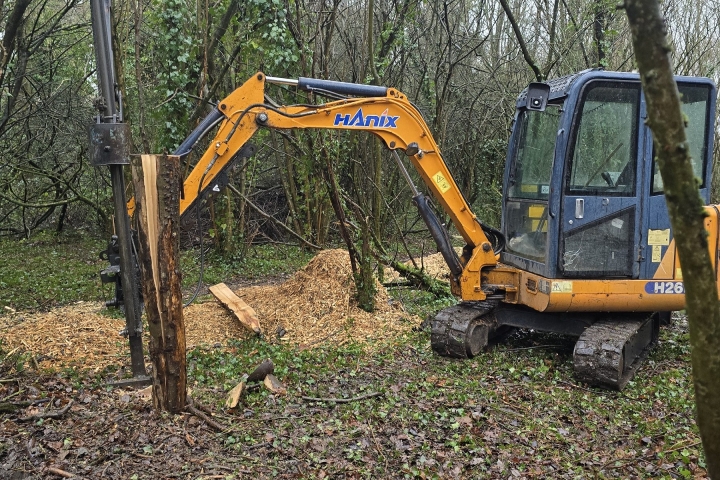
Thanks to a grant from South Norfolk Council major progress is being made to transform Moot Hill in Wymondham into a safe, accessible, and vibrant green space for the local community to enjoy. The area is now owned by local charity, Norfolk Archaeological Trust (NAT) and is both a Scheduled Monument and a County Wildlife Site. The project will balance archaeological conservation with protecting the wildlife.

The initial preparatory work is now well underway, with new fencing and entrance gates installed securing the area. The project is currently exploring possible new access paths and ways to tell the story of Moot Hill.

To ensure the long-term health of the landscape, a professional Visual Tree Assessment has been completed NAT is currently selecting a specialist arboricultural contractor to carry out essential maintenance and emergency tree works. This work will ensure the woodland remains a safe environment for all visitors.

South Norfolk Councillor Graham Minshull said: “The main aim is to make Moot Hill a place that everyone can visit by providing access to the public. We are thrilled to see this beautiful site starting to open up so that Wymondham residents can enjoy this incredible local asset.”

Community input is at the heart of this project. NAT is currently hosting a public consultation to gather feedback on the future of Moot Hill. Following successful events at Kett’s Park and the Market Place, our final consultation event will take place between 9am and 1pmon Saturday 21 February in Wymondham Market Place.

This phase of the project is being funded by South Norfolk Council as a key priority in the Wymondham Green Infrastructure Strategy.

Safe disposal of batteries to help prevent waste‑vehicle and site fires

The Cambridgeshire and Peterborough Waste Partnership (RECAP) is urging residents to recycle batteries and battery‑powered electricals safely, following an increase in fires caused by incorrectly disposed lithium‑ion batteries. Recent incidents include a fire at Thalia’s Alconbury waste transfer station at New Year, as well as 13 bin lorry fires across Cambridgeshire in the last 12 months.

In 2023, more than 1.6 billion batteries were thrown away in the UK, with over 1.1 billion hidden inside everyday household items such as phones, tablets, e‑cigarettes, toothbrushes and power tools. When these items end up in general waste or mixed recycling, batteries can ignite or explode during collection, transport or sorting.

Across the UK, over 1,200 waste‑related fires were recorded in the past year – a 71% rise since 2022, posing significant risks to crews, the public and waste‑handling facilities. Lithium‑ion batteries are especially dangerous when crushed in lorries, and even small button or toy batteries can spark fires once compacted.

All types of batteries can be recycled free of charge at Household Recycling Centres, supermarkets and DIY stores. This includes loose household batteries, lithium‑ion and rechargeable batteries, and batteries found inside small electrical items.

To help prevent fires, residents are urged never to place batteries in the bin, to use designated recycling points, tape over damaged terminals and check for local collection schemes.

Councillor Ros Hathorn, chair of the RECAP board and Chair of the Environment and Green Investment Committee at Cambridgeshire County Council, said: “It’s really important that everyone knows how to recycle their batteries the right way, to keep Cambridgeshire safer.”

“Fires caused by discarded batteries are becoming much more frequent, putting our communities and crews at risk. However, the good news is that preventing these fires is simple, and every household can play a part.

“By remembering to always take your used batteries to a local recycling point, and never putting them in the bin, you’re helping to keep everyone safe, as well as reducing disruption to our services.”

Where to recycle batteries safely

You can take batteries and small electricals containing batteries to:

Household Recycling Centres (HRCs) across Cambridgeshire and Peterborough
Full list: https://www.cambridgeshire.gov.uk/residents/waste-and-recycling/household-recycling-centres
Supermarkets and DIY stores
(Any shop that sells batteries must also accept used batteries for recycling.)

Football Has Lost Its Patience and It’s Taking Society With It

Football used to be a long game played at short speed. Ninety minutes decided a match, but seasons decided legacies. Managers arrived with a philosophy, a blueprint, and the expectation that the first coat of paint would look patchy before the walls started to shine.

Now the sport behaves like it’s doom-scrolling its own existence. One bad half and the crowd wants a new manager. One awkward press conference and the forums light the torches. One run of draws and the word “project” becomes a punchline.

And it isn’t just football. It’s us.

We’re living in an age that treats time like a nuisance. Everyone wants results at the tap of a screen. Delivery by tomorrow. Answers in seconds. Success without the awkward bit where you’re bad at something before you become good at it. Gen Z have grown up in a world where speed is normal, and delay feels like disrespect. That isn’t a criticism, it’s an environment. If you’re raised in instant feedback, you start to believe the world owes you instant outcomes.

Football has swallowed that culture whole.

We even talk like speed is the point. “We need change at the speed of light,” people say, as if human beings can be rebooted like routers. But here’s the thing: even Concord, the most famous symbol of “faster than everyone else,” wasn’t moving at the speed of light. It was rare because it was expensive, loud, complicated, and only a tiny slice of the world could justify it. It crossed the Atlantic in a way no normal plane could, because it was built for a different reality.

That’s modern football in a nutshell.

Only the elite clubs can live like Concord. They can sack a manager, hire another, buy three players for him, sack him again, and keep flying at altitude. The money cushions the mistakes. The global pull covers the bruises. Their impatience is subsidised.

Everyone else? Everyone else is on a standard passenger jet. Seven to eight hours, depending on the tailwind. It takes the time it takes. You can kick the seat and scream at the air hostess, it won’t make the Atlantic smaller.

The tragedy is that mid-table and struggling clubs copy the elite’s impatience, without the elite’s safety net. They try to live at Concord speed with economy-class fuel. And then we act shocked when the engines fail.

A friend of mine said something to me off the record recently that stuck. He called it “the blood culture.” Not accountability, not standards, not ambition. Blood. The baying demand for sacrifice. Fans aren’t just unhappy, they want proof that someone is suffering for it. A sacking becomes a kind of offering to the gods, the idea that if you throw a manager into the fire, the footballing spirits will finally smile again.

But what does that actually buy you?

It buys you noise. It buys you dopamine. It buys you the feeling of control.

It rarely buys you a better team.

Stoicism understood this long before football did. Marcus Aurelius didn’t write about back fours and xG, but he did understand impatience as a form of weakness, because impatience is the refusal to endure the reality you’re in. Not forever, not blindly, but long enough to do the hard work properly. The Stoic idea isn’t “accept misery and do nothing.” It’s accept what is, then act with discipline, without theatrics, without panic.

Football is doing the opposite. It panics first and thinks later.

And that’s why recruitment is the first crime scene.

Clubs keep hiring managers like they’re ordering a takeaway. “He’s available.” “He’s a big name.” “He plays good football.” None of that is a plan. The homework should come first: what does this club actually need, structurally and culturally? What kind of football fits the squad, the academy, the budget, the league position, the owner’s tolerance for risk? What is the manager’s real track record when things go wrong, not just when the wind is behind him?

Then, and only then, once you’ve picked the right fit, you owe that person time. Not blind faith. Time. Respect. A runway long enough to build habits, not just hype.

Managers have their share of blame too. Some stroll into failing clubs and sell a fantasy in the first press conference. “We’ll be fearless.” “We’ll dominate.” “We’ll turn this around quickly.” It sounds brave. It sounds convincing. It’s often nonsense.

If you drop a CEO into a multinational where profits are down, morale is low, and systems are broken, nobody serious expects a miracle by next Tuesday. A serious turnaround works in phases, measured in fiscal cycles. Plan. Execute. Review. Adjust. Repeat. The organisation doesn’t transform because someone “wanted it more” in the first quarter.

Football is the only industry that pretends transformation should happen because the crowd got angry enough.

But football has one terrifying difference: relegation.

That trapdoor changes everything. You fall through it and sometimes you don’t bounce. You lose revenue, you lose players, you lose status, you lose the ability to recruit, you lose time itself because the club becomes a machine for survival. So yes, some knee-jerk reactions happen because fear is real.

Yet here’s the uncomfortable question: if the club goes down anyway, was the sacking actually the smart move? Or was it just the blood culture again? If you genuinely believe the manager is capable of bringing the club back up, if he’s built teams before, if his methodology aligns with what the club wants to become, then why is relegation treated as a moral failure rather than a strategic problem?

Because impatience has turned football into a courtroom instead of a workshop. Every weekend is a verdict.

And the greatest casualty is trust.

Trust is the invisible spine of every successful relationship. In marriage, in friendship, in business, trust isn’t optional, it’s oxygen. So why has football decided trust is a luxury?

The best eras are built on longevity. Longevity is just trust with time added.

Liverpool are the modern example people love to use, and for good reason. Jurgen Klopp didn’t land and immediately produce a masterpiece. He built culture first, then structure, then belief, then trophies. There were moments early on where the ideas didn’t fully gel, where the noise rose, where impatience tried to do what impatience always does: rush the ending. Time didn’t just help Klopp, time was the ingredient.

Everton are a sharper lesson, because it shows how close clubs come to sabotaging themselves. In David Moyes’ early years, there was a season where Everton finished 17th, flirting with the drop and living in that anxious fog where every result feels fatal. The very next season, the same club finished fourth. That is what patience can look like when it’s tied to belief and leadership, not sentimentality. Everton’s story also warns what happens when clubs stop learning that lesson and become addicted to the hire-fire cycle. You don’t get stability, you get permanent transition. You don’t get a “new manager bounce,” you get chronic identity loss.

And then there’s the modern fan’s favourite phrase: “Be careful what you wish for.”

West Ham are the cautionary tale written in capital letters. A manager brings stability, pulls you away from relegation chatter, turns you into a consistent top-eight contender, and then wins you a trophy. Yet the hunger doesn’t calm, it escalates. “Now we want more.” More is not always ambition. Sometimes it’s greed dressed as standards. It’s entitlement wearing a club badge. It’s the belief that satisfaction is weakness.

But football doesn’t reward greed with certainty. It punishes it with chaos.

Tottenham are often mentioned in this conversation for a reason. The club lives under the constant pressure of what it thinks it should be, rather than what it has actually built the foundations to sustain. Fans look up at the skyline and demand penthouse views without accepting you need to lay concrete first. You can’t manifest trophies. You have to manufacture them.

And here’s the dirty secret: impatience feels like ambition, but it behaves like self-harm.

Because what impatience really does is compress human development into an unrealistic timeframe, then label people “failures” when they can’t deliver miracles on demand. In any other job, that would be recognised as a toxic culture. In football, it’s treated as normal. We’ve normalised burning people as part of the entertainment.

The digital age has poured petrol on it. Everything is instant, so everything is judged instantly. The manager isn’t just managing a squad, he’s managing the internet’s mood. His job isn’t just tactics, it’s trend management. A bad substitution becomes a viral trial. A defeat becomes a week-long meme.

And owners aren’t helping, because so many of them are distant from the football itself. There’s a gulf now. PLC thinking. Corporate structures. Middlemen. Layers of “process.” The manager becomes a disposable asset inside an organisational chart instead of a leader with a shared mission. Alignment disappears, and without alignment, trust evaporates. Without trust, patience becomes impossible.

If owners and managers sat down properly, away from the noise, and spoke in depth about the real plan, the real tolerance for setbacks, the real style the club wants to embody, you’d see fewer impulsive sackings. Because you’d see fewer impulsive appointments in the first place.

That’s the heart of it: football’s patience hasn’t died. It’s been murdered by poor planning, digital noise, and a culture addicted to immediate emotional relief.

The fix isn’t to tolerate mediocrity. The fix is to stop confusing impatience with intelligence.

Pick better. Align properly. Communicate honestly. Then commit.

Because the sport doesn’t need Concord fantasies from clubs that can’t afford Concord consequences. Most clubs need the virtue of the ordinary journey, the steady flight, the long build.

Football used to understand that history takes time.

So does a rebuild.

So does a human being.

Historic building saved

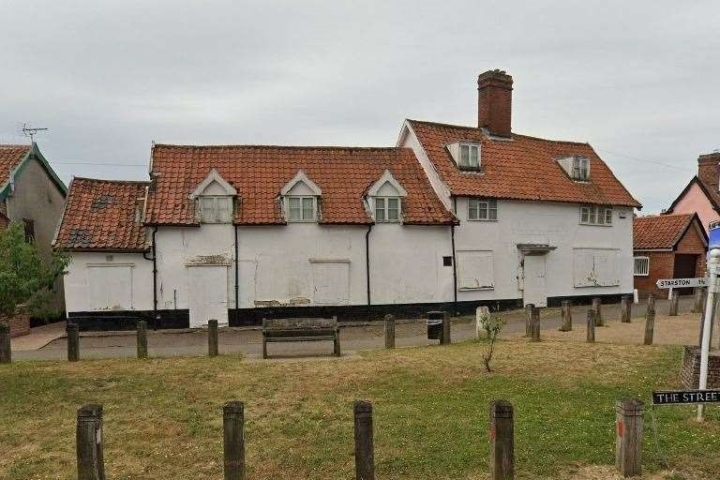
The Kings Head pub, a grade two listed building in the heart of Pulham St Mary has been saved from potential, unlawful demolition following action by South Norfolk Council.

The Council was granted an injunction at the High Court on Wednesday, preventing the owner, Mr Scott, from knocking down the historic public house. The Kings Head sits in a conservation area in middle of the picturesque village.

The owner of the pub, who wants to build houses on the site, has repeatedly been refused permission to demolish the listed building. However, the owner planned to push ahead with the demolition forcing the council to seek an injunction from the High Court to prevent this important building from being lost forever.

Leader of South Norfolk Council, Daniel Elmer said: “The historic towns and villages of South Norfolk are a valuable asset for us all. We have tried to work with the owner of the Kings Head, but it is the Council’s duty to protect our listed buildings and the conservation areas in South Norfolk from harm. When we were made aware that Mr Scott was planning to demolish the pub we had to act to save the building and that is exactly what we did.”

Local District Councillor, Clayton Hudson said: “We have to find a way forward and where there’s a will, there’s a way. I appeal to Mr Scott to sit down with members of the community, officers from the council and myself to collectively work to develop a plan to bring this wonderful, listed building back to its former glory. The community achieved great things with the former Pennoyer school over 15 years ago so I have no doubt of their ability to make similar things happen again.”

In 2024, following Mr Sott’s latest application nearly 1,000 people signed a petition in protest.

At the time the council’s decision to refuse concluded: “The proposed demolition would result in the total loss of the grade II listed King’s Head public house and would result in harm to the significance of the conservation area. There is an absence of any clear and convincing justification for the scheme, including any benefit to the community.

“The applicant has failed to provide sufficient information to demonstrate that the public house, a community facility, could not be brought back into use as a public house or similar community use.”

Government launches consultation into future options for new one tier councils in Cambridgeshire and Peterborough

The Government is seeking views on the proposals submitted by councils for the reorganisation of local government in Cambridgeshire and Peterborough.

Peterborough City Council, Cambridgeshire County Council, Fenland District Council, Huntingdonshire District Council, East Cambridgeshire District Council, South Cambridgeshire District Council and Cambridge City Council have all submitted their preferred options for Local Government Reorganisation (LGR).

From 2028, Peterborough City Council, and Cambridgeshire’s existing two-tier system of one county and five district and city councils, will be replaced with new unitary authorities.

In November, Peterborough City Council submitted its proposal (Option D) to Government to create three new unitary authorities in Cambridgeshire. One for Peterborough and West Huntingdonshire, one for Fenland, East Huntingdonshire, East Cambridgeshire, and another for South Cambridgeshire, Cambridge City.

Leader of Peterborough City Council, Councillor Shabina Qayyum, said: “Local Government Reorganisation is an opportunity to shape the future local governments of our region and ensure that Peterborough remains at the heart of decision-making for our residents.

“We want to ensure the councils of the future can deliver the best change for our city in terms of prosperity, investment, growth and identity whilst continuing to protect our most vulnerable residents and give our young people the best life chances.

“Option D, the Greater Peterborough option, preserves our identity. We are unique as a city from the rest of the region. We have a densely diverse core surrounded by our leafy green villages and it is essential we preserve that identity

“The Government wants to hear what local people think about the four options that are being put forward for Cambridgeshire and Peterborough. I would urge you to read the consultation and take part to make sure your voice is heard in the decision-making of one of the best changes we have faced for decades.”

The seven councils in Cambridgeshire and Peterborough submitted the following proposals:

  1. Cambridge City Council, East Cambridgeshire District Council and South Cambridgeshire District Council proposed two unitary councils (Option B). These would comprise the district areas of:
  • North Cambridgeshire and Peterborough: Peterborough, Huntingdonshire, East Cambridgeshire, Fenland
  • Greater Cambridge: Cambridge, South Cambridgeshire
  1. Cambridgeshire County Council proposed two unitary councils (Option A).

These would comprise the district areas of:

  • North West: Peterborough, Fenland, Huntingdonshire
  • South East: Cambridge, East Cambridgeshire, South Cambridgeshire
  1. Huntingdonshire District Council proposed three unitary councils (Option E). These would comprise the district areas of:
  • North East: Peterborough, Fenland, East Cambridgeshire
  • Central Huntingdonshire: Huntingdonshire
  • South West: Cambridge, South Cambridgeshire
  1. Peterborough City Council and Fenland District Council proposed three unitary councils (Option D) splitting Huntingdonshire District Council areas between two of the proposed new councils.

These would comprise the district areas of:

  • Greater Peterborough: Peterborough and nine wards from Huntingdonshire
  • Mid Cambridgeshire: Fenland, East Cambridgeshire and 17 wards from Huntingdonshire
  • Greater Cambridge: Cambridge, South Cambridgeshire

The consultation will close at 11.59pm on Thursday 26 March 2026.

“Hopefully we can make those hard, blistering steps across the desert count and mean something more than just a tick on my bucket list” – EACH Sales Assistant Jenny and two of her children are taking on the toughest footrace on Earth

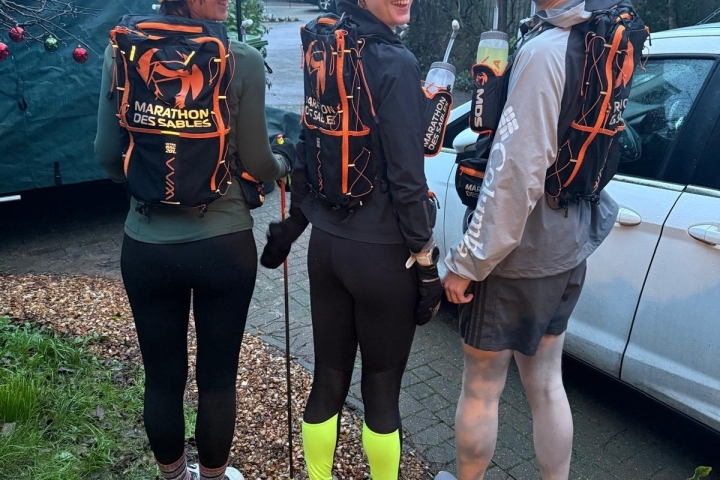
A determined mum and two of her children are embarking on a gruelling ultramarathon across endless sand dunes, rocky mountains and white-hot salt plains in a daring quest to raise funds for East Anglia’s Children’s Hospices (EACH).

Jenny Anderson, Sales Supervisor in the charity’s Southwold shop, has signed up for the energy-sapping Marathon Des Sables along with son Ewan, 28, and daughter Elin, 26. Between them, they hope to raise £3,000.

The 250km (156-mile) event, held in the Sahara Desert, is regarded as the toughest footrace on Earth. It is approximately the distance of six regular marathons, and the longest single stage is an eye-watering 100k.

“People may think we’re mad, but I feel truly privileged to have this opportunity, with two of my children by my side,” said Jenny, 58.

“I take each day as a blessing and am one of the lucky ones, having been diagnosed with breast cancer in 2019.

“It shook me to my very foundations, and suddenly, life seemed more precious and fragile than ever.

“Mercifully, after treatment, I’ve subsequently had a positive prognosis, and when I asked my oncologist what I should do to stop it coming back he said ‘keep running’.

“So, that’s exactly what I’ve done, and each step of every day is truly precious, a blessing and certainly not something I ever take for granted. It gave me the inspiration to take on this extraordinary challenge.”

The multi-stage Marathon Des Sables, which gets underway on 3rd April, is held every year in southern Morocco.

It equates to roughly a marathon a day for the first three days and then a double marathon on the fourth.

After a rest day, hardy participants then do another marathon before finishing with one last half-marathon.

It is a self-sufficiency race, so participants carry their own belongings. The only thing they are given is water.

They sleep in open-sided tents, which are big enough for seven or eight people.

“Ever since recovering from breast cancer, this event has been on my bucket list,” said Jenny, who lives in Worlingham.

“However, it’s self-funded and hugely expensive, so I knew I’d need to get a part-time job to help pay for it. That’s what led to me working for EACH, in Southwold.

“It’s one of the most rewarding jobs I’ve ever had, and I’m in awe of the incredible, essential care and support it provides.

“No family should have to go through these horrendous things.

“However, for those who have no choice, this amazing charity is there to make those short lives as loving, happy and pain-free as possible.

“It puts everything in perspective, and we’re so thankful to anyone kind enough to support us by donating.

“Any amount, however small, will be truly appreciated, and hopefully together we can make those hard, blistering steps across the desert count and mean something more than just a tick on my bucket list.”

Natasha Butler, EACH’s Senior Community Fundraiser for Norfolk, said she was in awe of Jenny, Ewan and Elin’s efforts.

“Jenny has clearly had a tough few years, but her strength, resilience and positivity is truly inspiring,” she said.

“Everyone here will be cheering them every step of the way, and the fact they’re embarking on this incredible adventure together, as a family, makes it even more powerful and meaningful.

“What a great way to bond and raise funds and awareness of our charity at the same time.

“The Marathon des Sables is an extraordinary challenge in one of the world’s most inhospitable environments.

“It demands immense physical and mental strength, and it’s clear all three of them have the qualities in abundance.”

Council approves ambitious £1.3 billion business and budget plan

Record spending on roads, thousands of extra school places and support for vulnerable residents underpin Cambridgeshire County Council’s ambitious budget, approved by a majority of Councillors today.

The council will also deliver improvements residents can see and feel, from award winning climate leadership to well‑resourced local libraries and upgraded recycling facilities.

A majority of Councillors also approved the new vision for “a healthy, fair and sustainable Cambridgeshire,” setting the direction for a bolder, brighter county in challenging times. This vision is driven by three key ambitions that will guide the council’s future business planning and the delivery of improvements for communities, for residents of all ages, to parents and carers, road users, and those facing cost-of-living pressures.

By approving the 2026–29 Business Plan and Budget, Councillors have approved a legal, balanced budget that also drives investment for vital services that communities say matter most to them.

The nearly £1.3 billion Business and Budget Plan includes a number of investments aligned with the council’s three new ambitions:

Supporting a green and sustainable county
To improve day to day journeys for drivers, cyclists and bus users, it has allocated an additional £20m for highway maintenance, on top of Government funding, to provide safer and more reliable roads across Cambridgeshire.
The council will also continue to provide leadership and deliver its Climate Change and Environment Strategy.

Enabling full and healthy lives for all
To support older people, adults with disabilities and families, who rely on care every day, the council is allocating £14.7m of additional funding for adult social care providers. This will help them to manage rising costs and ensure care workers are paid the Real Living Wage, improving stability and quality for those who depend on care workers for their support.
Ensuring fairness and opportunity
To help families under pressure from the cost-of-living crisis, the council is prioritising £1m to continue holiday meal vouchers for the children most in need, through to the end of summer 2026. As the Government withdraws the Household Support Fund, the council will also use its new £5m Crisis and Resilience Fund to provide a wider range of anti-poverty measures, offering practical support to households facing financial challenges.

In addition, aligned to the vision and ambitions, the draft budget sets out major investment across key services, including £11m to upgrade the Milton and March Household Waste Recycling Centres. Residents will also see major investment in the services families rely on day to day, more school places, stronger support for vulnerable children, and well-resourced local libraries.

The plan will create 3,500 new primary school places and invest £72 million over five years to increase secondary school places, including at Alconbury Weald and North‑West Cambridge. It also includes £780,000 a year to run a children’s residential home in South Cambridgeshire, as well as continued funding for the Families First programme, an early‑intervention project that helps keep more families together and is supported by the £6.7 million Children’s, Families and Youth Grant. In addition, more than £1.2 million will be invested in libraries and archives over the next two years.

Cllr Lucy Nethsingha, Leader of Cambridgeshire County Council, said: “This is the first council budget delivered by the new administration elected last May, and we want it to be an ambitious one – a budget that begins to build a healthy, fair and sustainable Cambridgeshire. We have taken a responsible and prudent approach so we can invest in the vital services residents rely on most, even though this has been the most difficult budget to balance in more than four years as Leader.

“Rising costs in children’s and adults’ social care and in special educational needs are putting enormous pressure on our finances, and these statutory services for our most vulnerable residents now account for by far the largest part of our budget. While these national pressures continue and government remains silent on how councils should be funded more fairly, we are still managing to invest in key priorities.

“We know thousands of people depend on our roads and paths every day and residents tell us repeatedly that highways are their top concern. They tell us on social media, through our annual Quality of Life Survey, at the pub, in the street and at the school gate. That is why we are continuing record levels of investment in maintenance, alongside additional support for overstretched social care, continued funding for free school meal vouchers, and work to drive forward our commitments to achieve Net Zero as a Council.

“This is our battle plan for a bolder, brighter and more resilient Cambridgeshire during challenging times, and it is just the start. These proposals will help the council remain financially sustainable while enabling people to live full, healthy lives and share in a fair and sustainable future. I am enormously grateful to the officers and councillors who have worked so hard to bring the budget to this point.

“We will continue to challenge Government to recognise they are short-changing the communities of Cambridgeshire and to provide the right level of funding for services that our residents deserve.”

The majority of councillors at Full Council backed the Business and Budget plans.

The plans discussed included an increase of council tax by 4.99%, the maximum permitted by Government for county councils, as is the case in nearly all councils across England, and the level assumed by Government in setting its grant allocations. A total 2% of this increase is specifically for adult social care funding. The increase, if approved, would generate around £21million in additional funding and help the council continue providing the essential services people rely on.

This would mean that for a Band D property, the County Council’s share of Council Tax would increase by £84.78 a year, or £1.63 a week.

Bentley Motors opens applications for 2026 apprenticeship intake

Bentley Motors has today opened applications for its 2026 Apprenticeship Programme, inviting the next generation of talent to begin their careers with one of the world’s most iconic luxury automotive brands. Launching during National Apprenticeship Week, the programme offers 25 exceptional individuals the opportunity to learn, grow and help shape the future of mobility at Bentley.

For more than 40 years, Bentley’s apprenticeship programmes have played a vital role in the company’s success – developing skilled, passionate people who have gone on to become engineers, leaders and innovators across the business. Today, that legacy continues as Bentley prepares for its next chapter, delivering the Beyond100+ strategy and a bold transition towards an electrified, sustainable future.

The 2026 intake will offer apprenticeship opportunities across key areas including Manufacturing, R&D, Sales and Marketing, Finance, Quality, Mulliner, Strategy and Product Lines. Based at Bentley’s renowned Dream Factory in Crewe, apprentices will work at the heart of the business, gaining hands-on experience alongside industry experts while contributing to the design, build and delivery of extraordinary vehicles. From day one, apprentices will be empowered to apply their ideas, develop future-ready skills and play an active role in shaping the automotive industry of tomorrow.

Apprenticeships will commence in September 2026 and will be offered at a range of levels, including Advanced Apprenticeships (equivalent to two A Level passes), Higher Apprenticeships (equivalent to a foundation degree, Higher National Certificate or Higher National Diploma), and Degree Apprenticeships offering progression equivalent to a Bachelor’s or Master’s degree.

Dr. Karen Lange, Member of the Board for People and Culture at Bentley Motors, commented:

“For 40 years, our apprenticeship programmes have been a powerful engine for innovation, craftsmanship and progress, enabling talented individuals to turn ambition into impact. As we transform Bentley through our Beyond100+ strategy, it is the curiosity, creativity and technical excellence of the next generation that will define how we lead the industry forward. Investing in young people today is how we secure sustainable success for decades to come.”

Sophie Reynolds, Degree Apprentice in Product Strategy, added:

“Bentley drew me in as a relatively small company where I could build close relationships, get hands on in real business activities, and gain exposure all the way up to the Executive Board. Being within the luxury automotive sector, you get a real understanding of the impact of a customer, and how every team in the business contributes to industry leading excellence.

“My apprenticeship has taken me on placements across Product Strategy, Product Line Delivery, Manufacturing, R&D, and a stint internationally in Porsche. Through the opportunities, responsibility, exposure, events, projects, and extra-curricular work that I have been involved with through Bentley’s apprenticeship programme I have achieved more than I ever expected, ultimately winning a national award through MAKE UK, as this year’s Business Apprentice Rising Star.”

Bentley Motors has also been recognised as a UK Top Employer for the 15th consecutive year by the Top Employer Institute, reflecting its continued commitment to creating an exceptional workplace culture and investing in colleague development at every stage of a career.

Applications for Bentley’s 2026 Apprenticeship Programme are now open and close on 20 February 2026. For further information and details on how to apply, visit careers.bentleymotors.com.

Virgin Atlantic celebrates National Apprenticeship Week

Virgin Atlantic is marking National Apprenticeship Week (NAW) 2026 with an engaging programme of events that bring apprenticeships to life across aviation, engineering and future skills.

Running from Monday 9th February to Sunday 15th February, NAW 2026 marks its 19th year and highlights the role apprenticeships play in developing early-career talent. This year’s theme, ‘Fuelling your skills. Powering your future’, reflects Virgin Atlantic’s focus on building accessible pathways into aviation.

On Thursday 12th February, Virgin Atlantic will host Early Careers – an opportunity for, students from Space Studio West, a local partner school, to attend the Heathrow engineering hangar for an immersive, behind-the-scenes experience. During the visit, students will meet Virgin Atlantic’s engineering team, explore real apprenticeship career pathways, and take part in an exclusive guided hangar tour where students will see aircraft maintenance in action and the teams and technologies behind day-to-day operations. The experience is designed to spark curiosity, build confidence and inspire the next generation of engineering talent by bringing the world of aircraft maintenance and operations to life.

The airline will continue its activity on Friday 13th February with two further events aimed at inspiring future talent. To start the day, our charity partners at STEM Learning will co-host a national virtual panel for schools and teachers across the UK, featuring Virgin Atlantic colleagues who all began their careers as apprentices and have since progressed into roles across the business. Hosted by Mark Cox, Head of Aircraft Maintenance at Virgin Atlantic, the panel will include Tom Minto (Station Manager), Sophie Kelly (Engineer – Technical Operations), and Engineering Technicians Dhru Bhudia and Omer Cinar, offering first-hand insight into how apprenticeships can lead to long-term careers at Virgin Atlantic.

Later that day, Virgin Atlantic will open its doors at the CAE training centre for its flagship ‘Most Loved Apprenticeships event’ – a family-friendly showcase open to colleagues and up to two guests aged 13 and above. Officially opened by Virgin Atlantic’s CEO, Corneel Koster, the immersive experience will give young people and their families the chance to explore real “skills for life” in action. Guests will step inside the airline’s state-of-the-art CAE centre, exploring everything from flight simulators and engineering demonstrations to the uniforms department, alongside hands-on activities showcasing aircraft engineering, cabin crew safety skills, and the future of AI and technology at Virgin Atlantic.

Becky Woodmansee, Chief People Officer at Virgin Atlantic, commented:
“National Apprenticeship Week shines a light on the powerful role apprenticeships play in shaping the future of our industry. Our people are at the heart of everything we do, and by opening our doors to families, schools and our teams, we’re showcasing the incredible career opportunities available at Virgin Atlantic. We’re proud to inspire the next generation to see aviation as a place where they can learn, grow and build a rewarding career.”

These activities reinforce Virgin Atlantic’s belief that apprenticeships play a vital role in building a diverse, skilled and future-ready workforce – offering meaningful alternatives to traditional academic routes. The airline currently supports more than 150 active apprenticeships across 45 programmes, spanning engineering, aviation operations and data and AI. 80% of Virgin Atlantic’s Engineering Leadership Team began their careers as apprentices or graduates, and apprenticeship intakes now reflect a 50/50 gender split, highlighting the impact on long-term progression and diversity.

Skip to content Skip to content