Last night in Dallas, the footballing world watched as Spain ruthlessly dismantled France with a clinical 2-0 victory, booking their ticket to the 2026 FIFA World Cup Final in New York. Tonight, the spotlight pivots to the sprawling architecture of the Atlanta Stadium, where the second semi-final promises to deliver a spectacle drenched in historical animosity, tactical intrigue, and the looming presence of an absolute genius.
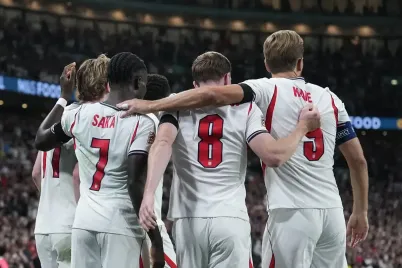
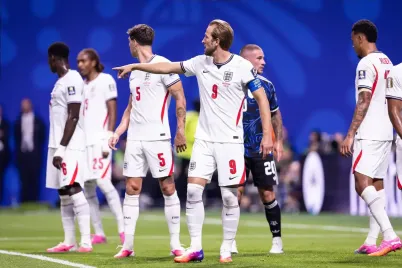
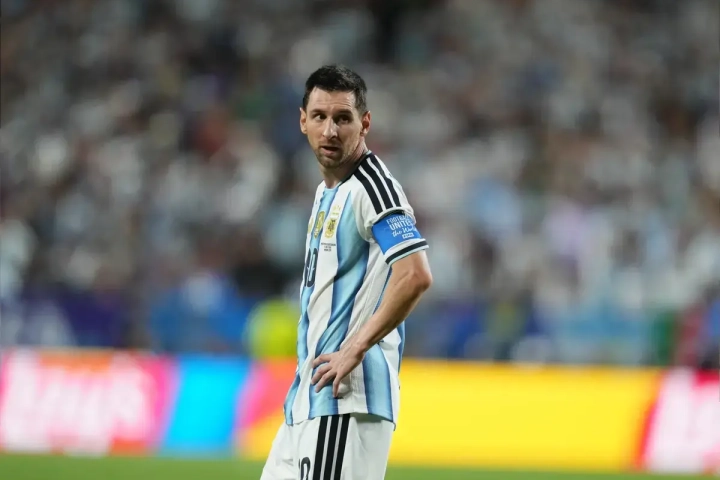
Thomas Tuchel’s resilient England side will face the reigning world champions, Argentina. It is a fixture that immediately sets the pulse racing, evoking decades of bitter rivalry and unforgettable sporting theatre. But beyond the historical baggage, this match presents the Three Lions with the most complex, seemingly unsolvable tactical conundrum in modern football: How exactly do you stop a 39-year-old Lionel Messi on a crusade to secure back-to-back World Cup titles?
Here is a comprehensive analytical deep dive into the intertwined history of these two footballing nations, and the precise tactical blueprint England must flawlessly execute if they are to survive the Argentine onslaught.
A Rivalry Forged in Fire: The Weight of History
To fully appreciate the magnitude of tonight’s clash, one must understand that when England and Argentina step onto the pitch, they are not merely playing a game of football; they are engaging in a fiercely partisan sporting war. The enmity between the two nations is woven into the very fabric of World Cup history.
The animosity was birthed at Wembley Stadium during the 1966 quarter-final. Following a brutal, bad-tempered affair, Argentine captain Antonio Rattín was controversially sent off, infamously refusing to leave the pitch for ten minutes. Following Geoff Hurst’s decisive goal, England manager Alf Ramsey refused to allow his players to swap shirts with the opposition, notoriously referring to the South Americans as “animals.”
Twenty years later, against the raw political backdrop of the Falklands War, the rivalry reached its mythological zenith at the Estadio Azteca in Mexico City. In the space of four breathtaking minutes during the 1986 quarter-final, Diego Maradona encapsulated the absolute duality of Argentine football. First came the brazen, unpunished cheating of the “Hand of God,” immediately followed by the sheer, unadulterated brilliance of the “Goal of the Century”, a slaloming run that left half the England team sprawling on the turf.
The drama spilled into the modern era during the 1998 Round of 16 in Saint-Étienne. That night had it all: Michael Owen’s sensational teenage wonder goal, a brilliantly orchestrated Javier Zanetti free-kick routine, and the defining image of David Beckham’s petulant red card for kicking out at Diego Simeone. England ultimately crashed out on penalties, a heartbreak that lingered until Beckham found personal redemption by smashing home a match-winning penalty during the 2002 group stages in Sapporo.
Tonight represents the first World Cup knockout meeting between the two nations since that fateful evening in France 28 years ago. The ghosts of Maradona, Simeone, and Rattín will inevitably hover over Atlanta, adding an immense psychological weight to a semi-final already overflowing with pressure.
The Messi Conundrum: Mind Over Matter
The central narrative surrounding Argentina’s progression to this stage has been the enduring brilliance of their captain. At 39 years of age, Lionel Messi is physically a completely different player than the explosive dribbler who tormented defences a decade ago. He operates almost entirely at a walking pace, meticulously conserving his energy reserves for devastating, split-second bursts of activity.
Yet, what he has lost in physical velocity, he has more than compensated for in unparalleled spatial awareness and footballing intellect. He effectively maps the pitch in real time, constantly scanning the defensive structures to identify microscopic vulnerabilities.
While his astonishing nine-match World Cup scoring streak was finally snapped in the gruelling extra-time victory over Switzerland last weekend, his overarching influence has not waned in the slightest. Against the Swiss, it was Messi’s gravitational pull that created the vast pockets of space for Julián Álvarez and Lautaro Martínez to exploit late in the game. He remains the undisputed architect of Argentina’s attack; stop him, and you drastically reduce the potency of the entire South American machine.
But can he actually be stopped? Or does a team merely hope to contain him?
Tuchel’s Tactical Blueprint: Zonal Denial Over Man-Marking
The most common, and historically most fatal, mistake managers make when facing Messi is assigning a dedicated man-marker to track his every movement. If Thomas Tuchel instructs Declan Rice to shadow the Argentine captain for 90 minutes, Messi will simply weaponise that attention. He will drift out towards the right touchline or drop deep into his own half, deliberately dragging Rice out of the central structure. This creates a gaping, unprotected chasm in the middle of the park for players like Enzo Fernández and Alexis Mac Allister to drive into.
Instead, England must employ a system of rigorous Zonal Denial.
Tuchel’s midfield must operate as a highly compact, horizontally rigid block. Rather than tracking the man, Bellingham and Rice must concentrate on suffocating the passing lanes. When Messi drifts into a specific zone, the nearest English player must engage him, but crucially, pass him off to a teammate as soon as he moves into a new area. This requires flawless, continuous communication, demanding immense concentration from a midfield that was pushed to the absolute physical brink during their 120-minute marathon against Norway.
The Defensive Patchwork: Bravery in the High Line
The execution of this zonal system is heavily complicated by the severe personnel crisis currently afflicting England’s backline. The controversial two-match suspension handed to Jarell Quansah following the Mexico clash, combined with Reece James’s lingering hamstring issues, has forced Tuchel into a frantic defensive reshuffle.
With young Nico O’Reilly thrust into a makeshift role on the left and Ezri Konsa shifted to the right, the central partnership of John Stones and Marc Guéhi faces the ultimate leadership test.
The temptation against a player of Messi’s calibre is to drop the defensive line incredibly deep to deny space in behind. However, sitting deep is practically a death sentence. Doing so willingly surrenders “Zone 14”, the highly dangerous area positioned centrally, just outside the penalty box. If Messi receives the ball in this pocket, facing the goal with time to lift his head, he will relentlessly punish England with perfectly weighted through-balls or trademark curling efforts into the top corner.
Therefore, Stones and Guéhi must be exceptionally brave. They must push the defensive line high up the pitch, violently compressing the space between themselves and the midfield pivot of Rice and Bellingham. By shrinking the playing area in the middle third of the pitch, England can physically crowd Messi out of the game, denying him the precious seconds required to orchestrate the play.
Starving the Supply: The Engine Room Battle
Ultimately, Messi cannot dismantle a defence if he does not have the ball at his feet. The most effective way to neutralise him is to ensure the supply line is completely severed at the source.
This shifts the immense responsibility onto England’s forward pressing unit. Argentina’s midfield enforcers, Enzo Fernández and Rodrigo De Paul, act as the lungs of Lionel Scaloni’s side. They do the heavy lifting, aggressively winning back possession and immediately looking to transition the ball to their captain’s left foot.
England’s attacking trio, whether that features Bukayo Saka, Phil Foden, or Anthony Gordon buzzing around Harry Kane, must press the Argentine midfield with calculated ferocity. If England can force turnovers high up the pitch, or simply force Fernández and De Paul into playing safe, lateral passes backward, they effectively isolate Messi from the rest of his team.
Furthermore, when Argentina transition into attack, the English full-backs must be hyper-aware of the runners. Messi’s greatest threat in 2026 is his ability to play a disguised, line-breaking pass to a forward in motion. If Julián Álvarez darts into the channels, O’Reilly and Konsa must track the run instinctively, without ball-watching.
Exploiting the Argentine Structure
While the defensive blueprint is paramount, England cannot simply look to survive; they possess the firepower to ruthlessly exploit Argentina’s own vulnerabilities.
Argentina’s full-backs, particularly Nicolás Tagliafico on the left, are actively encouraged to bomb forward and provide width. This aggressive positioning frequently leaves significant space in the wide defensive areas during turnovers. England’s greatest weapon tonight will be the blistering pace of Saka and the powerful, driving runs of Jude Bellingham in transition.
If England can absorb the pressure and launch rapid, vertical counter-attacks, they can force the Argentine midfield to constantly sprint backwards towards their own goal. A fatigued, retreating Argentine midfield means that when they do eventually regain possession, Messi is forced to drop 70 yards away from the English goal just to receive a pass, significantly diminishing his immediate attacking threat.
A Date With Destiny
As the hours tick down towards kickoff in Atlanta, the tension is palpable across two football-obsessed nations. For Argentina, tonight represents the penultimate step in cementing Lionel Messi’s legacy as the undisputed, back-to-back king of global football. For England, it is a glorious opportunity to exercise the bitter ghosts of 1986 and 1998, and to prove that their current golden generation, spearheaded by the phenomenal Jude Bellingham, is ready to conquer the world.
To stop Lionel Messi requires a tactical masterclass, an element of good fortune, and 90 minutes of absolute, unyielding concentration. Thomas Tuchel has the blueprint. Now, his exhausted, patchwork, but deeply talented squad must step onto the pitch and execute it against the greatest player of all time.