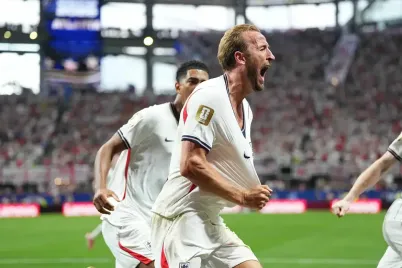
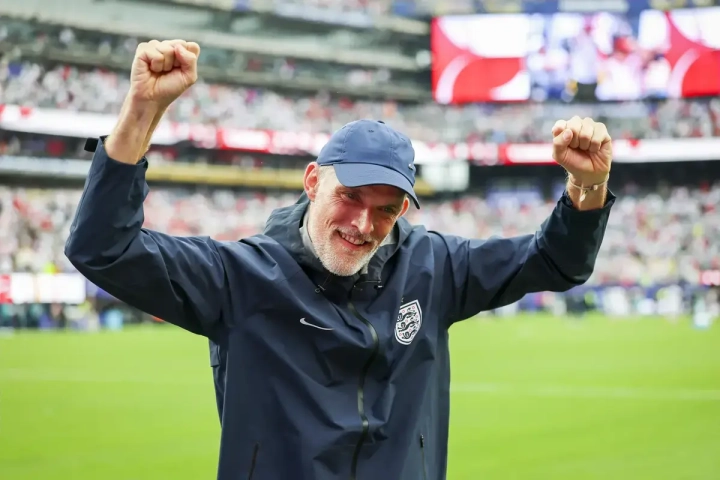
Today, beneath the immense roof of the Atlanta Stadium, the atmosphere around the England camp fundamentally shifts. The group stages, with their inherent margins for error and mathematical safety nets, are officially over. Welcome to the unforgiving reality of knockout football.
Thomas Tuchel’s men arrive at this Wednesday afternoon fixture boasting an unbeaten record in Group L, having safely navigated past Croatia, Ghana, and Panama. Yet, as any seasoned follower of the Three Lions will readily attest, the group stage is merely the preamble. The true psychological battleground for England has always been the sudden-death environment of the knockout rounds.
As England prepare to face an inspired Democratic Republic of Congo side in the newly expanded Round of 32, it is impossible to ignore the weight of history that accompanies the shirt. For decades, the knockout stages of the FIFA World Cup have been a source of both spectacular drama and profound, generational trauma for English football.
The Golden Generation and the Penalty Curse
To truly understand the modern psyche of the England national team, one must revisit the late 1990s and 2000s. This was the era of the so-called ‘Golden Generation’, a squad boasting the world-class talents of David Beckham, Michael Owen, Steven Gerrard, and Frank Lampard. On paper, they were world-beaters; in the knockout crucible, they were chronically fragile.
The modern narrative of heartbreak arguably began in the Round of 16 at France 1998. The encounter against Argentina in Saint-Étienne remains one of the most iconic matches in World Cup history. It had everything: a wonder goal from an 18-year-old Michael Owen, a disallowed Sol Campbell header, and the infamous red card for David Beckham following a petulant flick at Diego Simeone. England heroically held on for a 2-2 draw with ten men, only to inevitably succumb in the penalty shootout as Paul Ince and David Batty saw their efforts saved.
Four years later, under Sven-Göran Eriksson, the barrier was the quarter-final. Facing eventual champions Brazil in the sweltering heat of Shizuoka, Japan, England took an early lead through Owen. However, a brilliant equaliser from Rivaldo and an audacious, looping 40-yard free-kick from Ronaldinho that caught goalkeeper David Seaman off his line sent England crashing out.
The penalty curse reared its ugly head once more in 2006. In a gruelling quarter-final against Portugal in Gelsenkirchen, a painfully familiar script played out. Wayne Rooney was sent off for a stamp on Ricardo Carvalho, prompting Cristiano Ronaldo’s infamous wink to the bench. Despite a valiant defensive display to force a 0-0 draw, the mental block proved insurmountable. Lampard, Gerrard, and Jamie Carragher all missed from the spot, cementing the narrative that English players simply could not handle the psychological burden of a shootout.
The Dark Years and the Bloemfontein Injustice
If the 2000s were defined by near-misses and fine margins, the 2010 tournament in South Africa marked a severe decline. Under the rigid, uninspiring regime of Fabio Capello, a laboured group stage campaign resulted in a second-place finish and a daunting Round of 16 tie against a young, rampant German side.
The match in Bloemfontein is permanently etched into footballing infamy. Trailing 2-1 but building momentum, Frank Lampard unleashed a brilliant long-range strike that crashed off the underside of the crossbar and clearly bounced two feet over the goal line. Inexplicably, the Uruguayan officials failed to award the goal. While this glaring error directly accelerated the implementation of goal-line technology, it offered zero solace to England. Deflated by the injustice, they were subsequently torn apart on the counter-attack, falling to a humiliating 4-1 defeat, their heaviest ever at a World Cup.
The hangover from that era lingered into 2014, where Roy Hodgson’s side suffered the ultimate indignity of a group-stage exit, marking the absolute nadir of England’s modern World Cup history.
The Southgate Renaissance: Shattering the Ceiling
The arrival of Gareth Southgate fundamentally changed England’s relationship with knockout football. He fostered a culture that stripped away the historical baggage, encouraging his players to write their own stories rather than bearing the cross of past failures.
This psychological shift was spectacularly realised during the Round of 16 at the 2018 World Cup in Russia. Facing a cynical and physical Colombia side, England conceded a crushing 93rd-minute equaliser to Yerry Mina. In previous decades, the team would have inevitably crumbled in the ensuing penalty shootout. Instead, Jordan Pickford produced a miraculous save from Carlos Bacca, and Eric Dier coolly slotted home the winning penalty. It was England’s first-ever shootout victory at a World Cup, a watershed moment that propelled them all the way to the semi-finals.
By 2022, England had evolved into ruthless knockout competitors against mid-tier opposition. They systematically dismantled Senegal 3-0 in the Round of 16 in Qatar, showcasing a tactical maturity that had often been absent in previous eras.
However, the ultimate ceiling remained intact during their epic quarter-final clash with reigning champions France. Despite arguably outplaying the French for large spells of the game in Al Khor, England were undone by an uncharacteristic error from their most reliable asset. Trailing 2-1 late in the game, Harry Kane, who had already scored one penalty, blazed a second spot-kick wildly over the crossbar. It was a cruel reminder that at the absolute elite level, knockout football is decided by the finest and most unforgiving of margins.
The 2026 Reality: A New Format, A New Challenge
This brings us to the present day. Now operating under the tactical blueprint of Thomas Tuchel, England find themselves navigating an unprecedented World Cup structure. The 48-team expansion of the tournament means the introduction of a Round of 32, requiring nations to win four consecutive knockout matches to lift the trophy instead of three.
Their opponents today in Georgia, the Democratic Republic of Congo, present a unique and deeply dangerous challenge. While England are seasoned veterans of this stage, DR Congo are stepping into completely uncharted territory. This is their first-ever appearance in a World Cup knockout match. During their only previous tournament appearance in 1974 (competing as Zaire), they failed to score a single goal.
Fast forward 52 years, and Sebastien Desabre’s side are playing with the liberated joy of a team carrying absolutely no historical burden. They successfully navigated Group K, earning a resilient 1-1 draw against Portugal and putting three goals past Uzbekistan. They possess genuine Premier League pedigree, too. The dynamic Yoane Wissa has already netted three times in this tournament, operating at a devastating level of efficiency, while the presence of former England youth international Aaron Wan-Bissaka adds elite defensive solidity to their backline.
The Verdict: Expectations and Destiny
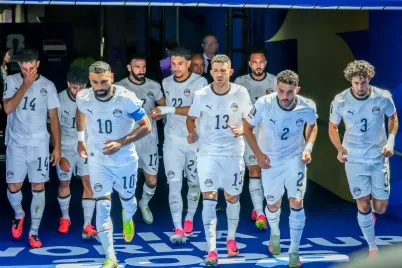
As the players walk out of the tunnel this afternoon, the juxtaposition is stark. Desabre has publicly stated that his side has “nothing to lose,” a psychological freedom that makes them incredibly dangerous on the counter-attack.
Conversely, the pressure on England is absolute. They are unbeaten in 11 competitive fixtures under Tuchel (W10 D1), dominating possession statistics throughout the group stage. Captain Harry Kane enters the match having just secured his place as England’s outright all-time leading World Cup goalscorer with 11 goals, while Jude Bellingham and Elliot Anderson have been dictating the tempo from midfield.
Yet, as the ghosts of Saint-Étienne, Shizuoka, Gelsenkirchen, and Al Khor whisper from the history books, Tuchel and his squad know that previous form counts for nothing from this point onwards. They must channel the newfound resilience of the modern era and respect a fearless DR Congo side hungry for a historic upset.
The crucible of knockout football has returned. Over the next 90 minutes, or perhaps 120 minutes and the dreaded penalty spot, we will discover if this iteration of the Three Lions is truly ready to conquer it.