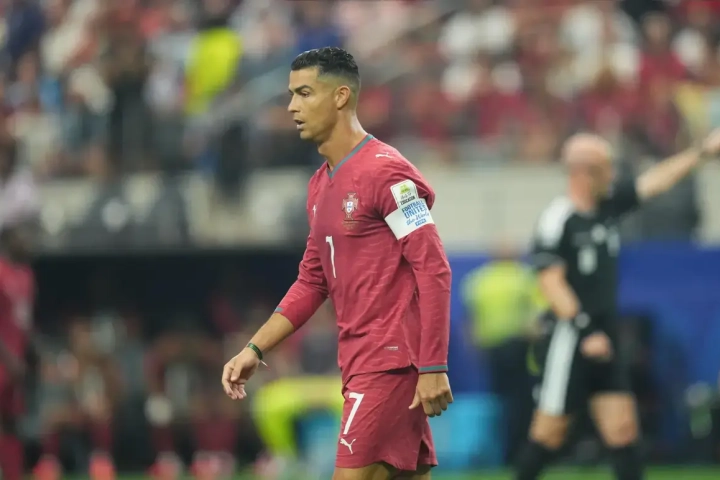
A Tense Iberian Derby in Texas
The sweltering heat of Texas provided a highly dramatic, tense backdrop for an eagerly anticipated FIFA World Cup 2026 Round of 16 encounter. Kicking off at exactly 20:00 BST on Monday, 6 July 2026, the sprawling Dallas Stadium bore witness to a gruelling, tactical tug-of-war between Iberian rivals Portugal and Spain. For ninety minutes, the contest devolved into a deeply absorbing yet remarkably frustrating chess match, defined by elite defensive organisation and heavily congested midfield battles.
Ultimately, the persistent deadlock was broken in the most spectacular fashion conceivable. Deep into second-half stoppage time, a moment of quick-thinking brilliance from Spanish substitutes Ferran Torres and Mikel Merino secured a breathtaking 1-0 victory for La Roja. The last-gasp triumph propels Luis de la Fuente’s squad into the quarter-finals to face either the United States or Belgium, whilst brutally drawing the curtain on Cristiano Ronaldo’s legendary World Cup career.
Tactical Blueprints and Midfield Attrition
Approaching the high-stakes fixture, both managers deployed pragmatic formations explicitly designed to control the crucial central channels and limit transitional vulnerabilities. Roberto Martínez structured his Portuguese side in a robust 4-2-3-1 setup. By anchoring the midfield with the youthful exuberance of João Neves and the assured control of Vitinha, their primary objective was to absorb pressure and rapidly counter-attack through Bruno Fernandes. The game plan heavily relied on supplying Ronaldo and Pedro Neto in the final third whenever possession was regained.
Across the technical area, De la Fuente orchestrated a fluid 4-1-2-3 formation, leaning on the metronomic passing of Manchester City anchor Rodri and Barcelona playmaker Pedri. Spain arrived in Dallas boasting a highly impressive, unblemished defensive record, having not conceded a single goal throughout the entire tournament. This formidable foundation, built upon the solid central partnership of Aymeric Laporte and Pau Cubarsí, allowed full-backs Pedro Porro and Marc Cucurella to push aggressively up the flanks, constantly supporting the dynamic attacking trident of Lamine Yamal, Álex Baena, and Mikel Oyarzabal.
First-Half Frustrations and Goalkeeping Composure
The opening forty-five minutes were overwhelmingly characterised by caution. Monopolising territorial possession, the Spanish midfield methodically probed the Portuguese block without finding a decisive breakthrough. The passing was intricate but lacked a clinical cutting edge against a well-drilled defensive unit led by Rúben Dias and Renato Veiga.
Yamal, showcasing his immense natural talent, forced a comfortable save from Diogo Costa early on, while Baena tested the goalkeeper again with a well-struck effort from the edge of the penalty area that had to be tipped around the post. At the opposite end, Ronaldo demonstrated flashes of his enduring threat. Eager to add to the three goals he had already registered in the tournament, the veteran forward demanded a sharp save from Unai Simón following a quick turn inside the box. However, clear-cut opportunities remained exceptionally scarce, and English referee Anthony Taylor brought the first half to a close with the scoreline firmly locked at 0-0.
Second-Half Substitutions and Shifting Momentum
Emerging from the interval, the largely soporific nature of the encounter continued. Both nations appeared terrified of committing a fatal error, leading to extended periods of sterile possession in the middle third of the pitch. Recognising the urgent necessity for fresh attacking impetus, Martínez was the first manager to blink. Nélson Semedo replaced Nuno Mendes in the 55th minute, followed by a crucial double substitution in the 70th minute that saw Diogo Dalot and Rafael Leão enter the fray for João Cancelo and João Félix.
Leão instantly injected a surge of blistering pace down the left channel, briefly unsettling the Spanish rearguard and forcingPorro into several frantic defensive recoveries. A promising situation arose when Leão crossed low into the penalty area, but Ronaldo was unable to keep up with the play, arriving fractionally too late at the far post to connect.
De la Fuente responded with his own decisive, game-changing tactical interventions. Ferran Torres was introduced for Baena in the 74th minute, aiming to stretch the tiring Portuguese defence with direct runs in behind. Ten minutes later, the Spanish manager rolled the dice one final time, bringing on Fabián Ruiz and Mikel Merino to replace the exhausted Pedri and Dani Olmo. These substitutions would ultimately prove to be the defining masterstroke of the evening.
Stoppage-Time Heartbreak and Merino’s Heroics
As the match inexorably drifted towards the exhausting prospect of extra time and a potential penalty shootout, frustrations began to boil over. Bernardo Silva, who had been introduced in the 82nd minute, received a yellow card in the 89th minute, illustrating the mounting tension within the Portuguese ranks. With the clock ticking into stoppage time, the defining moment of the tie arrived in the 91st minute (90+1′).
Winning a free-kick approximately forty yards from the Portuguese goal, Rodri was brought down following a clumsy challenge. Rather than waiting to set up a traditional, lofted ball into the penalty area, the Spanish side capitalised on a momentary, fatal lapse in concentration. Spotting the opposition defence snoozing and completely disorganised, Torres intelligently slipped a quick, precise pass down the inside-left channel.
Merino, having only been on the pitch for six minutes, timed his run to absolute perfection. The midfielder collected the ball in stride and slotted a clinical, low finish hard into the bottom left corner, completely deceiving Costa. The sudden, unexpected strike sparked scenes of unrestrained, chaotic jubilation on the Spanish bench, entirely shattering the resilient Portuguese resistance.
Desperately seeking a miraculous equaliser, Portugal threw caution to the wind during the remaining minutes of stoppage time. Renato Veiga picked up a yellow card in the 93rd minute (90+3′) as the desperation grew, while Leão frantically probed down the wing. Despite throwing numbers forward, the experienced Spanish backline effortlessly repelled the aerial bombardment.
End of an Era and Tournament Implications
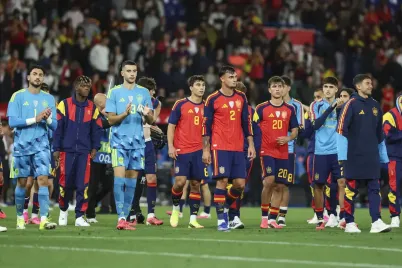
When the full-time whistle finally echoed across the cavernous arena, the deeply emotional aftermath provided one of the defining images of the entire tournament. The Spanish players embraced in a mixture of joy and profound relief, celebrating their progression and a remarkable fifth consecutive clean sheet.
Conversely, Cristiano Ronaldo stood alone on the turf, staring blankly into the middle distance. Hands resting on his hips, the legendary forward visibly fought back tears, slowly coming to terms with the brutal reality that his illustrious World Cup journey had reached its definitive conclusion. He departs the competition having etched an incredible legacy, but without the ultimate prize.
When analysing the underlying statistical narrative, Spain’s 1-0 victory was a testament to their unwavering patience and elite game management. Maintaining their status as the only team in the competition yet to concede a goal, their defensive solidity provides an incredibly formidable foundation for the latter stages. Ferran Torres and Mikel Merino shared the widespread plaudits for their match-winning combination, fully validating De la Fuente’s astute in-game adjustments.
This monumental result ensures La Roja advance to the quarter-finals, where they will face either the USA or Belgium on Saturday. Carrying immense momentum and tactical discipline, they have firmly established themselves as genuine contenders to lift the trophy. For Portugal, the heartbreaking defeat marks a highly sobering end to a campaign that had promised significantly more. They face a long flight back across the Atlantic filled with profound regret, fully aware that a singular lack of focus in stoppage time cost them their place on the grandest global stage.
Official Match Facts
| Detail | Information |
| Competition | FIFA World Cup 2026 – Round of 16 |
| Venue | Dallas Stadium, Texas |
| Date | Monday, 6 July 2026 |
| Kick-off Time | 20:00 BST |
| Final Score | Portugal 0 – 1 Spain |