
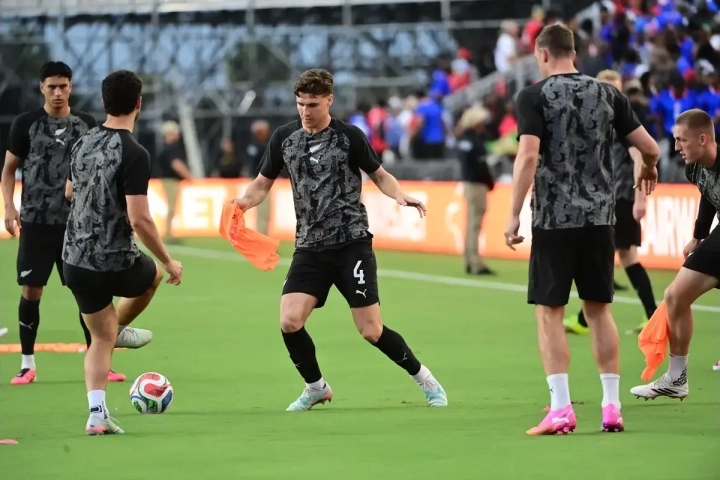
The 2026 FIFA World Cup group stage continues to unfold across North America, bringing together contrasting footballing narratives in a highly anticipated Group G encounter. On Tuesday, 16 June 2026, the imposing architecture of the Los Angeles Stadium in Inglewood, California, will provide the spectacular backdrop as Iran face off against New Zealand. Scheduled to commence at 02:00 BST, this fixture represents a monumental opportunity for both nations to establish an early, decisive foothold in an incredibly demanding group.
With European heavyweights Belgium and an ever-dangerous Egypt side awaiting them in their subsequent matches, the margin for error is virtually non-existent. For the Asian representatives, the primary objective is to finally break their historical ceiling and advance past the group stage for the very first time, a feat that has painfully eluded them in their previous tournament appearances. Conversely, the Oceania champions arrive in the United States fiercely determined to secure their nation’s elusive first-ever victory at a World Cup finals, having previously endured winless campaigns despite showing immense defensive resilience.
Team Melli’s Attacking Verve and Logistical Hurdles
Entering the tournament as the 20th-ranked team in world football, Iran carry the weight of immense expectations from an incredibly passionate fanbase. Under the highly experienced guidance of manager Amir Ghalenoei, Team Melli navigated a grueling 16-match qualification campaign across the Asian confederation, demonstrating remarkable consistency, tactical flexibility, and profound attacking depth.
Recent warm-up fixtures have only served to underline their impressive momentum heading into the global showpiece. The squad has tasted defeat just three times in their last twelve outings, showcasing a disciplined defensive structure complemented by a potent forward line that simply demands respect. Their tournament preparations culminated in a comfortable 2-0 victory over Mali in early June, which immediately followed a comprehensive 3-1 triumph against Gambia. During these encounters, Ghalenoei’s tactical blueprint became abundantly clear: an aggressive, proactive approach designed to dominate possession, dictate the tempo, and suffocate opponents deep within their own half.
Tactically, the Iranian system relies heavily on creating numerical advantages in wide areas through aggressive overlapping full-backs, aiming to stretch the opposition’s defensive shape to its absolute breaking point. However, the true attacking heartbeat of the side is the formidable, world-renowned partnership between Mehdi Taremi and Sardar Azmoun. The veteran Taremi frequently drops into deeper pockets of space, intelligently dragging central defenders completely out of position. This calculated, selfless movement creates inviting central channels for Azmoun to aggressively exploit, providing a multifaceted threat that is notoriously difficult for any defensive unit to contain over ninety minutes.
Despite their impressive on-field preparations, the squad’s build-up has been heavily overshadowed by complex off-field logistical and geopolitical challenges. Due to ongoing international tensions and reported visa processing complications, the Iranian football federation was forced to relocate their primary training base to Tijuana, Mexico. Consequently, the playing squad and technical staff are required to meticulously coordinate crossing the border into the United States strictly on match days. Furthermore, government authorities have issued stern public warnings regarding the potential display of unofficial political flags within the stadiums, controversially threatening to halt matches if such symbols are prominently present. Navigating this intensely charged atmosphere while maintaining absolute focus on the pitch will undoubtedly be Ghalenoei’s most profound managerial challenge of the entire tournament.
The All Whites Seek Historic Breakthrough
Transitioning to their opponents, New Zealand step onto the Californian turf fully embracing their undisputed status as the underdogs of Group G. Ranked 85th in the world, the All Whites experienced a vastly different, significantly less treacherous route to the global showpiece. Benefiting immensely from the newly expanded 48-team tournament format and the guaranteed automatic qualification berth awarded to the Oceania Football Confederation, Darren Bazeley’s squad breezed through their regional qualifiers. They completely dominated their local opposition, winning all five matches and scoring a staggering 29 goals while conceding just once, highlighting their absolute supremacy within their confederation.
However, the monumental step up in class to elite international competition has yielded somewhat mixed results during their recent preparation phase. While a highly impressive 4-1 victory over South American challengers Chile in March highlighted their undeniable attacking potential when afforded space, sustained chance creation has subsequently proven highly problematic. The team frustratingly failed to register a single goal in their final three warm-up fixtures, exposing a concerning lack of attacking rhythm and creativity when faced with rigidly organised defensive structures.
To counteract the anticipated Iranian possession dominance, Bazeley is fully expected to implement a cautious, deeply pragmatic approach. The English manager will likely deploy a highly compact low block, potentially utilising a flat back five to congest the central areas and frustrate the opposition’s intricate passing networks. Discipline, communication, and unwavering concentration will be the fundamental pillars of their defensive strategy.
When possession is eventually regained, the tactical directive will immediately shift to rapid, direct transitions. The absolute focal point of this system remains their towering captain and all-time leading goalscorer, Chris Wood. The veteran striker possesses the elite physical presence required to hold up the ball, relieve mounting defensive pressure, and bring advancing midfielders into the play. Supplying him with accurate service will be the primary responsibility of dynamic wing-back Liberato Cacace, whose aggressive overlapping runs and precise deliveries from the left flank represent New Zealand’s most consistent creative outlet. In the centre of the park, the tactical discipline and combative energy of Marko Stamenic will be absolutely vital in disrupting the rhythm of the technically gifted Iranian midfielders and protecting the vulnerable defensive line behind him.
Historical Context and Defining Battles
The historical record between these two nations offers very little contemporary insight, given their massive geographical separation and the extreme infrequency of cross-confederation clashes. They have only met on two previous occasions in their entire footballing histories, both occurring nearly half a century ago in August 1973. During those encounters, Iran emerged completely victorious on both occasions, maintaining consecutive clean sheets and establishing a psychological superiority that has lay dormant for decades. Over fifty years later, the stylistic contrast between the two distinct footballing cultures remains just as pronounced.
This opening fixture is heavily tipped to develop into a classic, grinding battle of attrition. The fundamental question is whether the relentless, intricate attacking movement of Taremi and Azmoun can successfully unpick a stubborn, highly concentrated New Zealand defensive line that refuses to be drawn out of position. If the All Whites can successfully weather the inevitable early storm and drag the match deep into the second half without conceding, growing frustration could easily become their greatest ally, forcing Iran into desperate, low-percentage attacking decisions.
Furthermore, the battle from dead-ball situations will be fiercely contested. Bazeley will undoubtedly view every single attacking corner or wide free-kick as a golden opportunity to utilise Wood’s unparalleled aerial prowess against a potentially nervous Iranian defence. A single momentary lapse in concentration from a set-piece could easily define the entire outcome of the match.
Looking at the broader tournament landscape, the profound importance of this specific result cannot be overstated for either camp. A victory in Los Angeles would immediately relieve the suffocating pressure before facing the formidable, world-class challenges posed by Belgium and Egypt in the coming weeks. Dropping points, however, would instantly transform the remainder of the group stage into a monumental uphill struggle, leaving both nations staring down the barrel of another painfully early tournament exit.
As the stadium lights brightly illuminate the pristine turf of the Los Angeles Stadium, the exhaustive theoretical planning, meticulous video analysis, and highly publicised off-field distractions must decisively conclude. With a significant local diaspora expected to transform the massive arena into a virtual home game for Team Melli, the atmosphere promises to be nothing short of electric. Football fans tuning in globally can readily anticipate a captivating, high-stakes encounter where fleeting moments of individual brilliance, unwavering tactical discipline, and sheer mental fortitude will ultimately define their respective World Cup trajectories.