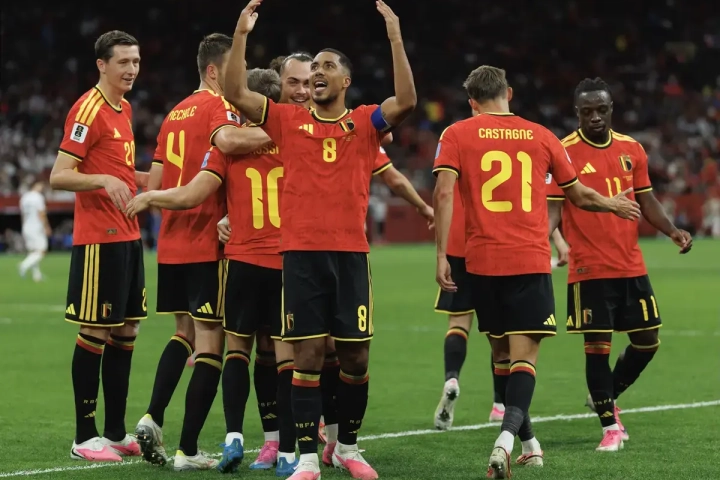
The spectacular surroundings of BC Place Vancouver witnessed a commanding attacking performance in the early hours of Saturday, 27 June 2026, as Belgium emphatically dismantled New Zealand with a final score of 1-5. Kicking off at exactly 04:00 BST, the decisive Group G encounter at the 2026 FIFA World Cup served as a stark reminder of the European heavyweights’ elite pedigree. Entering the fixture burdened by heavy media scrutiny following two frustrating, disjointed draws against Egypt and Iran, Rudi Garcia’s Belgian side desperately needed a comprehensive, statement victory to secure their progression to the knockout phases. They delivered exactly that, overwhelming the Oceanic representatives in a ruthlessly efficient, dominant display. For Darren Bazeley’s New Zealand, the heavy defeat officially curtailed their North American adventure, sending the All Whites home at the bottom of the group without registering their first-ever World Cup victory, despite displaying commendable bravery throughout the tournament.
Tactical Blueprints and an Early VAR Reprieve
From the opening whistle, it was immediately apparent that Belgium intended to dictate the overarching tempo and completely suffocate their opponents. Operating in a fluid 4-2-3-1 formation, the Red Devils monopolised territorial possession, relentlessly pulling the New Zealand defensive block out of its rigid shape. The central midfield pivot of Youri Tielemans and Hans Vanaken provided a robust, highly technical platform, allowing Jérémy Doku and Leandro Trossard to aggressively attack the wide channels. Consequently, the All Whites, marshalled by central defenders Finn Surman and Tyler Bindon, were forced into an incredibly deep, desperate rearguard action from the very first minute.
Belgium almost manufactured a spectacular breakthrough just eleven minutes into the contest. Trossard, demonstrating elite offensive movement on the left flank, carved out a pocket of premium space before unleashing a curling, venomous effort that comprehensively beat goalkeeper Max Crocombe but agonisingly cannoned off the post. The relentless, sustained pressure eventually forced a significant moment of high controversy in the 23rd minute. Following a chaotic, desperate scramble inside the New Zealand penalty area, the referee confidently awarded a penalty to Belgium for a perceived deliberate handball by Surman. However, after a lengthy and meticulous Video Assistant Referee (VAR) intervention, the on-field decision was rightfully overturned. Replays clearly demonstrated that the young defender’s arm was tucked in a natural position alongside his body, sparing the Oceanic side an early deficit.
Despite the temporary, dramatic reprieve, New Zealand’s stubborn resistance was inevitably broken in the 28th minute. A perfectly delivered, in-swinging corner from Kevin De Bruyne caused absolute havoc within the congested six-yard box.Failing to comprehensively clear their lines under immense physical duress, the Oceanic defence allowed the ball to drop invitingly into the path of Trossard. The Arsenal forward reacted with lightning speed, poking a classic poacher’s finish past a helpless Crocombe from incredibly close range to secure a thoroughly deserved lead for the European giants.
The Floodgates Open in the Second Half
Recognising the urgent necessity for fresh attacking impetus and increased midfield stability, Bazeley executed a bold double substitution at the interval. Ben Old and Jesse Randall were introduced in place of Ryan Thomas and Sarpreet Singh, aiming to provide greater verticality on the counter-attack. Additionally, the physical intensity of the match escalated, resulting in midfielder Marko Stamenić receiving a yellow card shortly after the restart following a cynical, tactical challenge designed to halt a rapid Belgian transition.
Unfortunately for the courageous All Whites, their tactical alterations were ruthlessly punished before they could even properly settle into the second period. In the 50th minute, Trossard showcased phenomenal individual brilliance and elite striking instincts to double his personal tally. Collecting a precise pass inside the penalty area, he saw his initial powerful attempt smartly parried by Crocombe. However, demonstrating incredible composure and balance, Trossard brilliantly controlled the rapidly rebounding ball with his chest before volleying it emphatically into the roof of the net, completely silencing the New Zealand supporters.
The second goal entirely shattered New Zealand’s structural discipline and defensive resolve. Winger Elijah Just was officially cautioned in the 55th minute as exhaustion and frustration began to visibly seep into the Oceanic ranks. Sensing blood in the water, Belgium continued to pour forward with terrifying efficiency. In the 66th minute, talismanic playmaker Kevin De Bruyne added his prestigious name to the scoresheet. Following a driving, progressive run from Trossard that completely destabilised the remaining New Zealand defenders, De Bruyne found himself occupying a vast amount of time and space on the edge of the penalty area. The 34-year-old maestro swept a beautiful, low strike directly into the bottom corner, officially becoming the oldest player to ever score for Belgium at a FIFA World Cup in the process.
Late Substitutions and a Frantic Final Flourish
With a highly comfortable, unassailable three-goal advantage safely secured, Rudi Garcia pragmatically utilised his substitutes’ bench to carefully manage the physical workload of his key personnel. Alexis Saelemaekers and Amadou Onana were seamlessly introduced in the 71st minute, replacing the exceptional Trossard and De Bruyne, respectively, to safely orchestrate the remainder of the fixture.
Despite being comprehensively outplayed and facing an astonishing barrage of 35 shots throughout the ninety minutes, New Zealand displayed commendable fighting spirit and remarkable character in the closing stages. Their unwavering persistence was briefly rewarded in the 84th minute with a moment of genuine, world-class quality. Elijah Just, who had previously starred during the thrilling draw against Iran, collected a lofted, searching pass from deep. Without hesitation, he lashed a spectacular, dipping half-volley high into the Belgian net from near the penalty spot, sparking brief, passionate celebrations among the travelling Oceanic supporters.
However, the Red Devils delivered an immediate, crushing response that perfectly underscored their attacking depth. In the 85th minute, less than 64 seconds after stepping onto the pitch to replace Charles De Ketelaere, Romelu Lukaku effortlessly restored the three-goal cushion. Fellow substitute Nicolas Raskin, who had also just entered the fray, delivered a pinpoint, highly inviting cross into the heart of the penalty area. Belgium’s all-time leading goalscorer rose majestically above his marker to power a trademark, downward header past a stranded Crocombe.
The comprehensive, deeply punishing rout was officially completed deep into the allocated stoppage time. In the 94th minute (90+4′), Lukaku transitioned seamlessly from goalscorer to provider. Intelligently holding up the ball with his immense physical frame, he patiently waited for reinforcements before delicately laying a pass off to Saelemaekers. The midfielder applied a remarkably clever finishing touch, securing a 5-1 victory with virtually the very last kick of the match.
Group G Implications and the Knockout Pathway
When the final whistle mercifully echoed across the cavernous Canadian arena, the overarching statistical narrative presented a clear, entirely undeniable picture of Belgian superiority. Enjoying over 60 percent of the total possession and completely restricting New Zealand to virtually zero attacking output in the first half, the European side completely controlled the midfield battlegrounds, thoroughly justifying their status as genuine title contenders. Leandro Trossard was universally praised and rightfully awarded the Michelob Ultra Player of the Match accolade for a talismanic, two-goal performance that single-handedly ignited his team’s stalling tournament campaign.
The commanding victory ensures Belgium finish at the absolute summit of Group G. Having previously drawn their opening two fixtures, the Red Devils dramatically leapfrogged Egypt to secure first place entirely on goal difference, boasting a highly healthy +4 differential compared to the Pharaohs. This crucially important outcome allows Garcia’s squad to avoid an early, treacherous knockout encounter with another heavyweight group leader. They will now embark on a highly anticipated journey down the Pacific coast to Seattle, where they will face a third-placed finisher from either Group A, E, H, I, or J in the Round of 32 next Wednesday evening.
For New Zealand, the heavy defeat serves as a sobering, highly educational reality check on the grandest global stage. While Bazeley’s squad displayed isolated moments of genuine attacking promise, scoring three goals across their three matches in North America, their defensive vulnerabilities were brutally exposed by elite, ruthless opposition. They depart the tournament having secured a single, highly respectable point from their thrilling 2-2 draw with Iran, officially finishing bottom of Group G. The All Whites must now urgently regroup, analyse their tactical shortcomings, and utilise this invaluable World Cup experience as a foundational building block for the future development of the national team as they prepare for the next qualification cycle.