Group I Permutations and the Pressure Cooker
The bustling city of Philadelphia provides a spectacular backdrop for a compelling Group I clash at the 2026 FIFA World Cup, as reigning European giants France prepare to face a resilient Iraqi national side. Scheduled for Monday, 22 June 2026, the highly anticipated fixture will kick off at exactly 22:00 BST beneath the towering floodlights of the Philadelphia Stadium in Pennsylvania. For the passionate legions of fans travelling across the globe, this Matchday 2 encounter represents a profound contrast in footballing heritage and immediate tournament ambitions. Following a dramatic opening round of fixtures that thoroughly tested the resolve of both nations, the stakes could scarcely be higher. Les Bleus are seeking to seamlessly consolidate their position at the summit of the group and guarantee a safe passage into the knockout phases. Conversely, the Lions of Mesopotamia face an absolute must-win scenario to keep their historic World Cup dream alive and avoid premature elimination from the competition.
Les Bleus Seek Early Knockout Qualification
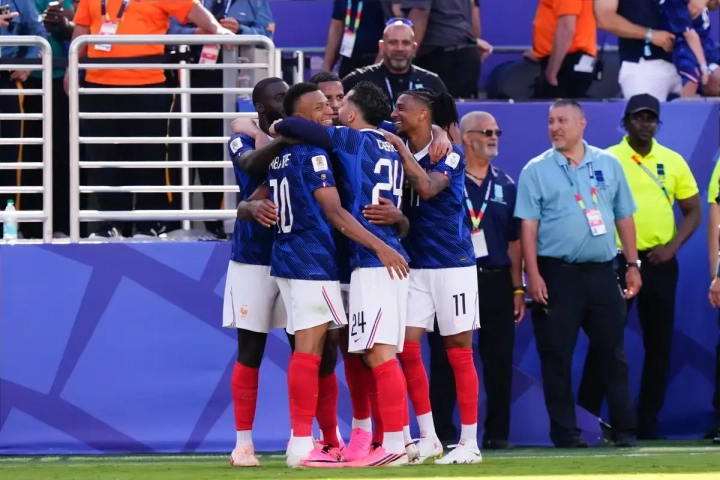
Arriving in North America heavily tipped as genuine tournament favourites, the French squad experienced a surprisingly sluggish start to their campaign before eventually demonstrating their undeniable, world-class pedigree. Didier Deschamps’s men were forced to dig remarkably deep during their opening fixture against a spirited Senegal side. Enduring a frustratingly disjointed first half where they managed just a single attempt on goal, the European heavyweights appeared completely devoid of their usual attacking rhythm. However, an explosive, free-flowing second-half performance swiftly alleviated any mounting anxiety, seeing them ultimately secure a commanding 3-1 victory.
The opening match proved to be a profoundly historic occasion for talismanic forward Kylian Mbappé. The electrifying attacker netted a clinical second-half brace, etching his name permanently into the footballing history books. His vital goals saw him officially overtake Olivier Giroud to become France’s all-time leading goalscorer, while simultaneously surpassing the legendary Just Fontaine for the most World Cup goals ever scored by a Frenchman. Supported brilliantly by the creative ingenuity of Michael Olise, who consistently unlocked the Senegalese defensive structures from the right flank, the French attacking machinery currently appears utterly terrifying when operating in full stride.
Operating under the pragmatic, highly experienced guidance of Deschamps, the squad is actively projecting an aura of calm, unwavering focus. With no confirmed injury concerns plaguing the camp following their intense physical battle with the African representatives, the manager is widely expected to retain absolute faith in his established starting eleven. The formidable defensive quartet of Jules Koundé, Dayot Upamecano, William Saliba, and Theo Hernández will provide a highly robust foundation ahead of goalkeeper Mike Maignan. This solid platform allows the midfield pivot of Aurélien Tchouaméni and Adrien Rabiot complete freedom to dictate the overall tempo of the match. Deschamps will undoubtedly be demanding a much sharper, proactive start in Pennsylvania, eager to avoid giving the opposition any unnecessary psychological encouragement during the crucial opening exchanges.
The Lions of Mesopotamia Quest for Redemption
On the opposing side of the halfway line, the Iraqi national team approaches this daunting fixture with a fascinating blend of immense pride and urgent desperation. Merely stepping onto the pitch at the 2026 tournament represents a monumental, emotional victory for the Middle Eastern nation, marking their very first appearance at the global showpiece in 40 long years. Their arduous, 21-game qualification journey was fraught with unimaginable logistical and geopolitical challenges, making their presence in the United States one of the most heartwarming, compelling narratives of the entire competition.
However, the harsh, unforgiving reality of elite international football was brutally exposed during their Group I opener. Facing a clinical Norwegian outfit, the Lions of Mesopotamia suffered a heavy 4-1 defeat. The Iraqi defence simply had no coherent tactical answer for the sheer physical power and predatory movement of Erling Haaland, who completely dominated the proceedings from the first whistle. The match was particularly bittersweet for Iraqi striker Aymen Hussein. While he showcased excellent striker’s instincts to score a vital 39th-minute goal and temporarily restore parity, he unfortunately concluded the gruelling evening by inadvertently scoring a calamitous 90th-minute own goal.
Guided by veteran Australian manager Graham Arnold, who dramatically took the reins in May 2025 following the abrupt departure of Jesús Casas, the squad must now rapidly recover from the psychological trauma of that opening defeat. Arnold has meticulously instilled a fierce, unyielding collective spirit within the dressing room, repeatedly stating his absolute belief that his team possesses the capability to shock the world. Navigating the relentless French attacking waves, however, will require a Herculean defensive effort that surpasses anything they have produced thus far.
While the squad has fortunately reported a completely clean bill of health regarding muscular injuries, disciplinary issues remain a pressing concern for the coaching staff. Key centre-back Zaid Tahseen picked up a late yellow card against Norway and will be walking a highly precarious disciplinary tightrope against the vaunted French forwards. Arnold faces a delicate tactical dilemma: whether to risk his aggressive defender from the opening whistle or adopt a slightly more conservative approach, potentially replacing him with Rebin Sulaka to preserve him for future scenarios.
Anticipated Tactical Battlegrounds
When analysing the granular details of this impending matchup, a truly compelling clash of overarching footballing philosophies emerges. France will naturally seek to heavily monopolise the possession statistics, constructing patient, intricate passing networks to systematically manipulate the Iraqi defensive block. By pushing full-backs incredibly high up the pitch, Deschamps actively attempts to create numerical overloads in the wide channels, deliberately forcing the opposition defence to expand and stretch. This structural manipulation creates inviting pockets of space for Mbappé, Olise, and Ousmane Dembélé to operate centrally and punish disjointed defensive lines.
In stark contrast, the Asian representatives will likely embrace a highly pragmatic, reactive posture. Acknowledging their opponents’ elite technical superiority, Arnold will instruct his team to remain incredibly compact, completely denying the French playmakers any inviting spaces between the lines. Deploying a rigid 4-4-2 or actively transitioning into a deeply entrenched 5-4-1 defensive shape, the focus will remain purely on structural solidity and sheer frustration.
Once possession is inevitably recovered, the explosive pace of winger Ali Jasim and the physical hold-up play of Hussein will be immediately weaponised to launch rapid, devastating vertical transitions. The central midfield battle promises to be particularly brutal and decisive. Ibrahim Bayesh and Amir Al-Ammari must aggressively disrupt the French passing lanes and break up counter-attacks before they can truly materialise. If France establish their fluid rhythm early in the contest, it could easily become a remarkably long evening for the Iraqi defence. However, if Arnold’s men can successfully frustrate Les Bleus and drag the match into the nervy latter stages, the mounting pressure could potentially force uncharacteristic European errors.
Historical Context and The Final Word
Encounters between these two distinct footballing cultures are exceptionally rare on the grandest global stage, adding a wonderful element of sheer unpredictability to the proceedings. The lack of recent historical precedent means there is absolutely no established psychological hierarchy in the fixture, presenting Iraq with a completely blank canvas upon which to boldly paint their 2026 legacy.
Looking purely at the broader tournament mathematics, the stakes in Philadelphia are beautifully poised. Securing a second consecutive victory would immediately catapult France to the prestigious six-point mark, mathematically assuring their safe passage into the Round of 32 with an entire game to spare. Such a rare luxury would afford Deschamps the invaluable opportunity to heavily rotate his squad, resting fatigued legs and protecting key personnel ahead of the physically demanding latter stages of the competition.
Conversely, a second successive defeat would mathematically eliminate Iraq from the tournament, cruelly reducing their final group-stage fixture against Senegal to a mere dead rubber played entirely for national pride. Even a closely fought, tactical draw would leave Arnold’s courageous men needing a minor miracle and extremely favourable results elsewhere on the final matchday to progress.
As the vibrant, passionate supporters from both nations converge on the impressive architecture of the Philadelphia Stadium, the extensive theoretical planning and exhaustive video analysis will immediately give way to raw, competitive tournament survival. For the seasoned European powerhouse, Monday evening provides a golden opportunity to definitively assert their dominance and justify their pre-tournament status as genuine title contenders. For the ambitious Asian challengers, it represents another monumental test of character against elite opposition, offering the incredibly rare chance to register a historic upset that would undoubtedly send major shockwaves throughout the global footballing landscape. Millions tuning in across the world can readily anticipate a fiercely contested, high-stakes encounter where fleeting moments of individual genius and unwavering tactical discipline will ultimately separate the victors from the vanquished.