
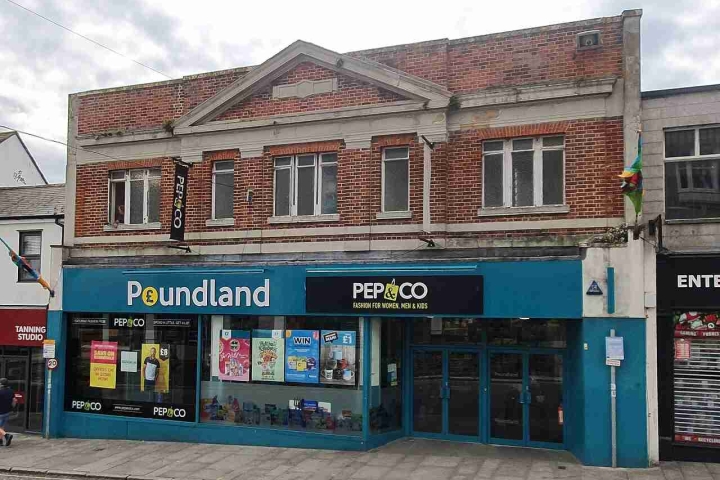
11,000 jobs are currently at risk as it was announced the discount retailer, Poundland, had gone into administration today (Wednesday 25 November).
But an economics expert from Birmingham City University (BCU), Dr Danilo Spinola, says its more than just Poundland staff who will be affected by the announcement.
“When people lose their jobs, they lose purchasing power and spend less in shops, restaurants and other local businesses,” said Dr Spinola, Senior Lecturer in Economics at BCU.
“Economists refer to this as a multiplier effect: an initial loss of income generates further losses of income elsewhere in the economy. This could include potential job losses for Poundland’s suppliers and distribution networks.
“Workers may also struggle to find alternative employment offering equivalent wages and working conditions, particularly in areas where employment opportunities are already limited.
“It is important, however, to distinguish between jobs being at risk and jobs actually being lost. Administration provides an opportunity to restructure the business or find new buyers. Alternatively, other retailers may acquire individual stores and retain some of their employees.”
However, Dr Spinola still expects discount retailers to stay on our high streets as the cost of living continues to grow.
“There is, however, an interesting paradox,” Dr Spinola adds. “The same economic conditions that encourage consumers to shop at discount retailers also make it more expensive for these retailers to operate.
“Think about Poundland’s original business model of selling products for £1. As purchasing, transportation and labour costs increase, maintaining that price becomes increasingly difficult.
“Yet raising prices risks undermining the very reason consumers choose to shop there. Discount retailers are particularly exposed to this tension because they rely on narrow profit margins and large volumes of sales.”

Dr Danilo Spinola
“The immediate priority should be to secure sufficient working capital: the money a company needs to finance its day-to-day operations,” Dr Spinola added.
“If an independent assessment confirms that the underlying business is commercially viable, restructuring its debts, renegotiating repayment conditions and attracting new investors could provide a sustainable solution.
“There is, however, another important economic aspect to consider: a company is much more than the sum of its physical assets.
“Over more than three decades, Poundland has developed distribution networks, purchasing capabilities, supplier relationships, brand recognition and knowledge of consumer behaviour.
“These capabilities take years to develop but can be destroyed very quickly. Selling individual stores may recover financial value and preserve some jobs, but it does not necessarily preserve the full economic value of the organisation.
Dr Spinola says there is also a role for the government to play in facilitating negotiations, ensuring transparency and supporting employment: “This does not necessarily mean using taxpayers’ money to rescue private investors, but recognising that the wider economic and social costs of losing a potentially viable business may considerably exceed the financial losses associated with its collapse.
“Ultimately, the question should not simply be how much money can be recovered from Poundland’s assets, but how much economic value can be preserved by keeping the business, or significant parts of it, functioning.”