After years of agonizing near-misses, devastating injuries, and suffocating pressure, Alexander Zverev is finally a Grand Slam champion.
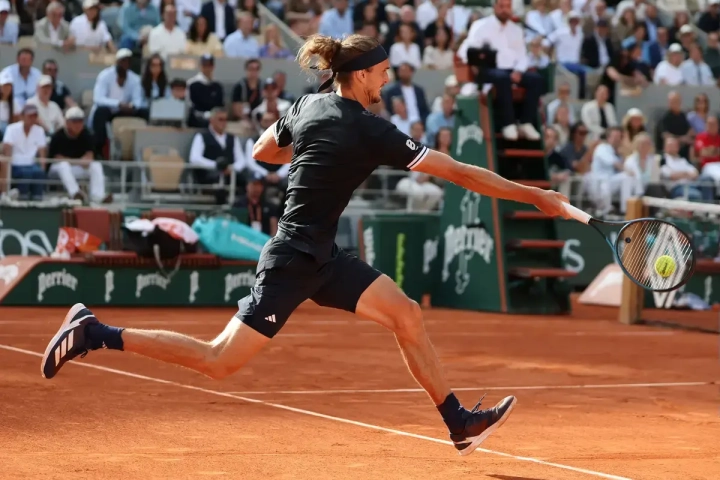
The 29-year-old German conquered his inner demons on the red dirt of Court Philippe-Chatrier on Sunday, surviving a ferocious, five-set emotional roller coaster against Italian sensation Flavio Cobolli. In a final that pushed both men to the absolute brink of their physical and mental endurance, Zverev triumphed to claim the French Open crown and etch his name into tennis immortality.
When Cobolli’s final overhead smash sailed wide, Zverev immediately collapsed onto his back, dropping his racquet as years of pent-up anguish gave way to uncontrollable tears of joy.
The Scorecard: A Five-Set War of Attrition
Player | Set 1 | Set 2 | Set 3 | Set 4 | Set 5 |
Alexander Zverev (2) | 6 | 4 | 6 | 6 (5) | 6 |
Flavio Cobolli (10) | 1 | 6 | 4 | 7 (7) | 1 |
Early Dominance and an Italian Resurgence
Heading into the final, the narrative was heavily weighted by history. Zverev was carrying the scars of three previous major final defeats, including a heartbreaking five-set loss to Carlos Alcaraz on this exact court two years prior. Cobolli, meanwhile, was playing with house money. The 24-year-old was competing in his first-ever Grand Slam final, looking to become the first Italian man to win at Roland Garros since Adriano Panatta in 1976.
Initially, experience dictated the tempo. Zverev exploded out of the gates, utilizing his towering serve and heavy groundstrokes to bulldoze through the opening set 6-1 in a matter of minutes.
However, Cobolli refused to fold. Relying on his sublime shot-making variety and a blistering inside-out forehand, the Italian dragged himself into the fight, capitalizing on a brief dip in Zverev’s focus to take the second set 6-4. When Zverev ground out the third set 6-4, the match morphed into a pure test of psychological fortitude.
The Fourth Set Crucible
The fourth set will be remembered as an excruciating display of the brutal mental toll elite tennis demands. Both men began to wilt under the immense pressure.
Zverev, seemingly battling severe cramping and the terrifying weight of his own expectations, tightened up significantly. Missed overheads, untimely double faults, and hesitant groundstrokes plagued the German. Cobolli pounced, dragging the set into a tiebreak. From the depths of his stamina reserves, the Italian conjured a brilliant passing shot to secure the breaker 7-5, sending Chatrier into a frenzy and forcing a deciding fifth set.
A Champion’s Resolve in the Decider
As the fifth set began, Zverev looked physically compromised, taking medication on the sidelines and leaning heavily on his serve. Yet, it was the underdog who ultimately blinked.
Serving at 0-1, Cobolli’s nerve finally gave way. He offered up a double fault and a string of erratic forehands to hand Zverev a crucial early break. From there, the German found a miraculous second wind. Unleashing a barrage of searing backhands down the line, Zverev raced to a 4-0 lead.
Despite saving multiple championship points in the final game, Cobolli’s tank was empty. At 5-1, a final unforced error from the Italian sealed his fate, crowning Zverev the champion.
A Legacy Rewritten
As Zverev climbed into the stands to embrace his father and his coaching team, the sheer relief was palpable. He becomes the first German man to win a Grand Slam singles title since Boris Becker captured the Australian Open in 1996.
Speaking on TNT Sports, two-time French Open champion Jim Courier perfectly encapsulated the moment: “He’s lived his whole life on a tennis court dreaming of this moment. He’s been so close before but it’s him now, forever a major champion. If you’re a Zverev fan, what you want is for him to have a Stan Wawrinka-type finish to his career.”
For Flavio Cobolli, the heartbreak of defeat will eventually be replaced by the immense pride of a phenomenal tournament run. He pushed the world’s second-best player to the absolute limit and proved he belongs on the sport’s biggest stages.
But Sunday belonged to Alexander Zverev. After a career defined by questions of whether he had the mentality to close out the biggest matches, the German provided the ultimate, definitive answer. The hoodoo is broken.