
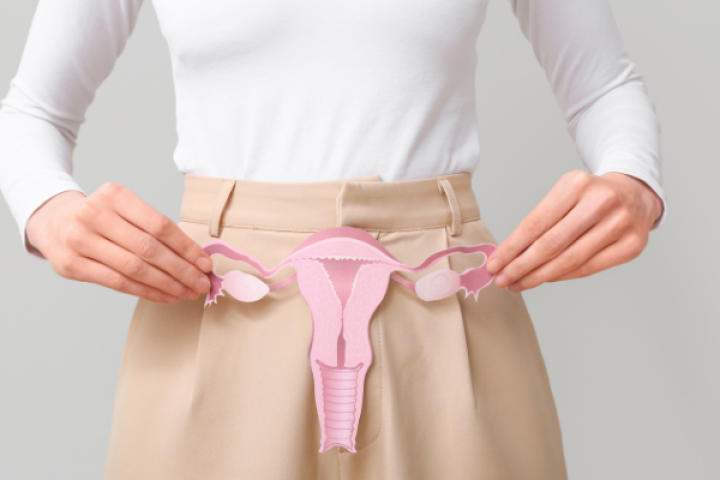
Does flaxseed help with hormone balance?
Flaxseeds support hormone health through a combination of fibre, gut health and plant compounds called lignans, rather than acting in one single way.
Their effects are supportive and subtle, helping to gently support the body during the perimenopause and menopause rather than acting as a direct hormonal treatment.
Fibre in Flaxseed
Firstly, flaxseeds are exceptionally rich in fibre, providing at least 20g fibre per 100g, with roughly 70–75% insoluble fibre and 25–30% soluble fibre.
Insoluble fibre helps support regular bowel movements and the soluble fibre in flaxseeds nourishes the gut microbiome and helps support microbiome diversity. Fibre binds to estrogen in the intestine, increasing its faecal excretion.
Once oestrogen has completed its work, it is processed by the liver, where it is deactivated and packaged up in an inactive form for removal via the stool. If our gut is working correctly this helps us to maintain normal hormone balance by allowing excretion of any excess. Fibre can also help bind to the oestrogen in our gut allowing it to be escorted out of the gut for excretion.
Keeping gut microbes balanced with a diet rich in fibre is another reason why fibre supports our oestrogen metabolism. We are familiar with the term microbiome, but we also have a collection of gut bacteria that are involved in oestrogen metabolism. We call this the estrobolome.
This means that some gut microbes help regulate how much oestrogen is reabsorbed, metabolised or excreted. One of the main mechanisms for this is down to certain gut bacteria, such as E.coli produce an enzyme called beta glucuronidase. This is an enzyme which can start to ‘unpack’ the inactive oestrogen packages that were so carefully parcelled up by the liver. This can lead to some of the oestrogen to be set free and reabsorbed back into the bloodstream. While this process is normal to a degree, higher activity of certain bacteria, often linked to an imbalanced microbiome, may increase recirculation of oestrogen. A fibre rich diet helps support a create a more diverse and balanced microbiome, allowing for more favourable metabolism and excretion of oestrogen.
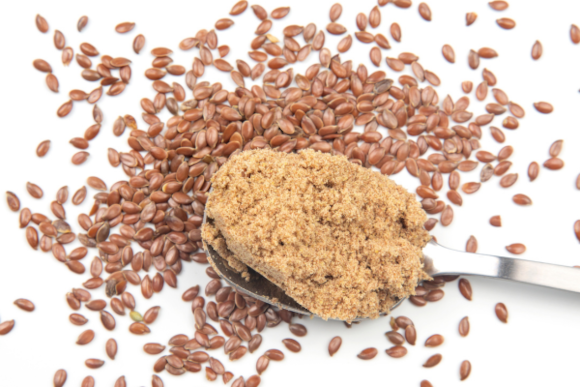
Lignans in Flaxseed
Flaxseeds contain lignans, a type of phytoestrogen, which gut bacteria convert into enterolignans such as enterolactone and enterodiol. These compounds can interact weakly with oestrogen receptors on the surface of our cells and may also influence how oestrogen is metabolised or utilised. Lignans are sometimes called phytoestrogens. These compounds have a much weaker effect than oestrogen itself, but they may help gently modulate oestrogen activity by either weakly mimicking or reducing its effects.
They may also influence how oestrogen is metabolised in the liver. Flaxseed consumption has been shown to alter oestrogen metabolism, with increased excretion of 2-hydroxyestrone and a higher 2:16 ratio, suggesting a shift towards 2-hydroxylation pathways. This means they may be supportive when oestrogen is higher, but also when levels are lower, helping to gently modulate activity rather than act in a fixed way.
Flaxseed for Blood sugar regulation
Soluble fibre in flaxseeds also supports blood sugar regulation, which becomes increasingly important during perimenopause. Larger swings in blood sugar can lead to energy dips, irritability, mood changes and increased cravings, all of which may become more noticeable during this time.
Overall, flaxseeds are best thought of as supporting hormone balance indirectly, through gut health, fibre intake, blood sugar control and mild phytoestrogen activity, rather than acting as hormone messengers themselves.
Can flaxseeds help with symptoms such as mood swings?
When we talk about foods supporting health or reducing symptoms, it is rarely down to one single ingredient. It is the combination of consistent dietary and lifestyle habits working together that has the greatest impact. This is why flaxseeds can be supportive at all times of life, but particularly during the perimenopause and menopause.
Because of this, studies looking at flaxseeds in isolation have produced inconsistent results, particularly for symptoms such as mood swings. Some randomised trials have found improvements in menopausal symptom scores, including psychological symptoms, while others found no significant benefit for hot flashes or quality of life. This may be down to how many other healthy diet and lifestyle interventions were made at the same time.
What we do know is that mechanistically, there is good rationale for why flaxseeds might be supportive indirectly for many of the symptoms experienced in menopause, including mood swings.
Flaxseeds are a good source of fibre and ALA, an omega 3 fatty acid. While conversion of ALA into its active forms EPA and DHA is generally poor in humans’ flaxseeds still play a supportive role. Mechanistically both fibre and omega 3 fats could play a role in mood.
Omega 3 fatty acids are thought to support mood through a number of overlapping mechanisms. Firstly, they are incorporated into all our cell membranes and are found in higher levels in our synapses (the connection between nerve endings) and our grey matter (which is where most of the brains’ processing occurs). DHA is more abundant in our brain and nervous tissue, where it has a structural and functional role. EPA has a structural role too but is also important for cell signalling by altering the behaviour of receptors and enzymes on the cells surface and impacts how cells respond to external signals such as cytokines and hormones and potentially neurotransmitters.
Omega 3 fats, especially EPA are known to regulate inflammation in the body, in particular pro-inflammatory cytokines such as IL-6 and TNF alpha. It is thought that these proinflammatory cytokines can interfere with and suppress serotonin production in the brain (by diverting tryptophan, an amino acid used in the production of serotonin, away from the 5-HTP pathway and into the kynurenine pathway), while also potentially disrupting dopamine signalling, which is a neurotransmitter involved in motivation and reward.
A recent 2024 umbrella review of 16 meta-analyses found a modest but significant reduction in depressive symptoms with omega 3 supplementation, particularly EPA rich formulations. This is thought to reflect indirect effects, including reduced inflammation and improved cell signalling.
Flaxseeds are also a source of magnesium, which supports nervous system regulation and contributes to a reduction in tiredness and , supporting better energy and mood the following day.
How much flaxseed should I eat daily to support hormone balance?
There is no established dietary reference intake for flaxseed. However, a usual recommended serving size for adults is around 20 g per day (approximately two dessert spoonfuls), which can be included as part of a balanced diet to reap the benefits from fibre, micronutrients and polyphenols (including lignans). This amount is usually well tolerated for longer term use.
Adding milled flaxseeds to your morning yogurt, stirring 2 dessert spoons into a smoothie, or using them in everyday recipes are simple ways to build a routine that increases intake in a realistic and consistent way.
How long does it take to see the benefits from flaxseed when supporting hormone balance?
Changes to bowel habits are often one of the first improvements seen when flaxseeds are introduced regularly into the diet. They can help relieve constipation, while also supporting stool formation, which may improve looser stools.
In clinical research, studies on flaxseeds and perimenopausal symptoms typically run for 6 to 12 weeks before any meaningful effects on symptoms can be assessed.
However, from a clinical perspective improvement to dietary interventions to improve overall diet, including the introduction of flaxseeds may lead to faster self-reported improvements in health and wellbeing.
When it comes to nutrition, it is often the smaller, consistent changes we make to our diet and lifestyle that have the most meaningful impact on our health. Consistency is key, rather than short term interventions or quick fixes.
References – Does Flaxseed help with Hormone balance?
Gaskins, A.J. et al. (2009) ‘Effect of daily fiber intake on reproductive function: The biocycle study’, The American Journal of Clinical Nutrition, 90(4), pp. 1061–1069. doi:10.3945/ajcn.2009.27990.
Hu, S. et al. (2023) ‘Gut microbial beta-glucuronidase: A vital regulator in female estrogen metabolism’, Gut Microbes, 15(1). doi:10.1080/19490976.2023.2236749.
McCann, S.E., Hullar, M.A.J., et al., 2019. Enterolignan production in a flaxseed intervention study in postmenopausal US women of African ancestry and European ancestry. Journal of Nutrition, 149(9), pp.1562–1569.
Brooks, J.D. et al. (2004) ‘Supplementation with flaxseed alters estrogen metabolism in postmenopausal women to a greater extent than does supplementation with an equal amount of soy’, The American Journal of Clinical Nutrition, 79(2), pp. 318–325. doi:10.1093/ajcn/79.2.318.
Wang, L.-Q. (2002) ‘Mammalian phytoestrogens: Enterodiol and enterolactone’, Journal of Chromatography B, 777(1–2), pp. 289–309. doi:10.1016/s1570-0232(02)00281-7.
Lu, Y., et al. (2024). Clinical impacts of n-3 fatty acids supplementation on depression symptoms: an umbrella review of meta-analyses. British Journal of Nutrition.
Pinzi, M. et al. (2025). Inflammatory and immune biomarkers in mood disorders: From mechanistic pathways to clinical translation. Cells, 14(19), 1558
Kunutsor, S.K., Jassal, D.S., Ravandi, A. and Lehoczki, A. (2025). Dietary flaxseed: Cardiometabolic benefits and its role in promoting healthy aging. Nutrients, 17(3), 456