A University of Gloucestershire professor has joined the national discussion around Andy Burnham’s emerging idea of ‘Manchesterism’, which places renewed emphasis on devolution, local coalitions and economic growth beyond Westminster, including Gloucestershire.
Since the 1980s, commentators and analysts have frequently described England as one of the most centralised countries in Europe. Successive governments have promised to change that, but Burnham’s latest intervention brings a new focus on how power, resources and decision-making might be shifted away from Whitehall and towards other regions.
Burnham’s Manchesterism is about building broad coalitions and devolving effective power to communities. Drawing on his experience as Mayor of Greater Manchester, his critique of ‘Westminster’ is aimed not only at political parties, but also at Whitehall departments, particularly the Treasury, as he prepares to become the next UK Prime Minister.
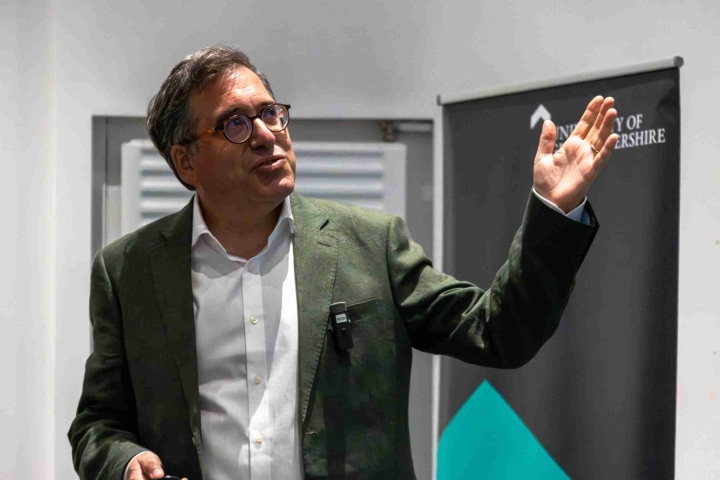
Professor Matt Reed, Head of Research and Director of the University’s Countryside and Community Research Institute, says: “Much of what is now being described as Manchesterism would be familiar, even unremarkable, to many of the UK’s European peers. The fact that it remains unusual in the UK may be Andy Burnham’s biggest challenge.
“For places such as Gloucestershire, the question is whether devolution can reach beyond the major metropolitan areas. If a combined strategic authority does not reach out to market towns and rural areas, many people will not see the ‘good growth’ that the Government wants to deliver.
“The local state is threadbare after many years of constrained resources, and rebuilding its capacity to deliver will take time. Manchesterism aims to take the long view, but whether residents will be willing to wait is another question.
“Infrastructure will be critical. A combined authority will need to put in place the public transport and wider connections that allow people to access excellent opportunities in places such Golden Valley – the major new cluster for cyber, AI and secure communications being developed in Cheltenham.”
Burnham’s pitch builds on the Labour manifesto commitment from the 2024 General Election that economic growth and opportunity should be more widely shared across the country.
For Gloucestershire, which is awaiting a decision on the shape of new unitary authorities, the next stage of devolution raises significant questions about growth, infrastructure, housing, rural communities and local capacity.
Professor Reed said: “Burnham’s specific reference to rural areas and the South West was welcome. His discussion of reindustrialisation is especially relevant to rural parts of the region with strong industrial traditions, including the Forest of Dean.
“It will be important to see how these areas are included in a renewed focus on good growth, resilience and fiscal stimulus. The recognition of food and farming as sovereign capabilities is also significant. This is language not commonly heard since the end of the Cold War in the early 1990s, and it is likely to be welcomed by many farming communities.
“Gloucestershire already has many of the anchor institutions needed to support a stronger innovation ecosystem, including GCHQ, University of Gloucestershire and local councils. These institutions are working to create new opportunities, but that work will take time and will require sustained collaboration.
“Potential flashpoints are already clear, particularly around housing. With much of the county protected for environmental and landscape reasons, pressure is likely to fall more heavily on other areas.
“The future of devolution in Gloucestershire will depend not only on the shape of any new authority, but on whether national ambitions for growth can be translated into practical change for rural communities, market towns and smaller industrial areas across the county.”