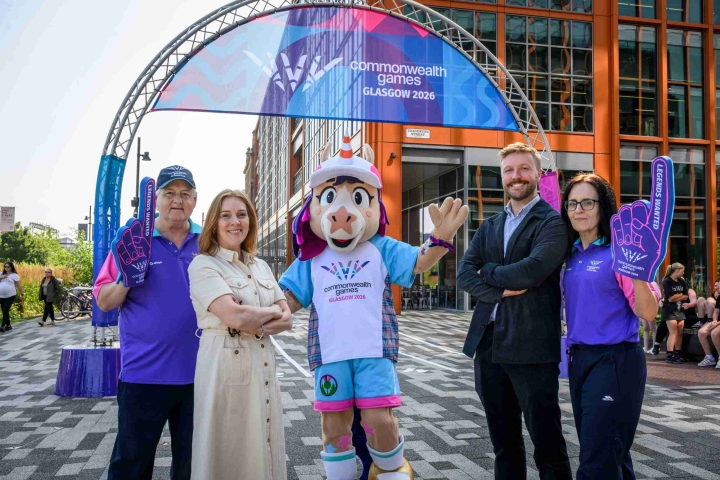
The 2026 Commonwealth Games officially commenced on Thursday evening with a vibrant, historic opening ceremony in Glasgow. Marking the start of an 11-day festival of international sport, the event brings together more than 3,000 athletes from 74 nations and territories. Running until Sunday, 2 August, the Games feature a streamlined programme of 10 sports across four primary venues, promising fierce competition and elite performances.
As the action pivots from Thursday’s spectacular celebrations to Friday’s opening medal events, Glasgow is entirely prepared to host a globally significant sporting showcase.
A Historic, Indoor Opening Ceremony
Thursday night’s opening ceremony set an unprecedented milestone for the Commonwealth Games, being staged entirely within an indoor arena for the first time in the event’s history. The OVO Hydro, a venue synonymous with major cultural and sporting events, provided an intimate yet electrifying backdrop for the proceedings.
The ceremony opened with a remarkable pre-recorded and live-action sequence that delighted the 13,000-strong crowd. Six-time Olympic cycling champion Sir Chris Hoy and actor Greg McHugh emerged from the iconic Doctor Who TARDIS, alongside the Seventh Doctor, portrayed by Sylvester McCoy. The sequence culminated with King Charles III and Queen Camilla boarding the TARDIS at Balmoral before the vessel “materialised” on the Hydro stage, allowing the royal couple to formally enter the arena.
Scottish culture was woven prominently through every segment of the presentation. Following the Parade of Nations, where host nation Scotland entered last to a deafening ovation—actor Sam Heughan introduced a massive theatrical representation of the Loch Ness Monster, affectionately known as ‘Nessie’, accompanied by a massed pipe band playing ‘Flower of Scotland’. The musical lineup showcased a wealth of domestic talent, featuring performances from KT Tunstall, Tom Walker, Callum Beattie, Nathan Evans, and electronic-folk duo Valtos, who provided the soundtrack for the Parade of Nations.
The Sporting Programme and Venues
The 2026 iteration of the Games operates with a condensed but highly competitive roster of 10 sports. Notably, Para sport is fully integrated into the schedule, with six Para sports included in the main programme.
The featured disciplines include Athletics and Para Athletics, Swimming and Para Swimming, Artistic Gymnastics, Track Cycling and Para Track Cycling, Netball, Weightlifting, Para Powerlifting, Boxing, Judo, Bowls and Para Bowls, as well as 3×3 Basketball and 3×3 Wheelchair Basketball.
These events will be contested across four primary Glasgow venues: Scotstoun Stadium, the Tollcross International Swimming Centre, the Glasgow International Arena, and the Scottish Event Campus (SEC), which encompasses the SEC Armadillo and The Hydro.
Day One: The Schedule Kicks Off
Friday, 24 July, marks the first official day of medal contention, with athletes diving straight into the deep end of the competition schedule.
The Tollcross International Swimming Centre hosts a packed evening session. Swimming finals on Friday include the Women’s 400m Freestyle, Men’s 200m Individual Medley, and the fiercely anticipated Men’s and Women’s 4x100m Freestyle Relays. Para swimming is also heavily featured on day one, with medals decided in the S13 100m Freestyle and the SM10 200m Individual Medley categories.
Elsewhere, Artistic Gymnastics gets underway at the Glasgow International Arena, with the Men’s team final taking place alongside individual qualifications for the all-around and apparatus finals. The SEC Armadillo will also see its first champions crowned in Para Powerlifting, with both the lightweight and heavyweight finals for men and women scheduled throughout the afternoon and evening.
Athletes to Watch: The Global Superstars
With 215 gold medals to be awarded over the next 10 days of competition, the entry lists are heavily populated with Olympic champions, world record holders, and defending Commonwealth titleholders.
The Swimming Heavyweights
The pool at Tollcross is expected to provide some of the most compelling narratives of the Games. Team England’s Adam Ramsay-Peaty is seeking further glory in the 50m and 100m breaststroke events. The breaststroke specialist will be highly motivated to bounce back from his fourth-place finish in the 100m event at the Birmingham 2022 Games, a result that ended a remarkable eight-year unbeaten streak over the distance.
South African icon Chad Le Clos stands on the precipice of Commonwealth history. Currently holding 18 medals, Le Clos requires just one more podium finish to become the outright most decorated male athlete in the history of the Commonwealth Games.
The home crowd will have plenty to cheer for, primarily through Duncan Scott. As Scotland’s most decorated Olympic athlete, Scott lines up in the pool against several of his Team GB Olympic relay teammates, who are now representing their respective home nations, including Northern Ireland’s Jack McMillan and Wales’ Matt Richards. Australia’s formidable swimming contingent, led by Kaylee McKeown, Mollie O’Callaghan, and Kyle Chalmers, will present a massive challenge to the British home nations across the freestyle and backstroke disciplines.
Track and Field Titans
When the athletics programme commences at Scotstoun Stadium, all eyes will be on the middle-distance events. Team Scotland’s Josh Kerr enters the Games in scintillating form, having recently broken the world record for the mile at the London Diamond League. He will compete in the historic “Commonwealth Mile,” facing stiff competition from an elite field that includes Australian prodigy Cameron Myers. Fellow Scot Eilish McColgan returns to defend her title, aiming to replicate the emotional 10,000m victory she secured in Birmingham four years ago.
In the sprints, Jamaica’s Shericka Jackson, a two-time 200m world champion, headlines a world-class women’s field. On the men’s side, Kenya’s Ferdinand Omanyala aims to make history by becoming the first African man to secure back-to-back 100m Commonwealth titles.
The field events boast incredible depth, none more so than the men’s javelin. India’s Neeraj Chopra, the defending Olympic, world, and Commonwealth champion, will face Pakistan’s reigning Olympic gold medallist Arshad Nadeem and Grenada’s Anderson Peters in what promises to be an extraordinary contest. Team England’s Katarina Johnson-Thompson will attempt to secure a highly coveted “threepeat” of Commonwealth titles in the heptathlon.
Gymnastics, Weightlifting, and Beyond
In Artistic Gymnastics, Canada’s Ellie Black brings her immense experience to the floor. As the most decorated female gymnast in Canadian history, Black even boasts a unique release move on the uneven bars officially named in her honour. She will face strong opposition from Australia’s Georgia Godwin, a double gold medallist from Birmingham 2022.
Team England’s Emily Campbell returns to the weightlifting platform to defend her Super Heavyweight title. Already the most successful British female weightlifter in history, Campbell is aiming to establish new Commonwealth records in Glasgow. In the Para Track Cycling events, Great Britain’s highly decorated Kadeena Cox will be a major draw at the Sir Chris Hoy Velodrome, while Scottish cyclist Neil Fachie has announced that he will conclude his illustrious career following his tandem events at these Games.
In the Netball tournament, traditional heavyweights Australia and New Zealand will resume their trans-Tasman rivalry, featuring elite shooters such as Kiera Austin and Grace Nweke. England’s Funmi Fadoju and Jamaica’s Shanice Beckford are also expected to heavily influence the latter stages of the competition, ensuring the netball court remains one of the most fiercely contested arenas in Glasgow. Concurrently, the Lawn Bowls and Para Bowls events have already begun their preliminary sectional play, with nations battling for early dominance on the greens.
A New Chapter for the Commonwealth Games
The Glasgow 2026 Commonwealth Games represent a critical juncture for the international sporting event. By successfully implementing a streamlined 10-sport model across existing infrastructure, organisers have created a sustainable blueprint that prioritises elite competition over excessive geographical and financial expansion.
As the first medals are placed around the necks of athletes on Friday evening, the focus entirely shifts from logistical preparation to athletic excellence. For the next 10 days, Glasgow is the undisputed epicentre of global sport.