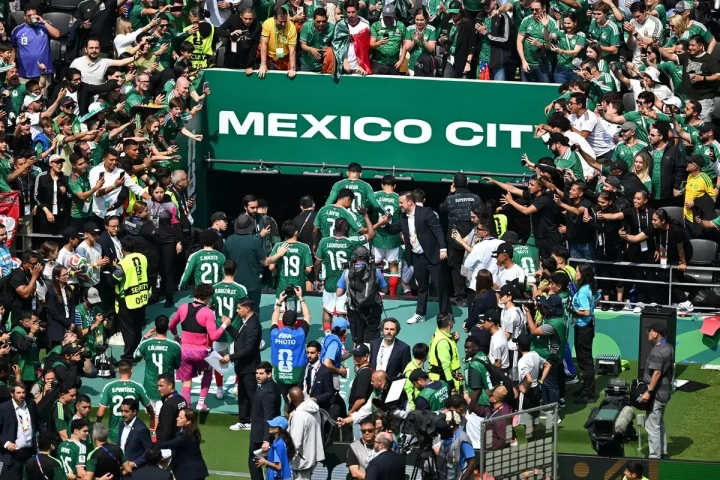
The passionate, vibrant atmosphere of a home World Cup returns to the forefront of the global sporting consciousness as Mexico prepare to face South Korea in a highly anticipated Group A fixture. Scheduled for Friday, 19 June 2026, the encounter will kick off at exactly 2:00 AM BST beneath the towering, spectacular arches of the Guadalajara Stadium in Zapopan. With the newly expanded 48-team tournament format severely punishing early sluggishness, both nations have successfully navigated their opening assignments to sit completely level on three points at the summit of the group.
Securing a victory in this specific clash carries immense, potentially tournament-defining significance. Establishing absolute dominance over the immediate standings would practically guarantee early progression to the knockout phases, alleviating the suffocating pressure that inevitably accompanies the final matchday of the group stages. For the hosts, it is an opportunity to validate their credentials in front of an expectant nation; for the visitors, it presents a golden chance to spoil the party and assert their own deep-run ambitions.
El Tri Seek Home Advantage Amidst Defensive Reshuffle
Stepping onto the pitch backed by a fiercely partisan, deafening crowd, the tournament co-hosts are riding a significant wave of early momentum. Javier Aguirre’s men commenced their campaign with a professional, hard-fought 2-0 victory over South Africa. That opening performance perfectly encapsulated the distinct tactical evolution implemented under the seasoned manager, showcasing a remarkably disciplined defensive structure that eventually laid the concrete foundation for clinical attacking moments in the final third.
However, the opening triumph did not arrive without significant, damaging casualties. The Mexican coaching staff are currently forced into an unwanted, drastic defensive reshuffle following a catastrophic red card awarded to Cesar Montes during the latter stages of the clash against the Africans. Stripped of their most commanding central defender, the heavy burden of organising the backline against a highly potent Asian attack will fall squarely onto the shoulders of Johan Vásquez, alongside the vast international experience of Jesús Gallardo. Operating behind them, goalkeeper Raúl Rangel will need to project absolute calm and authority to settle a newly formed defensive partnership.
Furthermore, the physical fitness of dynamic winger Julián Quiñones remains a pressing, unresolved concern within the camp. The forward limped heavily off the field in the 79th minute of the previous match, leaving his availability for Friday completely shrouded in doubt. To compensate for these glaring absences, Aguirre is widely expected to lean on his established veterans while simultaneously embracing his exciting emerging talents. Veteran striker Raúl Jiménez continues to offer a vital, intelligent focal point at the pinnacle of the attack. Meanwhile, the inclusion of 17-year-old midfield prodigy Gilberto Mora has genuinely captured the imagination of the host nation. The highly rated youngster made his major tournament debut in the opening match, demonstrating remarkable maturity and providing a relentless, box-to-box presence that will be desperately needed to disrupt the opposition’s rhythm.
Taegeuk Warriors Eye Historic Reversal
On the opposing side of the halfway line, the Taegeuk Warriors arrive in Zapopan fiercely determined to build upon a dramatic, morale-boosting opening victory of their own. Facing a resilient Czechia side, Hong Myung-bo’s squad demonstrated exceptional psychological fortitude to completely overturn a frustrating second-half deficit, eventually securing a crucial 2-1 win. The gutsy performance underlined their undeniable attacking potency and their innate ability to execute rapid, devastating vertical transitions when structural spaces eventually emerge.
Despite the positive start, underlying defensive vulnerabilities continue to plague the Asian heavyweights. Across their last five international outings leading into the tournament, the team has conceded an alarming six goals. This statistic stands in stark contrast to Mexico’s incredibly parsimonious record of just two goals conceded over their last nine matches in 2026. Defensive talisman Kim Min-jae will therefore be heavily relied upon to expertly marshal a backline that is currently missing several key pieces of personnel. Cho Yu-min has officially withdrawn from the squad entirely, while serious fitness doubts continue to linger over Bae Jun-ho and Kim Tae-hyeon, both of whom have only recently returned to light training sessions following respective ankle and muscular issues.
Operating within a highly fluid 3-4-2-1 tactical framework, Hong Myung-bo will undoubtedly look to exploit the wide channels to stretch the Mexican defensive block to its absolute limits. The creative burden invariably falls to the exceptional technical abilities of Lee Kang-in and the legendary Son Heung-min. The veteran Tottenham Hotspur forward remains the undisputed heartbeat of the national side, and his elite capability to drift inward from the left flank to operate dangerously in the half-spaces will pose a relentless tactical conundrum for the Mexican defensive midfield pivot.
Anticipated Tactical Battlegrounds
When analysing the granular tactical nuances of the fixture, the contrast in overarching footballing philosophies is genuinely compelling. Aguirre is heavily tipped to adopt a pragmatic, slightly conservative 4-1-4-1 formation, deliberately reducing the tempo of the match to protect his depleted central defence and frustrate the enthusiastic opposition. By heavily congesting the central midfield zones with the tireless, disruptive running of Érik Lira and the calculated positioning of other holding midfielders, the hosts will explicitly aim to sever the vital passing lanes feeding into Son and Lee.
Conversely, South Korea will actively seek to inject orchestrated chaos and blistering pace into the proceedings. Their preferred method of ball progression involves rapid, sweeping switches of play, utilising advancing wing-backs to aggressively overload the flanks. If Hwang In-beom and Paik Seung-ho can establish sustained, meaningful possession in the centre of the park, the resulting territorial dominance could easily force Mexico into an uncomfortably deep, passive defensive posture.
Area of the Pitch | Mexico Personnel | South Korea Personnel | Tactical Significance |
Central Defence | Johan Vásquez & TBD | Kim Min-jae | Vásquez must lead a reshuffled line against Son’s movement; Kim Min-jae needs to physically dominate the aerial prowess of Jiménez. |
Midfield Engine Room | Gilberto Mora & Érik Lira | Hwang In-beom & Paik Seung-ho | A fascinating battle for tempo control. South Korea’s fluid passing combinations against Mexico’s gritty, box-to-box disruption. |
Wide Attacking Channels | Roberto Alvarado | Lee Kang-in | Exploiting the transitional spaces left by advancing full-backs will be absolutely critical for both teams to engineer high-quality scoring chances. |
Historical Context and Tournament Permutations
Historically, this specific intercontinental fixture has consistently produced sheer heartbreak for the Asian nation on the grandest global stage. El Tri boasts a flawless World Cup record against their upcoming opponents, having secured a convincing 3-1 victory during the 1998 tournament in France, followed by a tense 2-1 triumph more recently at the 2018 edition in Russia. Erasing the heavy psychological weight of those previous, painful defeats will serve as a massive additional motivational factor for a South Korean squad desperate to carve out their own modern legacy.
Looking strictly at the broader tournament mathematics, the stakes in Zapopan are beautifully poised. Earning all three points would immediately catapult either nation to the prestigious six-point mark, effectively sealing their safe passage into the knockout rounds with an entire game to spare. Such a rare luxury would afford either Aguirre or Hong the invaluable opportunity to heavily rotate their squads, protecting crucial, fatigued players from potential injury ahead of the physically demanding latter stages of the competition.
Even a closely fought, tactical draw would leave both camps highly satisfied with their immediate prospects. A shared point would easily maintain their unbeaten tournament status and keep them firmly in control of their own destiny heading into the decisive final round of Group A fixtures. However, given the electric, deafening atmosphere expected inside the Guadalajara Stadium and the sheer wealth of world-class attacking talent distributed across both rosters, settling for a conservative, muted stalemate seems entirely contrary to the natural sporting instincts of both proud footballing cultures.
As the stadium lights brightly illuminate the meticulously manicured Mexican turf, the extensive theoretical planning and exhaustive video analysis decisively conclude. The watching global audience is set to witness a truly captivating clash of styles: a structurally disciplined, emotionally charged host nation stepping up against a technically gifted, ruthlessly persistent Asian force.