A Tactical Standoff in Massachusetts
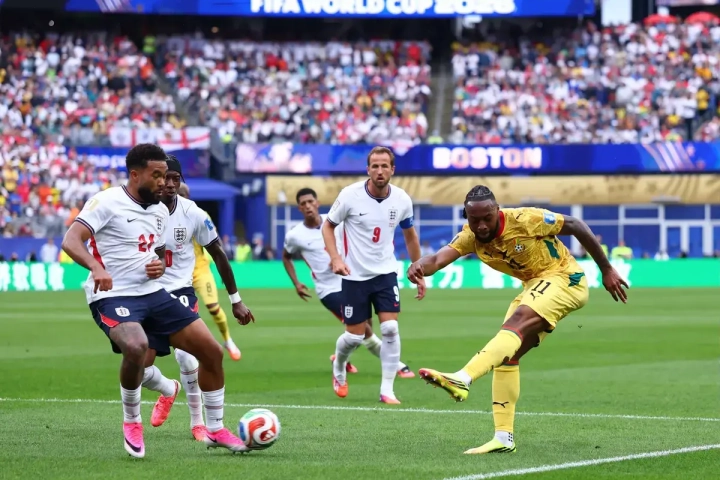
The highly anticipated Group L encounter between England and Ghana ended in a grinding, fiercely contested 0-0 draw on Tuesday evening. Staged beneath the spectacular architecture of the Boston Stadium in Massachusetts, the 2026 FIFA World Cup fixture officially commenced at 21:00 BST on 23 June 2026. Arriving in North America heavily tipped as genuine title contenders, Thomas Tuchel’s side had commenced their campaign with a thrilling 4-2 triumph over Croatia. However, they found life significantly more difficult against a remarkably resolute West African outfit. Despite controlling vast swathes of territorial possession throughout the ninety minutes, the European heavyweights were entirely unable to break down a flawless defensive block. The resulting stalemate leaves both proud nations perfectly poised on four points heading into the final round of group-stage matches, having each preserved their unbeaten starts to the tournament.
For the passionate legions of fans watching across the globe, the attritional nature of the contest presented a stark contrast to the free-flowing attacking football witnessed during the opening week of the competition. Eager to secure three points and officially book a definitive place in the newly expanded Round of 32, England severely lacked their trademark cutting edge in the final third. Conversely, Carlos Queiroz’s men executed an absolute defensive masterclass, demonstrating the same unwavering resilience and tactical discipline that earned them a dramatic 1-0 victory over Panama in their tournament opener.
First-Half Attrition and Queiroz’s Masterplan
Stepping onto the pristine turf, the stylistic contrast between the two squads was immediately evident from the very first whistle. Operating in their fluid 4-2-3-1 formation, the Three Lions sought to completely monopolise the ball. Midfielders Jude Bellingham and Elliot Anderson attempted to orchestrate attacking patterns from the central areas, patiently probing for gaps in the opposition structure. However, they repeatedly encountered an impenetrable crimson and yellow wall. Having carefully analysed the devastating offensive capabilities of their opponents, Queiroz deployed his Ghanaian side in a highly disciplined 5-4-1 system, specifically designed to congest the midfield and completely deny space between the lines.
The opening forty-five minutes were heavily characterised by immense physical exertion rather than attacking fluidity. Veteran striker Harry Kane, who had clinically dispatched two goals against Croatia and sits on the precipice of becoming his nation’s outright all-time leading World Cup goalscorer, found himself hopelessly isolated. The Ghanaian central defensive trio of Jonas Adjetey, Marvin Senaya, and Jerome Opoku tracked his movements with absolute precision, aggressively intercepting passes and dominating the crucial aerial duels inside the penalty area.
Consequently, the European side was frequently forced into harmless, lateral passing sequences, heavily struggling to penetrate the deep-lying defensive block. Wingers Noni Madueke and Anthony Gordon attempted to inject sudden pace and directness from the wide channels, but they were expertly marshalled by the retreating African full-backs, Gideon Mensah and Caleb Yirenkyi. The mounting frustration within the English ranks became visible as the half drew to a close, eventually culminating in a 40th-minute yellow card for midfield enforcer Declan Rice following a mistimed, cynical challenge to halt a rare, surging Ghanaian counter-attack.
The Counter-Attacking Threat
While the Black Stars willingly conceded the vast majority of possession, their overarching tactical approach was far from purely passive. Whenever the ball was successfully recovered, they immediately sought to transition vertically with blistering speed. The dynamic midfield pairing of Thomas Partey and Kwasi Sibo worked tirelessly to disrupt the English passing rhythm, frequently launching dangerous, rapid counter-attacks targeting the vast spaces left behind by the aggressively advancing European full-backs, Reece James and Djed Spence.
Experienced forwards Iñaki Williams and Jordan Ayew, the latter recently becoming the oldest Ghanaian ever to feature at a World Cup, provided a constant, menacing threat on the break. Their raw pace and imposing physical strength forced the English central defensive partnership of Marc Guéhi and Ezri Konsa to remain acutely vigilant, entirely preventing the Three Lions from fully committing bodies forward. This finely balanced tactical chess match ensured the two nations entered the dressing room at half-time deadlocked at 0-0, with neither goalkeeper having been severely tested.
Second-Half Substitutions and the Search for a Breakthrough
Emerging for the second period, Tuchel opted against making immediate personnel changes, trusting his starting eleven to eventually break down the stubborn resistance. However, the pattern of the match remained completely unaltered. The West African side continued to sit incredibly deep, maintaining their flawless structural organisation and thoroughly frustrating the European playmakers. The physical toll of the encounter was highlighted in the 59th minute when Williams entered the referee’s notebook, receiving a caution for a late, robust tackle on Konsa.
Recognising the urgent necessity for fresh attacking impetus, both managers finally turned to their substitutes’ benches midway through the second half. In the 64th minute, Tuchel made his first decisive move, replacing Gordon with the dynamic Bukayo Saka in a desperate attempt to stretch the opposition defence and provide a different attacking dimension. This was swiftly followed by the introduction of Nico O’Reilly for Spence, injecting fresh legs onto the defensive flanks.
Queiroz responded with equal tactical astuteness, completely refreshing his attacking line in the 65th and 66th minutes. The tireless Williams and Ayew were respectively withdrawn, making way for the explosive pace of Abdul Fatawu and Prince Kwabena Adu. These crucial alterations were explicitly designed to maintain the relentless counter-attacking threat and potentially snatch a famous, late victory against the rapidly tiring European defenders.
Late Drama and The Final Whistle
As the match crossed the 70-minute mark without a breakthrough, the English coaching staff rolled the dice once more. In a bold double substitution in the 72nd minute, the creative ingenuity of Eberechi Eze and Morgan Rogers was introduced into the fray, replacing Anderson and Bellingham. The withdrawal of Bellingham, in particular, underscored the incredibly challenging nature of the evening, as the young superstar had heavily struggled to exert his usual profound influence upon proceedings against a highly coordinated, suffocating defensive unit. A final roll of the dice saw Marcus Rashford replace Madueke in the 82nd minute.
Despite the influx of premium attacking talent, the Three Lions continued to probe without ultimate success. Their deliveries into the penalty area were comfortably repelled by the commanding Ghanaian goalkeeper Benjamin Asare, who confidently claimed crosses and commanded his penalty area with supreme authority throughout the evening. Ghana made their final adjustment in the 86th minute, bringing on Kojo Peprah Oppong for Senaya to bolt the back door securely shut. When the final whistle eventually blew following several minutes of stoppage time, the West African players celebrated the point as if it were a victory, having successfully executed their pragmatic game plan to absolute perfection.
Group L Implications and Statistical Milestones
The resulting 0-0 draw carries monumental significance for the overall trajectory of Group L. Both England and Ghana now sit perfectly level on four points, firmly cementing their positions at the summit of the standings. A victory for either side in their respective final group-stage fixtures will officially guarantee their progression to the knockout stages, keeping their World Cup dreams vibrantly alive.
From a historical perspective, the fixture represents a unique statistical milestone for the English national team. Tonight marked their eighth encounter against a different African opponent at the World Cup, having previously faced Morocco, Egypt, Cameroon, Tunisia, Nigeria, Algeria, and Senegal. While they currently maintain their proud, flawless unbeaten record against African sides in the competition, the sheer resilience displayed by Ghana perfectly illustrates the rapidly closing gap in quality across elite international football. Carlos Queiroz will undoubtedly be the happier of the two managers, having brilliantly orchestrated a result that proves his squad can go toe-to-toe with the very best teams on the planet.
Official Match Facts
Goalscorers:
- England: None
- Ghana: None
Discipline:
- England: Declan Rice (Yellow Card, 40′)
- Ghana: Iñaki Williams (Yellow Card, 59′)